Corvette That Bedeviled Shelby's Cobras Could Fetch $13 Million
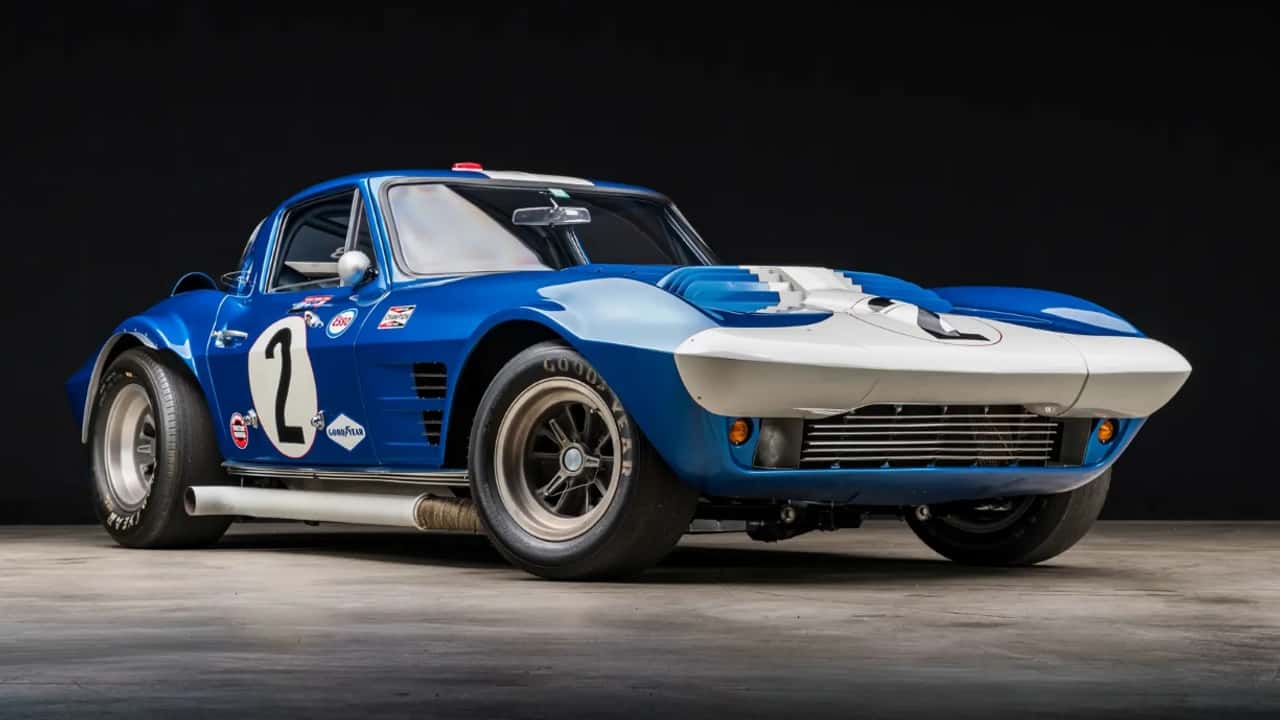
Zora Arkus-Duntov’s 1963 Chevrolet Corvette Grand Sport shed about 1,300 pounds and earned its Snake Eater nickname by outrunning Shelby’s Cobras.

THE BREAKDOWN
- Only five 1963 Chevrolet Corvette Grand Sport chassis were built as secret, ultra-lightweight competition cars.
- They dropped roughly 1,300 pounds using a tubular steel frame and one-piece fiberglass body.
- At Nassau in 1963 the Grand Sports outpaced Shelby’s Cobras, earning the "Snake Eater" nickname.
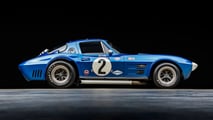
The 1963 Chevrolet Corvette Grand Sport, one of only five built, is back in the spotlight as a reminder of how far Zora Arkus-Duntov was willing to push America’s sports car in its battle with Carroll Shelby’s Cobra. Conceived as a secret, ultra-lightweight Sting Ray based racer, the Grand Sport was engineered to take on Europe and Shelby on their own terms.
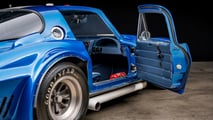
Developed against General Motors’ official ban on factory racing, the Grand Sport swapped the standard Corvette’s heavy frame and body for a tubular steel chassis and one-piece fiberglass shell. The result was a dramatic weight drop from about 3,200 pounds to roughly 1,900 pounds, paired with big V8 power and competition hardware aimed squarely at international endurance events.
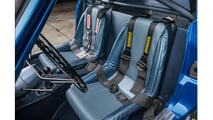
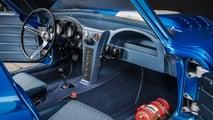
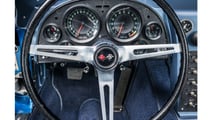
Gallery: 1963 Chevrolet Corvette Grand Sport


How Arkus-Duntov Created The Grand Sport
Zora Arkus-Duntov, a Le Mans class winner who joined Chevrolet in 1953, had already forced through the small-block V8 for the 1955 Corvette and built experimental racers like the SR1, SR2, and Corvette SS. When Shelby’s Cobra exposed the Sting Ray Z06’s weight disadvantage, he moved to build a clean-sheet, competition-only Corvette with quiet support from Chevrolet General Manager S.E. "Bunkie" Knudsen.
The Grand Sport kept the basic Sting Ray silhouette but shared little else. A lightweight tubular frame with aluminum cockpit bracing sat under an ultra-thin, hand-laid fiberglass body with wider fenders, fixed headlamps, and Plexiglas side and rear windows.
Girling disc brakes with aluminum calipers, reinforced suspension parts, lightweight radius arms, a relocated fuel tank, and competition-tuned geometry turned the car into a purpose-built sports racer. Only five Grand Sport chassis were completed before GM Chairman Frederic Donner ordered the lightweight program shut down.
Chassis 003 driven by A.J. Foyt and John Cannon at the 1964 Sebring 12 Hours
Racing Campaign And "Snake Eater" Reputation
Even after the official cancellation, Arkus-Duntov pushed on through unofficial channels, loaning cars to trusted privateers. Chassis 003 went to dealer Dick Doane, whose Illinois store billed itself as the "World’s Best Known Corvette Dealer." Running in SCCA C-Modified with iron-block 327-cubic-inch V8s to prioritize reliability, 003 took class wins at Wilmot and Greenwood and famously led 93 laps of the Road America 500 before its engine failed.
Doane’s quick fix for overheating at Road America, punching eight cooling holes in the rear valance under the taillights, worked so well that all remaining Grand Sports adopted it. By late 1963, 003 and 004 were reworked for Bahamas Speed Week alongside newly completed chassis 005, gaining wider wheels with massive Goodyear Stock Car Special tires, extra cooling vents, and all-aluminum 377-cubic-inch V-8s fed by four Weber 58 DCOE carburetors on cross-ram intakes.
The three cars caused a stir when they arrived in Nassau in December 1963, drawing scrutiny from rivals including Carroll Shelby. Early races exposed rear differential overheating, which engineers cured overnight with an external oil cooler and a decklid-mounted radiator. With that solved, Augie Pabst drove 003 to 4th overall in the 112-mile Governor’s Cup, and in the 252-mile Nassau Trophy, John Cannon took 2nd in class and 8th overall in 003 while Dick Thompson won the class in 005. The trio outpaced the Cobras on Nassau’s long straights, earning the Grand Sports the "Snake Eater" nickname that still follows them today.
Motor1's Take: The Grand Sport shows how far a small team went to make the Corvette competitive, ignoring corporate limits, inventing lightweight solutions, and learning faster on the track than on the drawing board, which is why it still matters today as both a museum piece and a practical lesson in focused race car design that continues to shape how we read early American sports-car racing and Zora’s legacy.
More On The Corvette:
RECOMMENDED FOR YOU
Seven Dream Ferraris Are Headed To Auction, From the 288 GTO To The Luce
Woman's Airbag Deploys In Car Accident. Then She Learns She Has To Flush Herself With Water For 15 Minutes: 'Never Heard This'
This Is One Of The Rarest Mercedes G-Classes Ever Made, And It Just Sold For $143,000
That Little Fin On Your Car's Roof Is Hiding Some Clever Technology
This One-Of-A-Kind Koenigsegg Could Fetch $10 Million
Man Goes To Ford Dealership. Then A Saleswoman Asks If He Wants To 'Swap Keys.’ It’s Not Just Him’
You Can Buy The First Ferrari 430 Scuderia Ever Built