Home
Porsche
911
News
Even Porsche thinks the 911 is too big
The head of design wants a more compact 911, but that won't happen in the combustion engine era
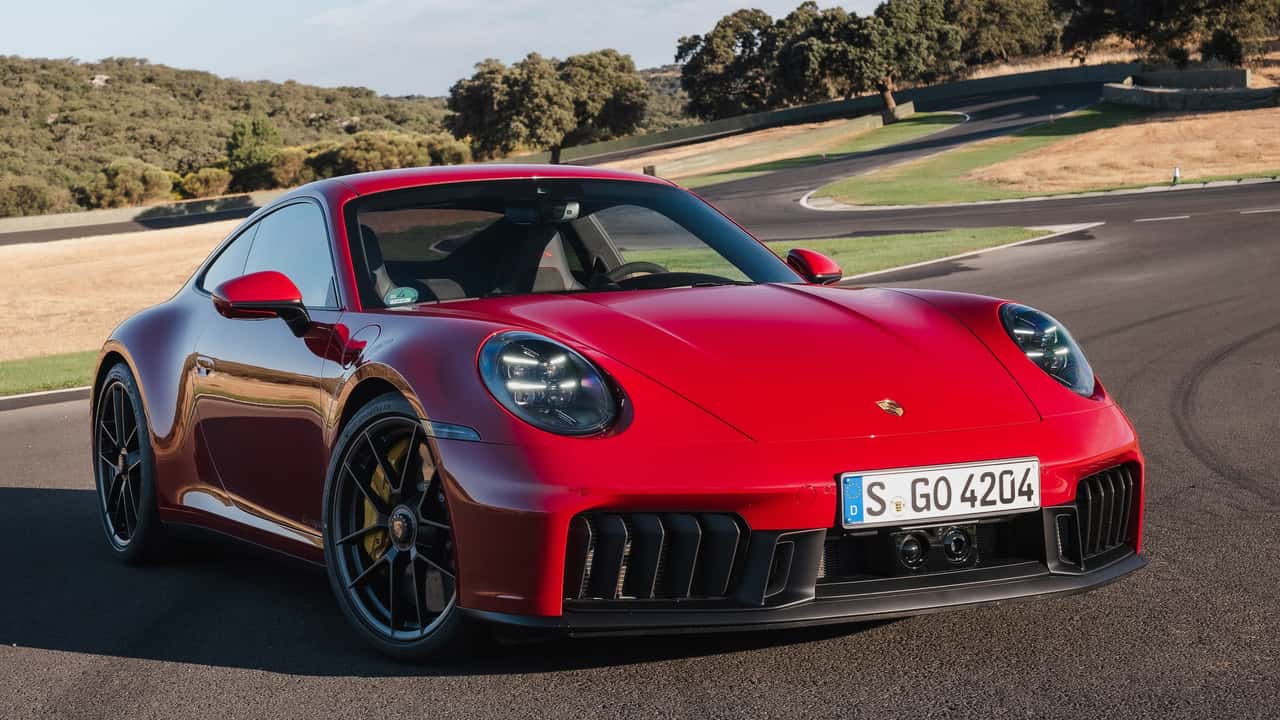
Photo by: Porsche

By: Stefan Wagner
Published by: Brian Potter
Aug 2, 2024 at 4:09am ET
Add Motor1.com as a preferred source in Google
- (https://twitter.com/intent/tweet?url=https%3A%2F%2Fwww.motor1.com%2Fnews%2F728793%2Fporsche-finds-911-too-heavy%2F&text=Even%20Porsche%20thinks%20the%20911%20is%20too%20big&via=motor1com)
- copy
Share
Comment
There are a few exceptions, but as a rule, each new generation of a car is bigger than its predecessor. We have known this game for decades. Ever stricter safety standards and customers' desire for ever greater performance are to blame. If you cram more and more technology into your vehicles, you make them heavier. This also applies to previously small and light sports cars, some of which have reached immense proportions.
Porsche is aware of this worrying trend, but has to admit that the company's hands are currently tied. In an interview with the Australian magazine Drive, Porsche's head of design Michael Mauer said that legislation regarding safety standards and other necessities have contributed to the enormous growth of the 911. In addition, the huge increase in performance has forced engineers to accommodate ever larger wheels and brakes.
"It's also heavily influenced by [government regulations] and the [car's] design. If you look back 20, 30 years and see how much horsepower the 911 had then and how much it has now, that influences the size of the wheels, the size of the brakes and all those things."
Ideally, Porsche would like to bring out a smaller 911, but that is no longer feasible in the current era of combustion engines. Mauer hinted that it could become technically possible once electric technology has progressed further. As soon as energy density is improved and batteries can become smaller, the 911 could also potentially shrink. However, Zuffenhausen has already ruled out the possibility of launching a fully electric 911 on the market this decade. Whether the legend would have the same appeal without a combustion engine is another matter.
In a perfect world, Mauer would like to make the 911 "as compact as possible" and return it to its roots as a "very compact little sports car". However, the usual packaging problems are currently preventing this vision from being realised - a problem that affects almost all vehicle types, not just the sporty ones.
In fact, the current 992 has made further gains with its recently presented facelift. At least the 911 GTS, which is now the first 911 in history to be equipped with a hybrid drive. Thanks to the new drivetrain, the car has gained a total of 50 kilograms and now weighs 1,595 kilograms as a rear-wheel drive model. However, we were already able to see in the test of the 992.2 that the new system is more beneficial than the manageable additional weight is detrimental.
What do you think?
View
Comments
Nevertheless, a look back is somewhat sobering: a 1972 911 Carrera RS 2.7 weighed just 960 kg. However, you can still buy a sports car in 2024 that weighs only slightly more than the good old RS 2.7. We are talking about the Mazda MX-5, but of course the cult roadster is far from being a real rival to the current Porsche 911. And even the MX-5 will have to be electrified in the foreseeable future in order to fulfil stricter emissions regulations. So it will probably become heavier too.

The electric 718 Boxster, caught here as a prototype, will be unveiled in 2025
Porsche's smaller mid-engined sports car, the 718 Boxster/Cayman, is on the brink of extinction as the classic cornering machines will be discontinued in 2025. The successors will be purely electric. At present, it is not expected that the E-718s will be smaller than their predecessors with petrol engines. At least the prototypes we have seen so far do not look any more compact. A lower kerb weight is highly unlikely. The opposite will be the case.
More Porsche news:
Porsche tests new Cayenne with electric powertrain
Porsche revises plans for electric cars
The most powerful Porsche Panamera of all time revealed
Porsche Macan Electric rear-wheel drive and 4S models revealed
Source: Drive
We want your opinion!
What would you like to see on Motor1.com?
Take our 3 minute survey.
- The Motor1.com Team
Share this Story
- (https://twitter.com/intent/tweet?url=https%3A%2F%2Fwww.motor1.com%2Fnews%2F728793%2Fporsche-finds-911-too-heavy%2F&text=Even%20Porsche%20thinks%20the%20911%20is%20too%20big&via=motor1com)
- copy
GO TO COMMENTS
(
)
Got a tip for us? Email: tips@motor1.com
View all comments ( )
Popular
12 Cars With Names That Make Absolutely No Sense
BMW Kept This Hatchback A Secret For Decades
Bugatti Restores One-Off Veyron With A Mirror-Like Aluminum Body
The Gas BMW M3 Isn't Dead: Next-Gen Prototype Roars
latest articles
- Photos: Porsche's Mission S Concept Takes Over New York City Oct 20 - Design -
- The 2027 Honda Passport TrailSport Looks Noticeably Taller Next To Last Year's Model Oct 20 - Off-Road -
- 12 Cars With Names That Make Absolutely No Sense Oct 20 - Lists -
- The Ford Ranger Is Getting A Bigger V6 For 2027: Report Oct 20 - Rumors -
- BMW Already Has A Deal On The New i3. But It's Not Cheap Oct 20 - Pricing -
- Remember The Ford Flex? This Weird SUV Is Now A Great Used Buy Oct 20 - Why Buy? -
- Mercedes Isn't Sold On Extended-Range EVs: 'Would You Really Switch?' Oct 20 - Interview -
RECOMMENDED FOR YOU
Porsche Sales Keep Falling, But The 911 Is More Popular Than Ever
The 2027 Honda Passport TrailSport Looks Noticeably Taller Next To Last Year's Model
One-Off Ruf Project Dragon Heads To Auction With An $8 Million Estimate
12 Cars With Names That Make Absolutely No Sense
Porsche Is Cooking Up Even More 911 Specials
The Ford Ranger Is Getting A Bigger V6 For 2027: Report
Porsche Says It's Not Anti-EV. But The Gas Macan Is Coming Back