How the pocket cells in lithium-ion batteries are made
Compact and with a flexible structure, they have record density but durability problems.


Lithium-ion batteries for electric cars generally use cylindrical cells. Recently, other shapes have appeared on the market, and we are starting to see prismatic cells and pouch cells.
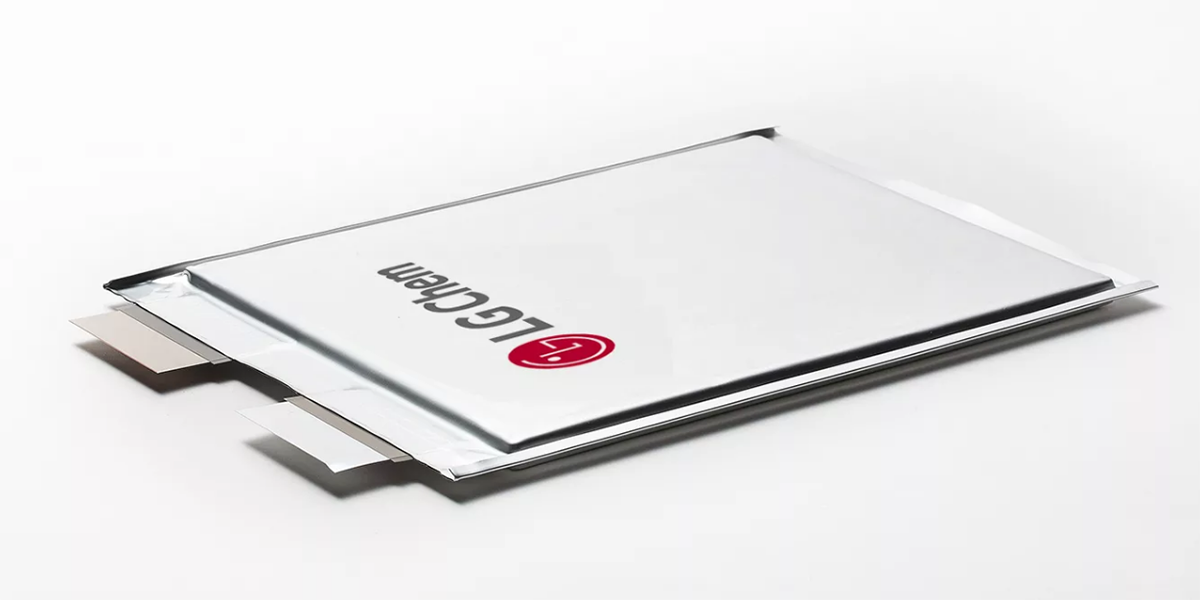
Pouch cells have a flattened shape (hence the name) and are flexible. They were invented in 1995 by the American company Li-Polymer, which surprised the world with a product with a completely new shape, for use in consumer electronics. But today they are also used in storage systems and electric vehicles.
A "classic" lithium-ion cell
Pocket cells, like all lithium-ion batteries, comprise an anode, a cathode, a separator and an electrolyte. The anode and cathode, the negative and positive electrodes respectively, are covered with a conductive material. The separator is sandwiched between the two to prevent contact, while the electrolyte is the medium in which ions move from one pole to the other during charge and discharge cycles.
The inside of pocket cells consists of a series of juxtaposed layers arranged as follows: anode-separator-cathode. These layers are then sealed to form a compact unit that resembles an envelope or bag. The negative and positive poles are connected on the outside by means of two tabs that protrude from the envelope itself.
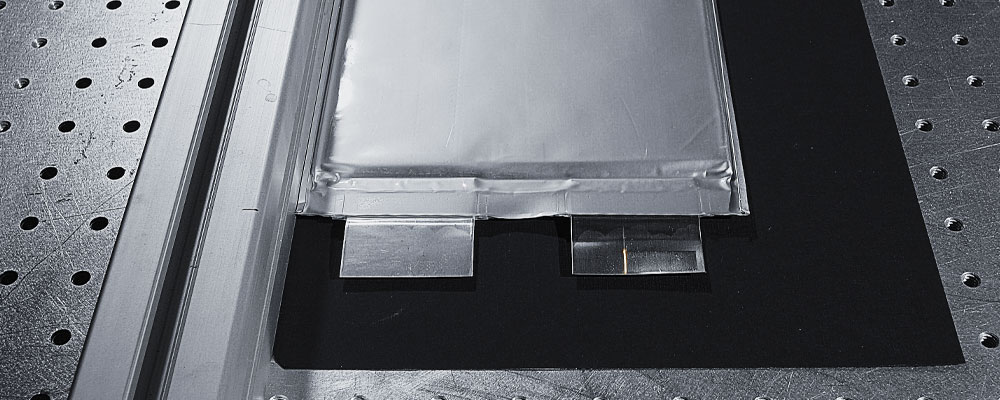
Numerous advantages in a small space
One of the advantages of pocket cells is that they take up very little space and are lightweight. This is why they are mainly used in consumer electronics. Their flexible design also gives designers more freedom, as they adapt to irregular shapes. Pocket cells also have a higher energy density than other types of cell. We're talking here about values in excess of 90%. All these characteristics make these cells interesting for emerging electric mobility.
Read also:
As if that weren't enough, they are also cheaper to produce, precisely because the different layers are placed next to each other without overlapping excessively, as in prismatic cells, or without complicated winding into coils, as in cylindrical cells.
A question of durability
Unfortunately, pocket cells generally have a shorter lifespan than cylindrical or prismatic cells. This is precisely due to the flexibility of their outer structure, which is less resistant to deformation and mechanical stress during charge and discharge cycles. If the cells produce gas during charging and discharging, this leads to significant swelling of the cell, which is detrimental to its performance and safety. In addition, cells are particularly sensitive to humidity and high temperatures.
As a result, pocket cells last on average between 500 and 2,000 cycles before losing considerable performance. This durability issue, combined with the compactness and cost-effectiveness mentioned above, makes them particularly suitable for use in hybrid and plug-in hybrid vehicles, and a little more complicated to use in pure electric vehicles.
Ideal for solids
But things are changing. Pocket cells are getting bigger and more reliable, and many companies working on the solid state are using precisely this format.
Factorial, Solid Power and QuantumScape have chosen pocket cells with superimposed layers (up to 24) to create next-generation batteries. This is because the presence of a solid electrolyte allows better temperature management and avoids the formation of gas, making it possible to create products that, in addition to all the advantages typical of pocket cells, guarantee lifetimes equal to those of cylindrical or prismatic cells.
Gallery: Factorial Energy Batteries


RECOMMENDED FOR YOU
This Clever New EV Drive System Achieves Incredible Efficiency
Toyota Driver Goes To Walmart. Then She Parks Her Celica In The Cart Return Bay: ‘Banned From The Store’
Lamborghini Won't Follow Ferrari With Simulated Manuals
A Mercedes Executive Reportedly Said The Electric GT 'Shouldn’t Exist'
This New Engine Runs On Methanol And Could Give EVs A Boost
‘Toyota, Do Better’: Mom Gets Toyota Highlander Recall Notice In The Mail. She Can’t Believe The ‘Fix’
This Company Built A Simulated Manual For Ferraris Before Ferrari Did