Home
News
Classics
The Peugeot 306 Cabriolet (1994-2002) celebrates its 30th anniversary
Thanks to Pininfarina, the series achieved a timeless fresh air appearance...
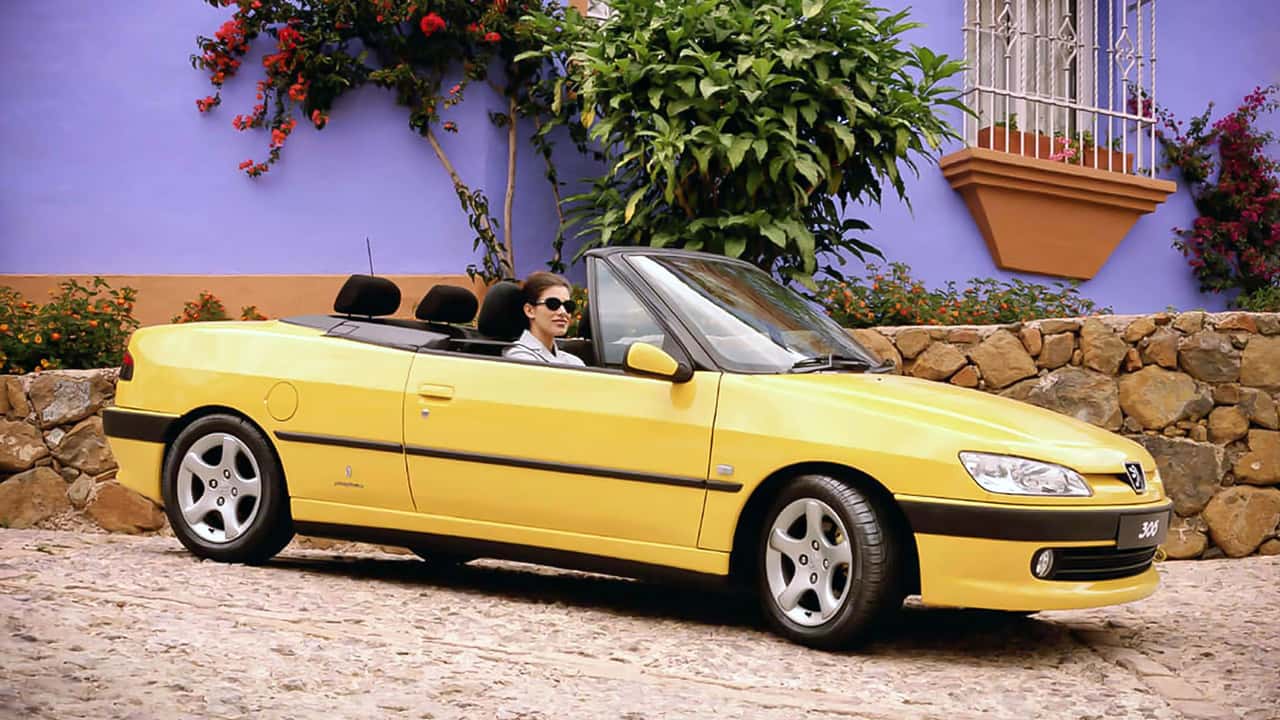
Photo by: Peugeot

By: Roland Hildebrandt
Published by: Brian Potter
Dec 22, 2024 at 2:30am ET
Add Motor1.com as a preferred source in Google
- (https://twitter.com/intent/tweet?url=https%3A%2F%2Fwww.motor1.com%2Fnews%2F745260%2Fpeugeot-306-cabriolet-1994-history%2F&text=The%20Peugeot%20306%20Cabriolet%20%281994-2002%29%20celebrates%20its%2030th%20anniversary&via=motor1com)
- copy
Share
Comment
In the spring of 1993, Peugeot launched the new 306, which was to succeed the 309. The technical basis was provided by the Citroën ZX, which also belonged to the PSA Group. The Peugeot 306 Cabriolet was presented in autumn 1993 at the Frankfurt Motor Show and was sold from March 1994 to 2002.
The designer of the Ferrari F40
It was designed by the famous Italian coachbuilder Pininfarina, more specifically by its designer Pietro Camardella, who had designed several Ferraris, including the famous F40. His task was not so simple on the 306, as the four-door saloon would result in a convertible that was too long and the three-door version in a model that was too short. As a result, the wheelbase is four centimetres longer than the five-door version, giving an overall length of 4.14 metres.
Gallery: Peugeot 306 Cabriolet (1994-2002)

7
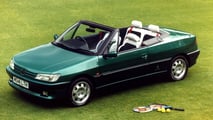
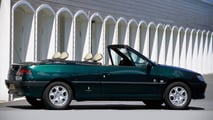
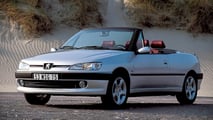
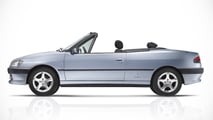
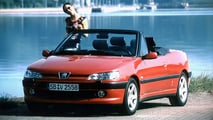
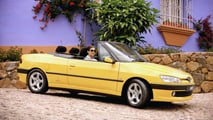
Source: Peugeot
The traditional cabriolet with a soft-top roof, a separate boot and therefore a fixed and relatively large volume for a vehicle of this type, was the last classic type of cabriolet produced by Peugeot, before they switched to a folding metal roof with the 206 CC and others.
The vast majority of models rolled off the production lines at the Pininfarina factory in Cambiano on the outskirts of Turin. Signore Camardella did a good job: In 1994, the 306 Cabriolet won the title of "Most Beautiful Convertible of the Year" and, again at the 1998 Geneva Motor Show, the "Cabriolet of the Year" award.
On 31 August 1998, the 50,000th model was assembled in Turin. That's not many compared with a total of three million 306s, but at that time almost all carmakers still had at least one cabriolet in their range.
Peugeot 306 Cabriolet "Roland Garros" (in English)
Photo : Peugeot
The options available included a hardtop to make the 306 cabriolet more suitable for winter use. An electric soft top, ABS, air conditioning, light alloy wheels (standard on the Roland Garros), leather upholstery, and after the facelift, at no extra cost, a blue, red or green soft top.
Outside France, there are special versions such as Platinum (Germany) and Swiss (Switzerland), which come with heated leather seats and headlamp washers as standard, as well as air conditioning.
Three different phases
The 306 Cabriolet was produced in three phases: Phase 1, from 1994 to 1997, was characterised by a fairly square front end and rectangular fog lamps (when fitted). In the boot, the opening button was rectangular and had no Peugeot logo.
Peugeot 306 Cabriolet after the 97 facelift
Photo : Peugeot
Phase 2 was marketed from 1997 to June 2000. It followed the more rounded shape of the 306 facelift, and the fog lamps were now round. On the boot lid, the Peugeot logo appeared on the boot lid release button and the headlights and front indicators were in one piece (separate on phase 1). At the same time, the immobiliser keypad has been removed.
Phase 3, also known as Phase 2.2, went on sale from June 2000 until production ceased in 2002. The restyling was based on that of the saloon, incorporating the front end of the S16 and providing improved comfort and a better finish. The matte-black trim and bumper strips are retained, but refined, to give the car a longer, more attractive appearance. All models are fitted as standard with 4 airbags (2 front and 2 side in the seats). The bonnet of phase 3 is slightly more rounded.
More anniversaries:
Ferrari 296 GTB specials dedicated to 30 years in the Middle East
Alcantara celebrates 50 years with the Lamborghini Bravo
What do you think?
View
Comments
Press
Production ended in July 2002, making the cabriolet the last 306 body to roll off the production line, the saloon having already been discontinued in May of the same year.
And what did the press have to say? In 1995, ADAC journalists praised the "touch of elegance", but criticised the mediocre rigidity of the four-seater's bodywork. The engines are described as "full of character": the 1.8-litre petrol engine with 101 PS and the 2.0-litre with 121 PS. The more powerful engine comes with ABS as standard, as well as light alloy wheels and an electric soft top.
We want your opinion!
What would you like to see on Motor1.com?
Take our 3 minute survey.
- The Motor1.com Team
Share this Story
- (https://twitter.com/intent/tweet?url=https%3A%2F%2Fwww.motor1.com%2Fnews%2F745260%2Fpeugeot-306-cabriolet-1994-history%2F&text=The%20Peugeot%20306%20Cabriolet%20%281994-2002%29%20celebrates%20its%2030th%20anniversary&via=motor1com)
- copy
GO TO COMMENTS
(
)
Got a tip for us? Email: tips@motor1.com
View all comments ( )
Popular
12 Cars With Names That Make Absolutely No Sense
BMW Kept This Hatchback A Secret For Decades
Bugatti Restores One-Off Veyron With A Mirror-Like Aluminum Body
The Gas BMW M3 Isn't Dead: Next-Gen Prototype Roars
latest articles
- Subaru Built A 510-HP Electric Wagon Without Toyota's Help Oct 20 - Official -
- The Strange Reason The Golf GTI Had A Golf Ball Shifter Oct 20 - Motor101 -
- Photos: Porsche's Mission S Concept Takes Over New York City Oct 20 - Design -
- The 2027 Honda Passport TrailSport Looks Noticeably Taller Next To Last Year's Model Oct 20 - Off-Road -
- 12 Cars With Names That Make Absolutely No Sense Oct 20 - Lists -
- The Ford Ranger Is Getting A Bigger V6 For 2027: Report Oct 20 - Rumors -
- BMW Already Has A Deal On The New i3. But It's Not Cheap Oct 20 - Pricing -
RECOMMENDED FOR YOU
You Can Buy This Wild 1967 Alfa Romeo Giulia Built Like A Le Mans Racer
Subaru Built A 510-HP Electric Wagon Without Toyota's Help
A Hidden Corvette Collection Was Found In A Texas Trailer Park
The Strange Reason The Golf GTI Had A Golf Ball Shifter
The Original Mercedes A-Class Is Now Old Enough To Be A Classic
Photos: Porsche's Mission S Concept Takes Over New York City
The First Maserati 5000 GT Frua Buried For 30 Years Resurfaces