Home
BMW
News
BMW recycles battery raw materials without chemicals and thermal methods
A new recycling competence centre to be built in Lower Bavaria.
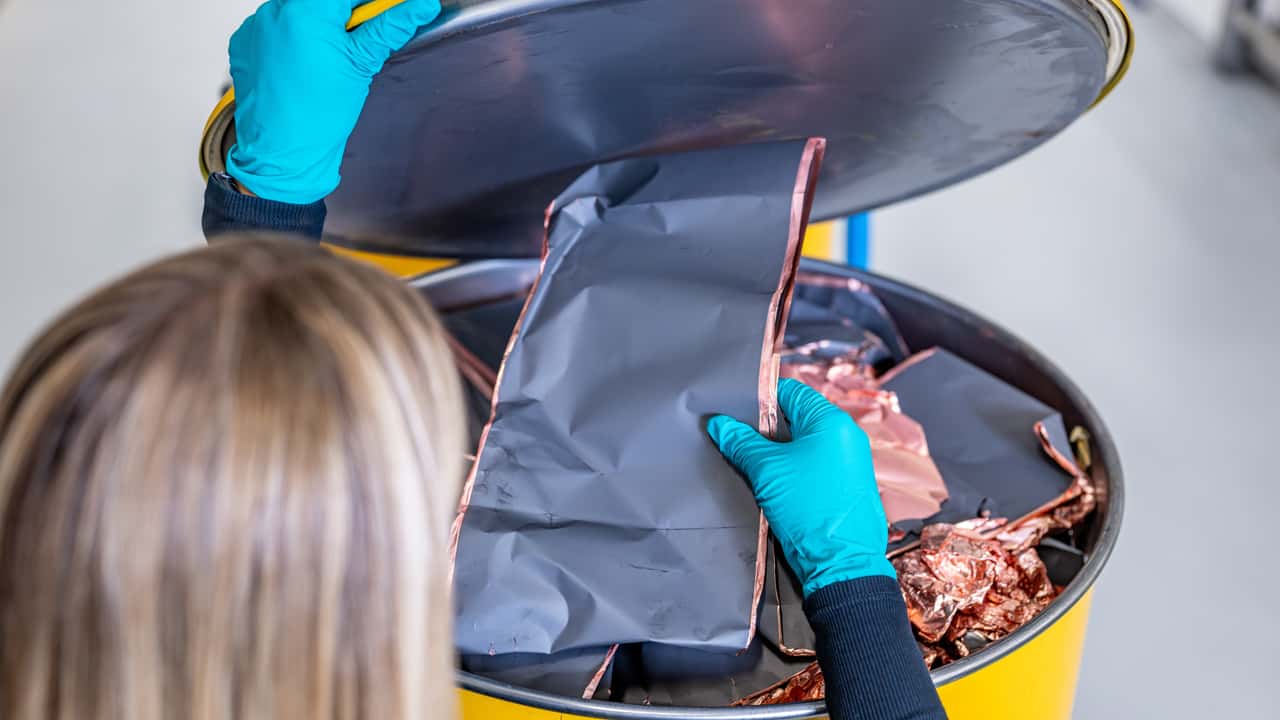
Photo by: BMW

By: Stefan Leichsenring
Published by: Angel Sergeev
Nov 28, 2024 at 6:03am ET
Add Motor1.com as a preferred source in Google
- (https://twitter.com/intent/tweet?url=https%3A%2F%2Fwww.motor1.com%2Fnews%2F742569%2Fbmw-battery-recycling-method%2F&text=BMW%20recycles%20battery%20raw%20materials%20without%20chemicals%20and%20thermal%20methods&via=motor1com)
- copy
Share
Comment
In battery recycling, the batteries are normally discharged first, then the components are separated mechanically. Finally, the metals contained are separated using chemical or thermal processes. Both have their disadvantages: chemicals produce dirt and a lot of energy is required for melting. BMW, however, wants to recover battery raw materials in future without resorting to thermal or chemical processes.
In the process developed by BMW itself, leftovers from cell production as well as entire battery cells are mechanically broken down into their components, according to BMW. How exactly this works is not explained. In any case, the raw materials obtained in this way are to be reused in BMW's own pilot production of battery cells. The Group has such a pilot production facility in Parsdorf near Munich.
The new method will be put into action in a new competence centre for battery cell recycling (Cell Recycling Competence Centre; CRCC). This centre is being set up in Kirchroth in Lower Bavaria (between Straubing and Regensburg).
BMW working on next-gen batteries:
 BMW says new Gen 6 batteries provide 30% more range, cost 50% less
BMW announces deal to build solid-state battery cells
BMW is investing around £8.3 million in the competence centre. The CRCC is being built on an area of 2,200 square metres. An existing building will be extended for this purpose. The production facilities are to be installed in the building from the second half of 2025. The validation of the recycling process can then begin. Later, battery cell material in the mid-double-digit tonne range is to be recycled there every year. Around 20 people will be employed in this process.
The most valuable battery raw materials include lithium, nickel, cobalt, and copper, as well as graphite and manganese. Recycling them is not only necessary from an ecological perspective, but also from an economic one. "Direct recycling will help to reduce the costs of our battery cell pilot line," says Markus Fallböhmer, Head of Battery Production at BMW. BMW is expanding its expertise with the new competence centre. "From development to pilot production to recycling", a closed cycle is being created, all with short distances in Bavaria.
What do you think?
View
Comments
BMW is pooling its battery cell expertise in three competence centres:
- Battery Cell Competence Centre (BCCC) in the north of Munich: Cell development and small-scale production
- Cell Manufacturing Competence Centre (CMCC) in Parsdorf near Munich: pilot line for scaling up battery cells
- Cell Recycling Competence Centre (CRCC) in Kirchroth: Recycling the surplus from Parsdorf
The electrical energy from the discharged cells is to be conserved in energy storage units in the building and used to operate the recycling facilities. The energy concept is supplemented by photovoltaics on the roof of the building. The competence centre is being built and operated by Encory GmbH, a 50-50 joint venture between BMW and the recycling specialist Interzero. In contrast, the intellectual property of the recycling process lies entirely with BMW.
Source: BMW
We want your opinion!
What would you like to see on Motor1.com?
Take our 3 minute survey.
- The Motor1.com Team
Share this Story
- (https://twitter.com/intent/tweet?url=https%3A%2F%2Fwww.motor1.com%2Fnews%2F742569%2Fbmw-battery-recycling-method%2F&text=BMW%20recycles%20battery%20raw%20materials%20without%20chemicals%20and%20thermal%20methods&via=motor1com)
- copy
GO TO COMMENTS
(
)
Got a tip for us? Email: tips@motor1.com
View all comments ( )
Popular
The Rotary Engine Should Be Everywhere. Why Isn't It?
Driven: The Revuelto SV Is All Bull, No BS
Toyota's Next Mid-Engined Coupe Is Going Racing This Weekend
Alfa Romeo Has Had It With Huge Screens
Subaru Teases A New Manual WRX, But Only For Japan
latest articles
- Acura Just Trademarked Four New Names, Hinting At 3 New SUVs Oct 23 - Patents & Trademarks -
- Driven: The Revuelto SV Is All Bull, No BS Oct 23 - New Car Reviews -
- The Mercedes 300 SL's Gullwing Doors Weren't Just For Looks. They Solved A Problem Oct 23 - Motor101 -
- 2027 Toyota Crown Signia Adds Tech Without Changing Its Formula Oct 23 - Pricing -
- Woman Buys 4Runner. Then She Drives 2 Miles—And Realizes The Windows Don’t Work: ‘Is This Something…They Should Be Liable To Fix?’ Oct 23 - Trending -
- Barely Driven Ferrari 499P Modificata Heads To Auction For Over $8 Million Oct 23 - For Sale -
- How Does Automatic Emergency Braking Know When To Stop? Oct 23 - Motor101 -
RECOMMENDED FOR YOU
The BMW iX5 Makes A Strong Case Against The Gas X5: Driven
Acura Just Trademarked Four New Names, Hinting At 3 New SUVs
The 2027 BMW X5 Is Hugely Improved Where It Matters Most: Driven
Driven: The Revuelto SV Is All Bull, No BS
For Around $40,000, You Can Buy BMW's Sports Car Of The Future
The Mercedes 300 SL's Gullwing Doors Weren't Just For Looks. They Solved A Problem
BMW's First Electric 3 Series Wagon Spied Looking Nearly Ready For Production