Who Makes Your Car's Audio System? We Visited One Of The Industry's Biggest Players
We toured Harman’s Northridge, California, facility to get a small glimpse at the company that makes almost 50 percent of all in-car audio systems.
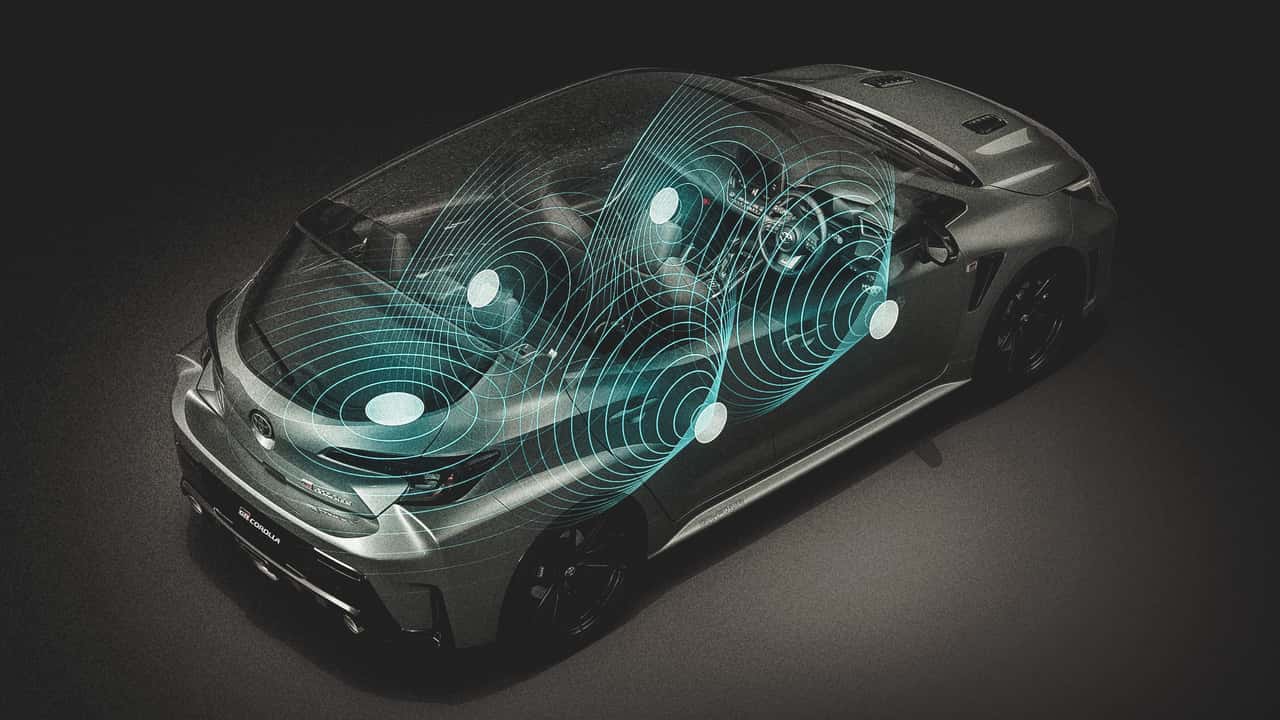

Few people spare a thought for their in-car audio systems. Whether it's the nameless setup in your base Toyota Corolla or the theatrical, motorized-tweeter arrangement in your Lamborghini Urus—audio systems are often taken for granted, except by those who truly enjoy listening to music.
Behind that invisible dependability is one huge company making nearly all of it: Harman International. Harman owns Bowers and Wilkins, Infinity, Mark Levinson, Lexicon, Polk, AKG, Harman/Kardon, and JBL, with a few more sprinkled in for good measure. It’s quite the formidable lineup.
In practical terms, Harman makes almost 50 percent of all in-car audio systems. In the United States, it’s more likely than not that your car has speakers, an amp, and a head unit made by one of many companies in Harman’s nebula of audio brands.
We wanted to see where it all comes from. So we took a trip to Harman’s Northridge headquarters—which also happens to be JBL’s main campus—to see a little bit of the behemoth behind so much of car audio.

The Company Behind In-Car Audio
In the San Fernando Valley north of Los Angeles proper, JBL’s old production center still exists. Only now it’s a combination of the Harman Experience Center, where guests can witness the breadth of product on offer, and a corporate campus that houses one of JBL’s research and development teams.
Oddly, it’s not really the home of automotive development, but it does make something abundantly clear about the audio behemoth: It doesn’t just make most car stereos. It makes nearly everything.
The experience was focused largely on JBL, which most people will know for either its Flip series of Bluetooth speakers or as the premium stereo option for modern Toyota products. JBL is also still deeply involved across all levels of the audio market, and despite being part of the larger Harman conglomerate, it retains its own R&D staff and facilities.
JBL’s roots lie in professional audio; the stuff used in music studios, concert stages, and movie theaters. The core business still exists, with JBL making huge loudspeakers for concerts, innovating spatial audio experiences for consumer-grade stuff, and also holding strong on professional studio monitors.
All of that experience, the company says, leads to automotive development. Much of Harman’s expertise in concert audio and audio imaging seems to come from JBL.
How Your Car's Audio System Is Made
It wouldn’t seem like it, but all of those skills trickle into Harman’s automotive side. It’s a huge company, to be sure, and I don’t think it’s as clear as "pro audio leads directly into automotive," but lessons can be learned. The truth is that automotive audio is exponentially trickier than the normal stuff.
When asked about automotive, a JBL representative said, "It’s the hardest part of the business. Not only are cost targets incredibly tight, but so are weight and durability requirements." He paused, then added, "It’d be a nightmare if the challenge wasn’t so engaging."
Cars are possibly the roughest environment for a sensitive electronic speaker. Not only do cars vibrate, but they also sit in the sun, have to survive scorching triple-digit temperatures, work in sub-zero conditions, and deal with all the situations your average daily drive creates. Hell, automotive speakers may even have to be spill-resistant.
'It’s the hardest part of the business. Not only are cost targets incredibly tight, but so are weight and durability requirements.'
The acoustics of a car are also incredibly complex and far from ideal. If you look at pro-level studios, every surface is carefully angled or sound-insulated to provide a perfect tone where the audio engineer will sit. A car has highly reflective glass surfaces, endless facets and folds, and also has to contend with road noise and engine noise.
Much of that challenge is overcome using imaging techniques and active noise cancellation. JBL (and all other automotive audio companies) models the inside of the car and times each speaker’s output down to the hundredths of a second so that the audio reaches the driver’s ear cleanly.
Even though cars across multiple models use the same speakers, amplifiers, and head units, they can all sound extremely different based on whether the car has leather or cloth seats, a different headliner material, or a panoramic sunroof. In an ideal world, every car is tuned to these minutiae, and Toyota’s JBL applications generally are.
That said, a JBL setup still isn’t up to the standard (or cost) of a Bang & Olufsen stereo—so it’s not the absolute benchmark. After all, it’s for a Toyota, not a Bentley. But the mission, regardless, is to provide good audio for the price point, which JBL does, even if it doesn’t knock your socks off.
Safe And Sound
I had the chance to try a Toyota GR Corolla and a Toyota Land Cruiser with JBL systems. The GR Corolla lacked bass but had overall clarity, while the much more expensive Land Cruiser had a fuller, richer sound profile. In the higher-end stuff, like the Mark Levinson system that lives in Lexus cars, you get knock-your-socks-off audio. As ever, you gotta pay to play.
Point being, the effort that goes into even the most basic audio is immense. Getting good audio is expensive, and getting exceptional audio is often the price of an economy car. And it’s not always in better hardware, but often in better software.
So, yes, you can toss a big subwoofer and a system in a car to make it loud. But making the audio have good fidelity, an excellent tonal response? That takes the expertise and engineering that very few can provide.
More Audio
RECOMMENDED FOR YOU
Man Goes To Carmax, Sees 2022 Toyota 4Runner With 127,000 Miles. Then He Finds Out How Much They Want: ‘Let’s Not Normalize This’
Audi Caught Flogging Its Tiny Electric Hatchback On The Nürburgring
Man Gets His Toyota Worked On. Then His Mechanic Finds The Car's Secret Screen: 'You May Not Know'
Is AAA Still Worth It? Why Millions Of Drivers Keep Paying For It
RIP: These Cars Won't Make It To 2027
Texas Woman Says This Is The Best Car She's Ever Had. So Why Is The Dealership Taking It Away From Her?
The Toyota Tacoma Has 8 Trims. Which One Should You Buy?