RIP: These Cars Won't Make It To 2027
Rust in peace to models like the Audi S6, Toyota Supra, and many more.
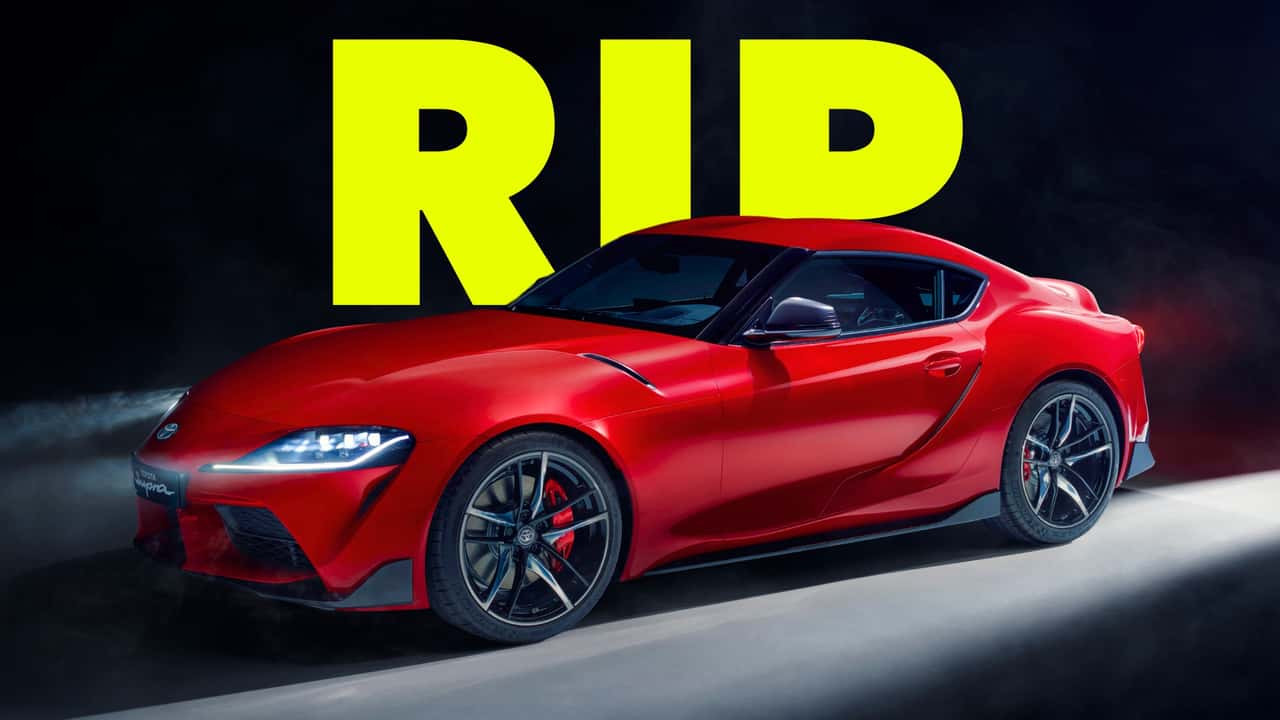

We’re already more than halfway through 2026, believe it or not. With that, there are more than a handful of cars that won’t live to see the end of the year. Some automakers have already started discontinuing models that were either slow sellers or starting to show their age, in order to make room for newer and better products.
Last year, more than 30 vehicles ended up in the big junkyard in the sky, ranging from luxury sedans and station wagons to several electric models (you can read the previous lists at the bottom of the story). So far in 2026, 27 vehicles are destined to meet the same fate come 2027.
More cars are destined to join this list as the year goes on, and we’ll update it accordingly. For now, these are the cars we know won’t be around come 2027. Rust in peace.
Acura RDX*

This one gets an asterisk. Yes, Acura is technically ending production of the current RDX. The compact luxury SUV won’t carry over to the 2027 model year. That said, the company has already confirmed that a hybrid replacement is in the works. The big question is timing. According to Acura, a new RDX won’t arrive for "a couple of years."
Audi S6
With the arrival of the new A6 and A6 E-Tron models, Audi is saying goodbye to its mid-range performer. The S6 will reach the end of the line after the 2026 model year, and we’ll say goodbye to the 444-horsepower twin-charged V6 sports sedan. Thankfully, a new RS6 Avant is supposedly on the way.
BMW iX
BMW is ending allocations of the iX after the 2026 model year in the United States. The automaker designed the battery-electric vehicle, which went on sale in the US in 2022, to showcase its latest technologies. Now that BMW is launching its Neue Klasse models with its latest battery technology, the iX has served its purpose here.
BMW Z4
BMW built the last Z4 in May, marking the end of production for its sporty convertible. To commemorate the occasion, the automaker offered a Z4 Final Edition with the 382-horsepower 3.0-liter inline-six engine. It wore staggered 19-inch front and 20-inch rear wheels, and featured other unique styling tidbits. It’s unclear if BMW has plans for a successor (but we’re at least hoping).
Cadillac CT4
Cadillac announced last October that the CT4 was on the way out. Production for the brand’s entry-level sedan ended in June, which included a CT4-V Blackwing variant. Cadillac offered the performance sedan with the twin-turbocharged 3.6-liter V6 making 472 horsepower, which was available with a six-speed manual.
Cadillac CT5
Cadillac CT5 production ends at the end of 2026, but unlike the CT4, it’s not completely dead. The automaker has already announced that it is working on a next-generation, combustion-powered CT5, which will likely include a new Blackwing variant with a supercharged V8 and hopefully a manual transmission. The most potent Blackwing made 685 horsepower.
Chevrolet BrightDrop
Chevrolet’s attempt to crack the electric commercial vehicle market is over. The automaker announced last October that it would officially end production, after pausing production all the way back in May. General Motors blamed the shutdown on the slow development of the commercial EV market.
Chrysler Pacifica Hybrid
Stellantis is pulling the plug—pun intended—on nearly all of its plug-in hybrid models in the US, and the Chrysler Pacifica Hybrid is no exception. Introduced for the 2017 model year, the electrified minivan has been on sale for nearly a decade. With Stellantis rethinking its US electrification strategy, the Pacifica Hybrid is officially on its way out.
Chrysler Voyager
Chrysler is killing its Voyager minivan—but only in name. The entry-level Voyager will be folded back into the Pacifica lineup with the arrival of the facelifted model in 2027. It will be dubbed the Pacifica LX, and sadly, it will get a slight price hike, climbing from $41,990 to $43,490.
Dodge Hornet
This one likely won’t be missed. After just three years on the market, Dodge is discontinuing its slow-selling and underwhelming compact SUV. Fewer than 40,000 Hornets were sold during its entire production run, and that weak demand—combined with tariffs—has forced Dodge to rethink its strategy for the Italian-built model.
Honda Prologue
Honda has canceled several electric vehicles and projects so far, and it finally announced that Prologue production would end at the end of the 2026 model year. The automaker said the demand for EVs has “shifted significantly,” with sales for the General Motors-based model expected to continue through 2027. This will leave the automaker with zero EVs as it focuses on offering more hybrids.
Hyundai Ioniq 6
With tariffs still impacting the industry, Hyundai has decided to pull the plug on the standard Ioniq 6 for the US. The sleek electric sedan debuted for the 2023 model year, but it wasn’t nearly as popular as its SUV sibling, the Ioniq 5, which will remain in the lineup for the foreseeable future. That said, Hyundai will continue to offer its performance-oriented Ioniq 6 N in the US.
Jeep Grand Cherokee 4xe
As part of Stellantis’s revised electrification plans, Jeep is dropping the plug-in-hybrid Grand Cherokee 4xe. Introduced for the 2022 model year, it offered up to 25 miles of all-electric range. But a massive 2025 recall affecting more than 90,000 vehicles sealed its fate, and the model will soon be gone for good.
Jeep Wrangler 4xe
Like the Grand Cherokee 4xe, the Wrangler 4xe won’t make it to 2027. The plug-in hybrid suffered from similar issues, resulting in a 2025 recall that impacted more than 228,000 vehicles. The standard Wrangler, thankfully, lives on.
Karma Revero
Believe it or not, the Karma Revero was still in production until late last year. That run has now ended for good, with Karma officially wrapping up production after a surprisingly long five-year stretch. The Revero will be replaced by the upcoming Gyesera, which promises a new powertrain and a fresh start for the brand.
Kia Niro PHEV / EV
The Kia Niro is now down to one trim for 2027. The company is killing off its plug-in-hybrid and fully electric Niro SUVs, leaving the standard hybrid version as the only option available in the US.
Land Rover Discovery Sport
Land Rover will end Discovery Sport production later this year. The automaker will transition the factory to build its next-generation models. The SUV will remain on sale in the US until dealer inventories are depleted, and once they are gone, the Range Rover Evoque becomes the brand’s cheapest model here.
Lexus LC
It’s the end of the line for the beloved Lexus LC. The two-door, V8 sports car officially meets its maker this year, following the death of the oft-forgotten hybrid version in 2025. We can’t say we blame Lexus—even in its best year, the LC was never a big seller. But we’ll miss it regardless.
Mercedes-AMG C63
Mercedes-Benz is finally ending production of the loathed four-cylinder C63. After admitting that fans weren’t too fond of the top-end performance model with a four-cylinder plug-in-hybrid powertrain, the German automaker is closing the door on the C63 and promises to replace it with a new six-cylinder model, likely a shared powertrain with the CLE53.
Polestar 3
Polestar as a brand is dead in the United States after the US Department of Commerce denied the automaker the ability to sell cars here under a new rule. This means the Polestar 3 is dead too for the 2027 model year. Polestar will continue to sell the 3, a traditional battery-electric SUV, until the existing stock is gone.
Polestar 4
The death of Polestar also includes the Polestar 4, the brand’s coupe-like crossover, which is smaller and cheaper than the 3. It lacks a rear window entirely, limiting visibility, and features a minimalist interior with nearly zero physical controls. Despite those downsides, it’s a stylish crossover available with 536 horsepower on tap.
Porsche Taycan Cross Turismo / Sport Turismo
When Porsche updated the Taycan earlier this year, it killed the Taycan Cross Turismo and Taycan Sport Turismo. The automaker cited low sales for the decision, which peaked in the United States in 2023. With Porsche killing these two variants, the automaker sells zero wagons here, but the two Turismos will continue to exist in other markets.
Tesla Model S
Tesla is winding down production of the long-running Model S (and the next car on this list) to make way for production of its Optimus humanoid robots at the company’s Fremont, California, facility (yes, really). The Model S was a survivor, debuting for the 2013 model year and receiving a handful of facelifts in that time.
Tesla Model X
Just like the Model S, Tesla will pull the plug (pun intended) on its Model X SUV after this year. The Model X debuted two years after the Model S, in 2015, and received a few subtle facelifts in its long tenure. But much like the Model S, Tesla’s biggest SUV was getting a bit long in the tooth.
Toyota GR Supra
Toyota Supra production ended in March, a few months before BMW built the last Z4, which it shares a platform with. Toyota offered a MkV Final Edition with 382 horsepower, less than the output of the versions offered in Europe and Japan. Unlike BMW, Toyota is planning to launch a Supra successor, but it will not arrive anytime soon.
Volkswagen ID.4
Volkswagen announced it would temporarily discontinue ID.4 production in the United States, killing the electric crossover in this market. The automaker is making room to build the 2027 Atlas, which it just redesigned. Volkswagen said it is planning a “future version of the ID.4” for the North American market, but it did not indicate as to when that would happen.
Volvo EX30
Just like Honda, Volvo cited “shifting market conditions” as the reason to kill its cheapest electric vehicle in the United States after just one year. The compact electric crossover had a starting price of just over $40,000, with the dual-motor performance variant producing 422 horsepower and offering up to 253 miles of range, but a baffling interior design and other quirks limited its appeal.
The Previous Years

RECOMMENDED FOR YOU
Man Buys BMW With ‘Clean Report.’ Then He Finds Out It’s Totaled. Here's What Could Have Saved Him
Car Salesman Says You Don’t Need To Go To A Dealership For A Test Drive. Are Takeout Test Drives The Next Big Thing?: 'Way Easier'
Monterey Car Week 2026: Every New Supercar, Hypercar, And Concept
Customer Comes Into Shop At 8 A.M. They Put Something Unthinkable In Their Windshield Washer Fluid Reservoir: ‘Charge Them Double’
BMW Never Built A V10 Manual X5. So This Company Is Making One
'Boot' Tries To Take Out Mercedes Driver Every Time They Open It. Then They Take It To The Shop: ‘Feels Calculated And Personal’
BMW’s Next M3 Touring Gets A Codename And A Possible US Passport