Smart #2 Leak Reveals Final Shape Before Paris Debut
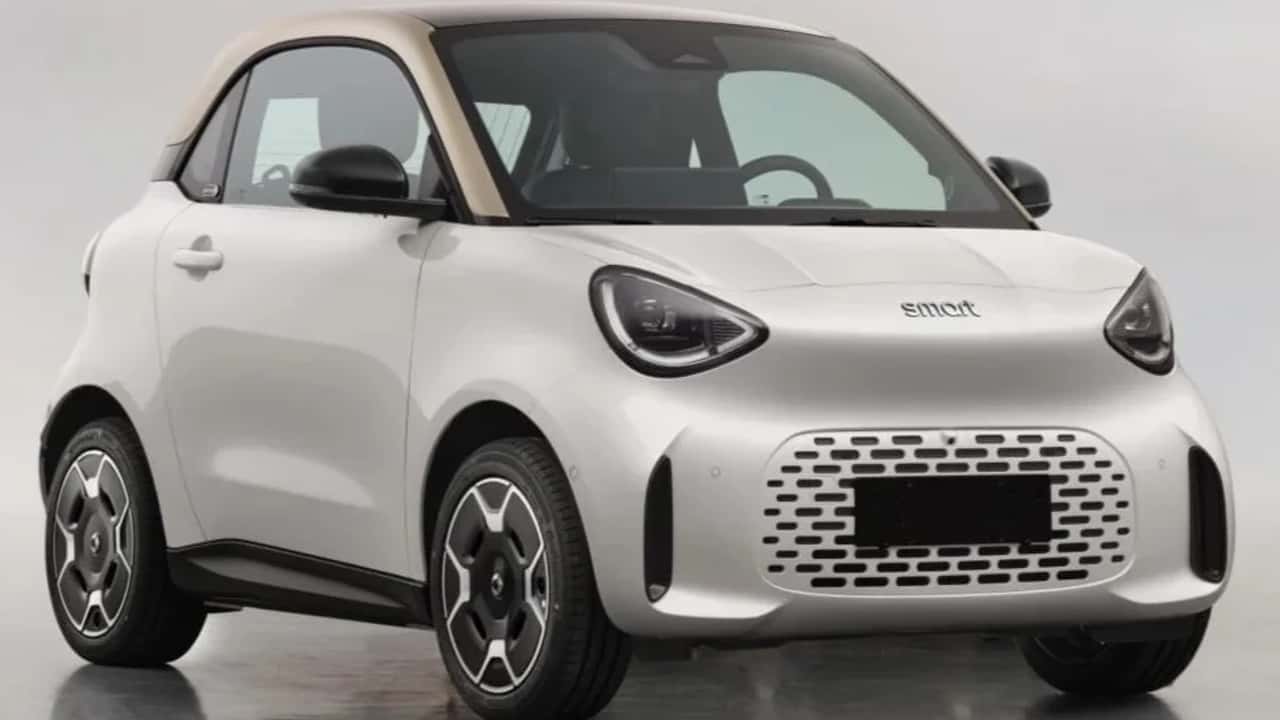
China’s MIIT filing locks in Smart #2 dimensions, motor output, and battery specs, clarifying its role as a tiny urban electric successor.

THE BREAKDOWN
- China’s MIIT filing reveals the production Smart #2’s final bodywork.
- 60 kW motor and 87 mph top speed, with a 35.7 kWh LFP battery.
- World premiere at the Paris Motor Show in October 2026, deliveries in 2027.
The Smart #2 was supposed to wait for the spotlights in Paris. Instead, China’s MIIT filing has put the tiny two-seater on display early, complete with final bodywork, dimensions, and key powertrain numbers. For anyone who cared about the old ForTwo, this is the clearest look yet at how Smart plans to bring the legend back as a battery-electric city car.
The filing confirms the Smart #2 as a compact, all-electric two-seater sitting on a new dedicated EV architecture, not a warmed-over gas platform. It locks in everything from the overall size to motor output and top speed, so shoppers and fans can already see how it fits into crowded-city parking and urban traffic. If you’ve been trying to guess from murals and teasers, this is where the speculation ends.

Design And Production Details
The homologation images show the production Smart #2 with full lighting units, bumpers, and trim, rather than the stylized graphics used in the global mural campaign. You can clearly see the short overhangs, tall roof, and bluff nose that echo the original ForTwo, with smoother surfaces and more EV-style aero work around the front and rear fascias.
Compared with the earlier teaser art and concept-style shots, the filing reveals details like the actual headlight internals, the shape of the tailgate glass, and the way the black tridion-style safety cell contrasts with the body color. If you remember how Smart previewed the car in murals, this is effectively the answer key to those drawings, now backed by regulatory paperwork instead of street art.
Gallery: Smart #2 Street Mural Preview






Smart has been rolling out this new generation step by step, from the mural reveal to confirmation that the #2 rides on a bespoke Electric Compact Architecture with a redeveloped tridion cell and a 35.7 kilowatt-hour battery announced at its Rome presentation.
Size, Power, And Range
China’s MIIT catalogue lists the Smart #2 at roughly 108.3–108.8 inches long, 65.7 inches wide, and 61.2 inches tall, riding on a 73.8-inch wheelbase. Kerb weight comes in at about 2,491 pounds. The numbers confirm what the photos suggest: this is a true micro EV aimed squarely at dense urban centers, not a stretched “city SUV” like the Smart #1 and #3.
Under the floor sits a lithium iron phosphate battery using cells supplied by CATL, paired with a 60-kilowatt electric motor from InfiMotion and a listed top speed of 87 miles per hour. Smart and outside reports point to a 35.7 kilowatt-hour pack and a target WLTP range around 186 miles, plus a European starting price kept below roughly $24,700. That combination of small footprint, usable highway speed, and sub-premium pricing is exactly what made the original ForTwo interesting, now translated into EV form.
Smart plans to build the #2 in China for the domestic market and export to Europe and other overseas regions, though current reports do not point to a US launch. Because it will arrive as a Chinese-built battery-electric vehicle, it falls under the European Commission’s countervailing tariffs on Chinese EV imports, a factor that could push European pricing upward even as Smart aims to keep the car accessible. For more context on how Smart is positioning this car against other small European EVs, it’s worth revisiting how the brand framed its new Smart EV lineup debut and how rivals like the upcoming Audi city EV are being tested, as seen in our 2027 Audi A2 spy video coverage.
More From Patents & Trademarks:
Motor1's Take: Smart's return with the #2 is less about climbing the mainstream EV ladder and more about reclaiming the tiny-city-car niche—a compact footprint, simple powertrain and accessible positioning spell that out, but final pricing, equipment and real-world range and charging will decide whether this stays a neat novelty or turns into a genuinely practical urban solution for city drivers and shared-mobility fleets.
RECOMMENDED FOR YOU
How Pininfarina Transforms Luxury Interiors
JCB Hydromax Smashes Bonneville With 368.347 MPH Hydrogen Run
Porsche's Latest One-Off Is A Fair Dinkum Aussie Tribute
Metal AMG Badge Allegedly Burned Drivers
'Over My Dead Body:' Audi Design Boss Had One Non-Negotiable For The New Supercar
Mouse Causes $3,200 In Damage To Car. Honda's Design Might Be At Fault: 'Warranty Won't Pay'
The Man Behind The Nissan Juke Is Now Designing Nissan's Future