Trump Boasts Auto Comeback — Michigan Data Says He’s Wrong
Michigan’s auto plants, from General Motors EV trucks to Ford factory shifts, reveal a patchwork recovery that complicates Trump’s comeback narrative.
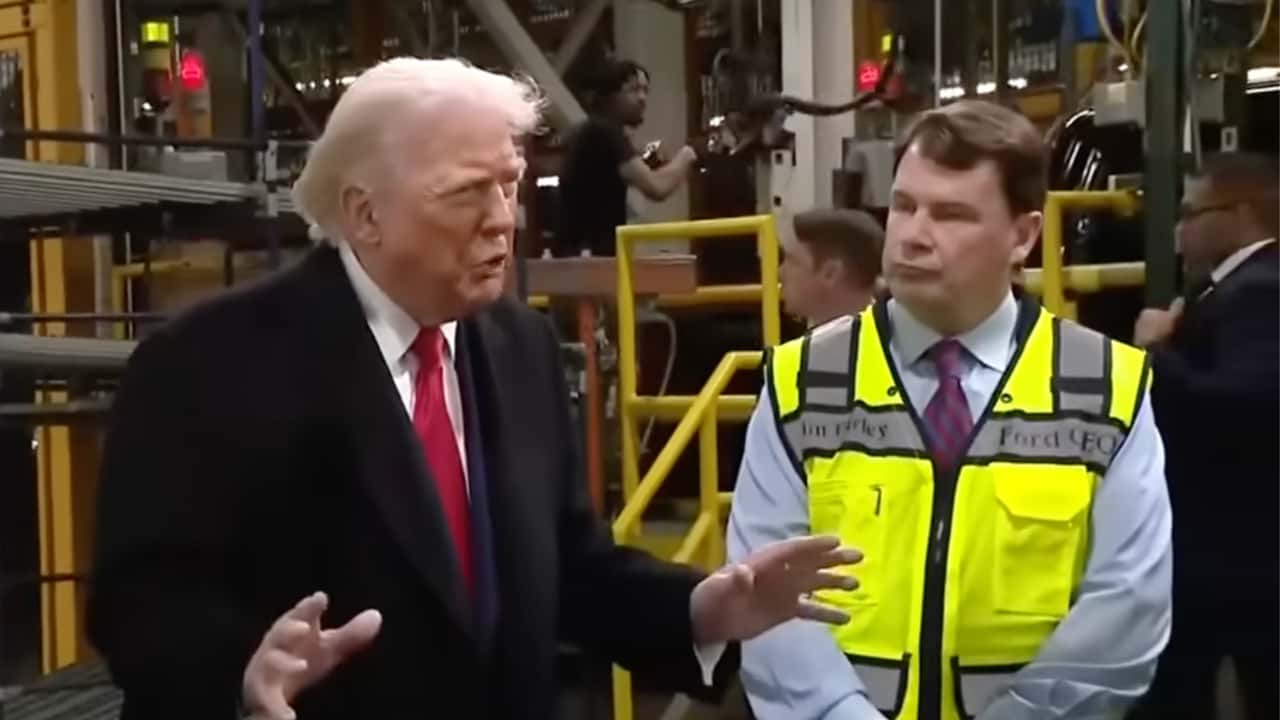

Donald Trump walked onto a General Motors stage in Michigan and declared that “America’s auto industry is back,” framing tariffs and pressure on automakers as the reason plants are buzzing again. For car fans and workers who lived through bankruptcies and layoffs, that is a powerful story: factories saved, jobs returning, and foreign rivals no longer “pillaging” US plants.
The Michigan stop blended campaign-style rhetoric with specific claims about General Motors and other automakers investing billions and adding jobs. It came as fresh labor data and local reporting painted a more complicated picture: some plants hiring, others idled or pivoting from EVs, and suppliers squeezed by trade policy. Bridge Michigan’s fact-check of the same July 27, 2026 speech found that, over the year ending in June 2026, Michigan actually lost about 4,000 auto parts manufacturing jobs (a 3.5% decline) and about 7,000 manufacturing jobs overall (a 1.2% drop), numbers that sit awkwardly next to the “thriving” narrative.
Trump’s Michigan auto industry claim
Trump’s Michigan message centers on a simple line: the state is “thriving” again and the auto industry is “back.” At the GM proving grounds event, he credited his tariffs on imported vehicles and parts for protecting US plants and insisted that foreign countries are no longer hollowing out Midwest manufacturing. He also cast previous administrations, especially Barack Obama’s, as having “abandoned” auto workers before 2016.
The former president paired that story with promises that more tariffs and tougher trade enforcement would keep investment flowing to places like Detroit, Flint, and Lansing. The framing implies a broad-based upswing touching automakers, suppliers, and dealers, and suggests that Michigan’s current auto momentum is primarily the result of past and future tariff pressure rather than a mix of market forces, technology shifts, union bargaining, and state and federal incentives.
GM investment, EV shifts and tariff arguments
At the Michigan appearance, Trump highlighted General Motors as proof that the strategy is working, pointing to GM’s decision to expand and retool facilities in the state. His argument ties GM investment announcements to tariff threats, suggesting that automakers chose Michigan production over foreign plants to avoid potential penalties. That narrative echoes past clashes over projects like Ford’s overseas plans and debates about whether policy actually kept specific vehicle lines in the US instead of Mexico or China.
The White House messaging also leans on a broader list of automaker projects, from new battery plants to reworked truck lines, to claim that “Made in Michigan again” is a direct result of the trade agenda. Yet recent developments complicate that picture. GM has adjusted parts of its electric truck push, with reports of an indefinitely delayed next-generation electric trucks program affecting expectations around future EV jobs in Michigan, even as the company stresses that it “has not canceled any electric trucks” and that “EVs remain the end game for GM.” At the same time, suppliers and global partners still depend on cross-border parts flows that can be disrupted or made more expensive by tariff battles.
Michigan auto jobs data
The latest state-level labor numbers tell a more mixed story than a simple boom. Over the year ending in June 2026, Michigan shed roughly 4,000 auto parts manufacturing jobs, a drop of about 3.5 percent, and about 7,000 manufacturing jobs overall, a decline of about 1.2 percent. Those losses land on top of the longer arc in which auto assembly and parts employment has climbed back from the worst of the last downturn but still leaves several counties short of past peaks, even as production has shifted between internal combustion and EV programs.
Union activity adds another layer. Recent bargaining rounds and UAW actions at factories, including those visited by national figures, have chased better wages and job security even as politicians of both parties claim credit for “saving” plants. Coverage of Trump’s appearances at Ford and other facilities, such as the Ford factory event where he was heckled by a UAW member, underscores that many workers remain skeptical that tariffs alone explain their paychecks. For many on the line, the data that matters is whether shifts are added, overtime returns, and new product lines actually arrive.
‘Tiny cars’ and reshoring promises
When Trump declares that Michigan’s auto sector is “back,” the measurable reality looks more like a patchwork. Some assembly plants are running strong with high-margin trucks and SUVs, while others face uncertainty around EV timing or changing demand. A recent GM EV retrenchment documented in coverage of its indefinitely delayed next-generation electric trucks program shows how quickly investment narratives can flip, even after ribbon cuttings and presidential speeches.
At the same Milford event, Trump also rolled out a fresh regulatory move meant to bolster his reshoring story, announcing that Transportation Secretary Sean Duffy had “just cleared” the way for American automakers to build tiny, kei car-style vehicles and saying he was “giving all American car companies the right to build” those small cars. That pitch arrived alongside familiar arguments about bringing production home. Past coverage of proposals such as a Trump-era kei car import plan with expensive problems and debates over building Chinese-market Fords in the USA shows how complicated reshoring really is, from safety and regulatory questions on tiny cars to the realities of global platforms. A claimed “comeback” sounds clean on stage, but the underlying jobs and plant footprints shift model by model, program by program, every model year.
RECOMMENDED FOR YOU

Here's How The Volkswagen Group Plans To Simplify Its Parts Bin
Florida Man Drives A Camaro SS. Then 1 Day, He Notices An Anonymous Letter On His Windshield: ‘Nobody Is Impressed’
Porsche Confirms It's Laying Off Another 5,000 People
Why Your Brake Rotors Rust Overnight
Lexus Has The Happiest Dealers In America. Infiniti Doesn't
Man Puts His Mazda Filter in a New Box. Then He Tries To Get AutoZone To Refund It
These Automakers Have The Most Visited Websites