Home
Features
Automakers Need To Slow Down Before Reliability Gets Even Worse
The race to launch new models is faster than ever. But consumers are paying the price when it comes to reliability.
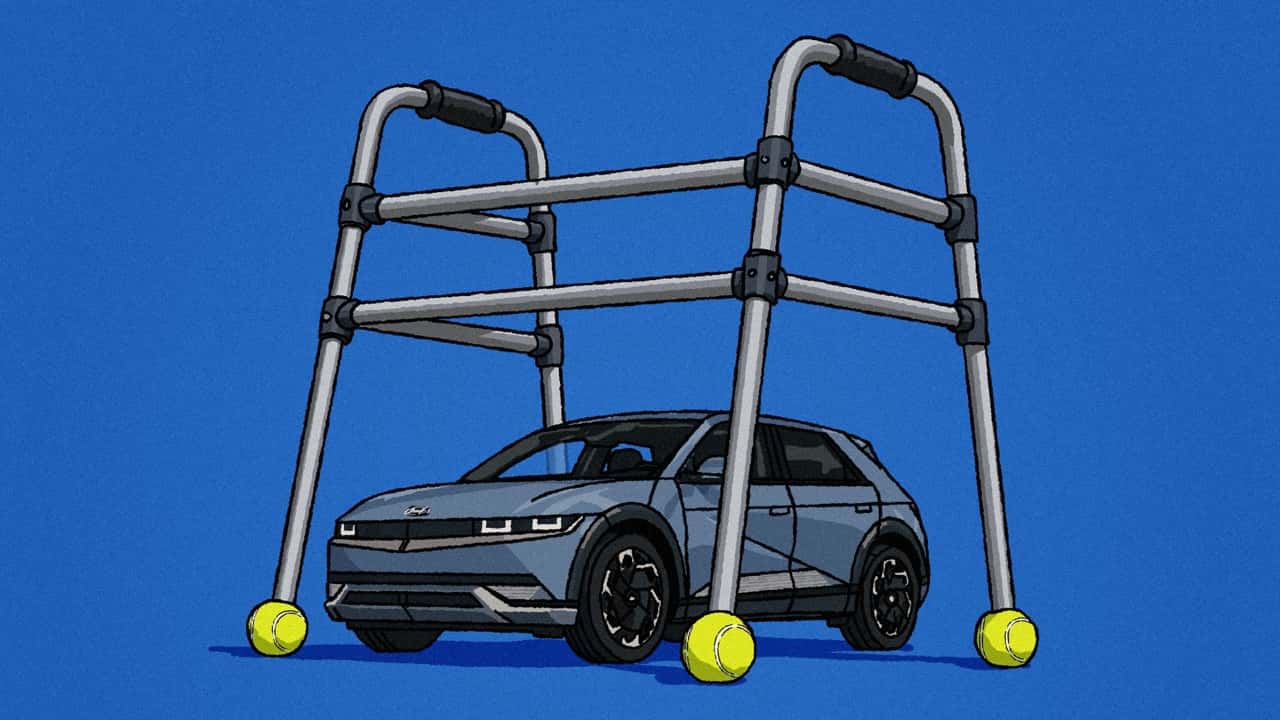
Photo by: Sam Woolley | Motor1
Adrian Padeanu 
By: Adrian Padeanu
Jul 27, at 9:00am ET
Add Motor1.com as a preferred source in Google
- (https://twitter.com/intent/tweet?url=https%3A%2F%2Fwww.motor1.com%2Ffeatures%2F802711%2Fautomakers-need-to-slow-down-improve-reliability-opinion%2F&text=Automakers%20Need%20To%20Slow%20Down%20Before%20Reliability%20Gets%20Even%20Worse&via=motor1com)
- copy
Share
Comment
As someone who’s about to turn 40, I feel like the world is moving at a pace I’m no longer comfortable with. Everything is happening at lightning speed, and we’re running out of time to slow things down, at least every now and then.
The same is true of the automotive industry. Companies are continually working on bigger, faster, and fancier vehicles in an effort to outdo their competitors. But is that constant pressure to improve actually a good thing? Or is it making cars worse?

Skoda Enyaq Touchscreen
Photo by: Skoda
The growing number of recalls we cover here at Motor1—many of them software-related—suggests the latter. Automakers are seemingly asking engineers to solve increasingly complex problems in increasingly short development windows.
In the race to lure in new buyers, quality can all too easily fall through the cracks.
But there could be a simple solution here: Just extend model life cycles. Easier said than done, I know, but automakers need to be able to give themselves more time to iron out issues before the next-gen car goes on sale, rather than putting buyers through the hassle of repeated trips to the repair shop.
But is that constant pressure to improve actually a good thing? Or is it making cars worse?
That strategy has worked for Toyota (until recently, at least); the fact that it was the world’s best-selling automaker for the sixth consecutive year in 2025 doesn't simply happen by chance. Nor is it a coincidence that Lexus perennially ranks at the top of the quality charts.
The average vehicle life cycle of a new car in the US is around five to six years before it’s inevitably updated or facelifted. Historically, that number has been higher for Toyota, as the Japanese automaker is more willing to keep its notoriously reliable cars around for a bit longer.
The fact of the matter is, people want a car they can depend on. It can be ancient by 2026 standards and still bring people into showrooms, as is the case with something like the 42-year-old Land Cruiser (J70), which is still sold in a few parts of the world.
It’s an extreme example, sure, but it proves a point: Just because something has been around for a long time doesn’t necessarily make it obsolete.
2027 Lexus TZ
Photo by: Lexus
That said, I understand why the rush to launch new models has spread across the industry. Carmakers are under constant pressure to move metal; competition has never been fiercer, and with the rise of AI, cutting-edge technology has never been more in demand. And that’s a large part of the issue.
Software has added a layer of complexity that sometimes creates more problems than it solves. There’s too much technology in today’s cars, and software has become the Achilles’ heel as aggressive development timelines force companies to launch new vehicles today and fix the bugs tomorrow. The number of US recalls related to software alone is proof of that—at least 30 already this year, depending on how you define it.
On a more positive note, one potential upside is that electric vehicle adoption is rising in most parts of the world. EVs have fewer moving parts than combustion-engine cars, which should reduce the risk of mechanical failures because fewer components can fail.
Whether that advantage outweighs the growing complexity of automotive software, however, remains to be seen.
Carmakers are under constant pressure to move metal; competition has never been fiercer, and with the rise of AI, cutting-edge technology has never been more in demand.
This perspective comes from someone who puts reliability at the top of their list when shopping for a car, as I suspect many people do. I’ve had my Skoda for a decade now and don’t plan on changing it anytime soon, because I fear its replacement won’t be nearly as bulletproof.
When I bought my Octavia back in 2017, I deliberately waited until the mid-cycle facelift to reduce the risk of running into problems later on. It paid off, at least so far, and I know for a fact its replacement suffered from many teething issues shared with its sister models across the Volkswagen Group. Some of those issues persist today, and most are software-related.
And that's the point. Extending model life cycles would not only lower expenditures by reducing the frequency with which companies have to invest in all-new products, but it also yields better economies of scale. Buying larger volumes from suppliers typically lowers the cost per unit. And with reliability theoretically improved, automakers would likely spend less replacing components under warranty.
What do you think?
View
Comments
On paper, it looks like a win-win. Automakers and consumers would benefit from vehicles that stay on the market longer. However, it’s unlikely to happen because "China speed" is on everyone’s mind these days. Western brands aspire to develop new models in as little as two years, following the lead of many Chinese automakers.
If anything, model life cycles are destined to get even shorter. And that could be bad news for consumers.
More From State Of Motion
When Software Replaced Suspension Engineering
The Aston Martin Vanquish's Designer Tells Us Why It's Still So Important
We've Reached Peak Horsepower. Now What?
Waymo Won't Go Where Americans Need It Most. But Why?
We want your opinion!
What would you like to see on Motor1.com?
Take our 3 minute survey.
- The Motor1.com Team
Share this Story
- (https://twitter.com/intent/tweet?url=https%3A%2F%2Fwww.motor1.com%2Ffeatures%2F802711%2Fautomakers-need-to-slow-down-improve-reliability-opinion%2F&text=Automakers%20Need%20To%20Slow%20Down%20Before%20Reliability%20Gets%20Even%20Worse&via=motor1com)
- copy
GO TO COMMENTS
(
)
Got a tip for us? Email: tips@motor1.com
View all comments ( )
Popular
The 15 Best Movie Cars of All Time, Ranked
Porsche Is Building 15 One-Offs, Including A $15 Million Car
The Volkswagen Group Reportedly Wants To Put Chinese Software In European Cars To Cut Costs
Audi Reveals Which Models It Plans To Build In America
latest articles
- Mitsubishi Is Keeping The Lancer Evo's Spirit Alive... In An SUV Built By Another Company Oct 27 - Green -
- Man Buys New Tire. He's Certain The Shop Sabotaged It On Purpose: ‘We Called AAA’ Oct 27 - Trending -
- Jeep’s Most Popular Gladiator Upgrade Is Finally Available From The Factory Oct 27 - Off-Road -
- The Volkswagen Group Reportedly Wants To Put Chinese Software In European Cars To Cut Costs Oct 27 - Rumors -
- Florida Man Wants To Buy A Toyota 4Runner. Then He Learns He Can Only Afford The Base Model—So He Goes Bold Oct 27 - Trending -
- Chevy Wants The Next Corvette To Stay Affordable, Even With More Power Oct 27 - Pricing -
- Audi Reveals Which Models It Plans To Build In America Oct 27 - Official -
RECOMMENDED FOR YOU
The New Lexus LFA Inches Closer To Production With Fresh Spy Photos
Florida Man Wants To Buy A Toyota 4Runner. Then He Learns He Can Only Afford The Base Model—So He Goes Bold
Lexus TX 550h+ Is Dead For 2027
Chevy Wants The Next Corvette To Stay Affordable, Even With More Power
Lexus NX Goes Hybrid Only For 2027
Audi Reveals Which Models It Plans To Build In America
Man Goes To Sam’s Club Gas Station. Then He Puts 87 Gas In His Wife’s Luxury Lexus