Why Does The Mercedes-Benz Logo Have Three Points?
That iconic Mercedes-Benz star has a surprisingly strange history, and its three points are more than a simple design choice.
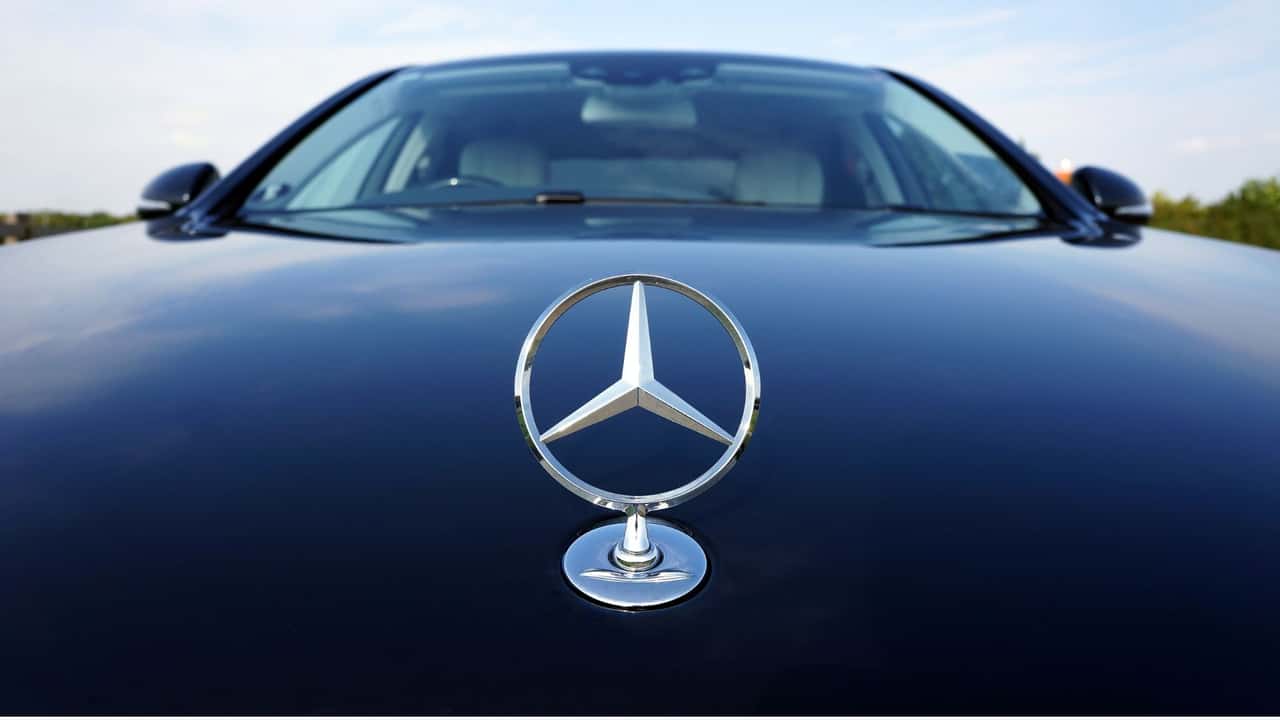

There's a good chance you've seen the Mercedes-Benz logo thousands of times without ever stopping to wonder why its star has three points.
The silver star is one of the most recognizable and coveted automotive badges in the world. It sits on everything from compact sedans to massive SUVs, luxury limousines, sports cars, vans, and trucks. But those three points aren't random.
The answer goes back more than a century to Gottlieb Daimler's vision for his company's engines and a symbol his sons later turned into one of the world's most famous automotive logos.
Motor1
Welcome to Motor101, our series dedicated to answering the internet's biggest automotive questions. From the origins of iconic designs to the engineering breakthroughs that shaped the world's greatest cars, we uncover the stories behind the vehicles you love.
The Three Points Represent Land, Sea, And Air
The simplest explanation is also the most interesting. The three points of the Mercedes star were intended to represent land, water, and air—a reference to Gottlieb Daimler's ambition for his engines to power vehicles across all three environments.
Mercedes-Benz says the symbol represented the use of Daimler engines in land vehicles, ships, and aircraft. That's an important distinction because the logo wasn't originally created simply to represent luxury cars.
Daimler's company was involved in engines for multiple forms of transportation, and the three-pointed star captured that much broader ambition. So when you see the three points today, you're looking at a symbol that predates the modern Mercedes-Benz brand itself.
The Star Actually Started With A Postcard
The story gets even more random. According to Mercedes-Benz, Gottlieb Daimler once marked his family home on an 1872 postcard depicting a view of the town of Deutz with a star during his time as technical director of Gasmotorenfabrik Deutz.
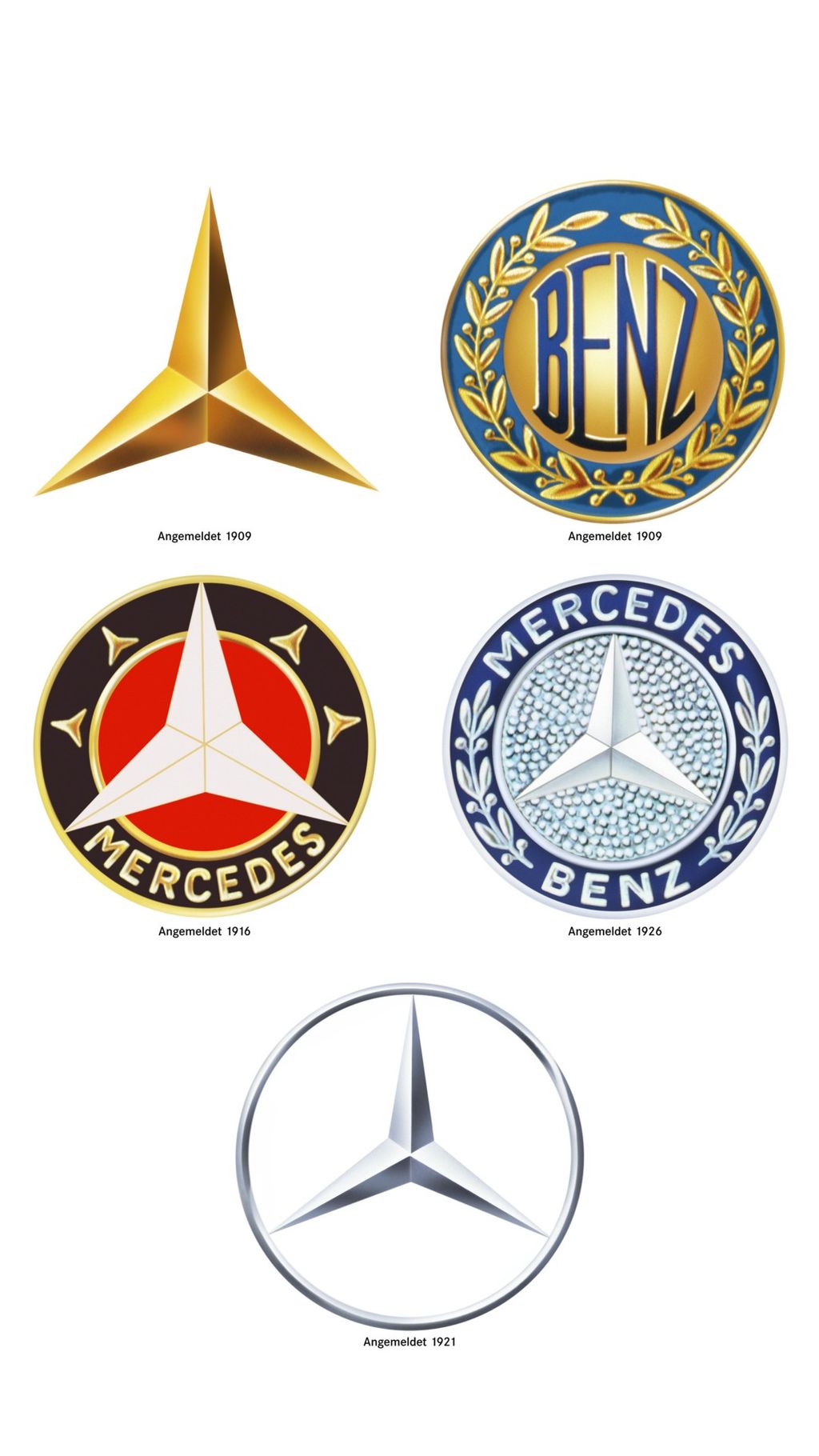
After his death in 1900, his sons Paul and Adolf Daimler adapted the idea into a trademark for their father's company. Daimler-Motoren-Gesellschaft applied for legal protection for the three-pointed star on June 24, 1909.
Interestingly, the company also registered a four-pointed star at roughly the same time. But the three-pointed version was the one that ultimately became associated with Mercedes vehicles. From 1910 onward, it appeared on Mercedes radiators.
The now familiar badge wasn't the result of a modern marketing brainstorm. It evolved from an idea connected to the company's founder more than 150 years ago.
It Didn't Always Have The Circle
If you picture the Mercedes-Benz logo in your head, you're probably imagining a three-pointed star sitting inside a circle. But you should know that the star originally appeared without the surrounding ring.
Early versions were used primarily on vehicle radiators, sometimes alongside the Mercedes name. Over time, Daimler developed different versions of the emblem, including a star surrounded by a ring. In 1921, the company registered a three-dimensional star inside a circle, specifically including its use as a radiator ornament.
The circular design eventually became a defining part of the Mercedes emblem. It also gave the badge a clean, compact shape that could work as a hood ornament, grille emblem, steering-wheel badge, wheel center cap, or flat graphic.
That versatility helped turn the star from an identifying mark on a radiator into a logo that could be recognized almost anywhere.

Then Mercedes-Benz Combined Two Logos
Here's the part many people don't realize: the Mercedes-Benz logo is actually a combination of two different companies' symbols.
Daimler-Motoren-Gesellschaft had the three-pointed star. Benz & Cie., meanwhile, had a laurel wreath surrounding the Benz name. The two companies were competitors before moving toward a merger.
In 1925, their symbols were combined in anticipation of the merger. The Mercedes star was placed inside the Benz laurel wreath, creating the emblem associated with Mercedes-Benz. The merger became effective in 1926.
That means the familiar badge isn't simply a star inside a circle. It's effectively a visual piece of corporate history, combining the identities of two pioneering German automakers.
Fans Have Some Surprisingly Detailed Mercedes Logo Theories
Mercedes fans on Reddit have spent plenty of time digging into the history behind the famous star, and some of the discussions go well beyond simply asking what the three points mean.
In an r/cars thread about why some Mercedes models have two emblems on the front, one commenter gave a detailed history of how the three-pointed star and Benz laurel wreath came together following the 1926 merger. The explanation also noted that the separate hood ornament and grille emblem were rooted in the brand's early history.
A separate discussion in r/mercedes_benz focused specifically on the star-in-a-circle emblem. One commenter traced the circular version to the early 1920s and explained how the star evolved from a radiator-related emblem into the familiar badge.
There's also a surprisingly popular Reddit post featuring a historic Mercedes-Benz advertising poster. Commenters connected the imagery of land vehicles and aircraft with Daimler's broader ambition of providing engines for land, sea, and air—the same idea represented by the three points of the star.
So while Reddit occasionally produces some wild theories about automotive logos, in this case the community discussion largely reinforces the historical explanation: the star isn't just a luxury-car badge. It's a surviving piece of Daimler and Benz history.
The Logo Has Barely Needed To Change
That's arguably the most impressive part of the story. Mercedes-Benz has refined the appearance of its emblem over the decades, but the three-pointed star has remained remarkably consistent.
The evolution can be boiled down to a few key moments:
- 1909: Daimler-Motoren-Gesellschaft registered the three-pointed star as a trademark.
- 1910: The star began appearing on Mercedes vehicles, including on radiators.
- 1921: Daimler registered a three-dimensional three-pointed star inside a circle.
- 1925: The Mercedes star was combined with Benz's laurel wreath ahead of the companies' merger.
- 1926: Daimler and Benz officially merged, creating Daimler-Benz AG and the Mercedes-Benz brand.
- Today: The three-pointed star remains one of the most recognizable automotive logos in the world.
The badge has also evolved with the cars themselves. Early Mercedes vehicles used prominent three-dimensional radiator ornaments, while modern vehicles can feature flatter versions integrated into grilles and other design elements.
Yet you can put an early Mercedes star next to a modern one and immediately understand that they're related. That's the power of a good logo: the design can evolve over time without losing its identity.
One Of The World's Most Iconic Automotive Logos
More than a century after the three-pointed star was first registered, it's hard to think of a better example of a logo becoming inseparable from a carmaker's identity.
The star has survived mergers, changing design trends, new technologies, and countless generations of Mercedes-Benz vehicles. It has appeared as a towering hood ornament, a grille badge, and a subtle emblem on modern cars, but its basic shape remains instantly recognizable.
And that's what makes its history so interesting. Those three points weren't designed simply to make a luxury car look distinctive. They represented Gottlieb Daimler's much bigger ambition for his engines to power transportation on land, water and in the air.
Today, most people see the star and immediately think Mercedes-Benz. That's the ultimate achievement for an automotive logo: you don't need the name to know what you're looking at.
More From Motor101
RECOMMENDED FOR YOU

Mercedes' New Black Series Will Use A Wild Flat-Plane V8
Woman Gets Told She Has To Pay $95 For A New Tire. Then She Bats Her Lashes: ‘I Gotta Try This'
Mercedes Won't Stop Building V8s, But A New C63 May Not Happen
Why AWD Isn't The Winter Advantage You Think It Is
Mercedes-AMG Owners Say The Logo On Their Seats Literally Burned Them
Woman Pulls Out Her GMC Yukon’s Floor Mats To Clean Them. It Makes Her Car Break Down: 'This Just Happened To Me'
Mercedes-AMG’s Secret Electric SUV Is Taking Shape