Europe Wants BYD Investigated Over Spying Fears. Company Responds
The Chinese automaker faces fresh scrutiny over concerns about connected-car data.
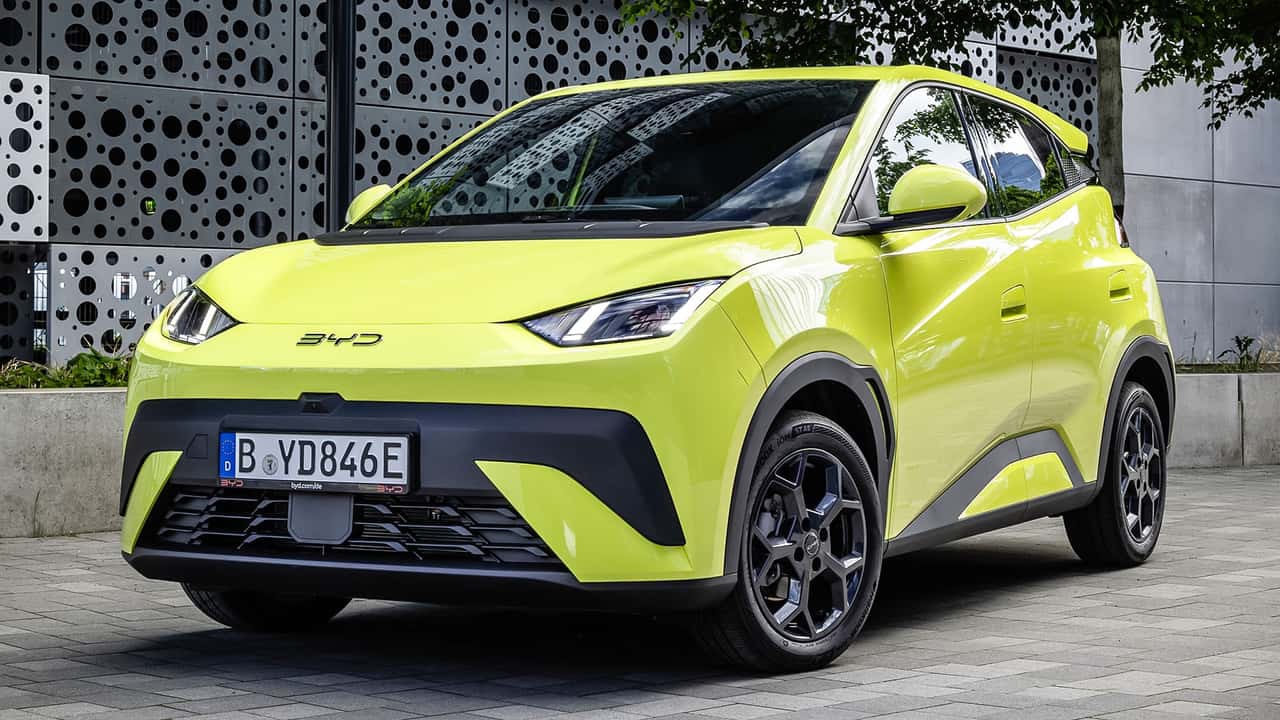

283,997. That's how many cars BYD sold in Europe through September, according to data published by the European Automobile Manufacturers' Association (ACEA). That's nearly 7,000 more than Ford, showing just how far the mighty Blue Oval has fallen amid the rapid rise of Chinese brands on the continent. Of course, axing the Fiesta, Focus, and Mondeo certainly didn't help, but I digress.
While BYD is enjoying a 2.7 percent market share through the first nine months of the year, its rapid expansion in Europe is attracting attention for other reasons. Fourteen members of the European Parliament are asking the European Commission to investigate whether the Chinese automaker poses a cybersecurity threat, potentially paving the way for restrictions on its vehicles.
French MEP François Kalfon is leading the initiative, arguing that connected cars from China could expose sensitive European infrastructure to security risks. He said: “Allowing connected vehicles from third countries to access sensitive European infrastructure therefore poses an unacceptable security risk.”

2026 BYD Dolphin Surf
Concerns About Chinese Cars Potentially Exposing Sensitive Data
In a written request submitted on November 4, the lawmakers asked the EU executive to have its cybersecurity agency assess BYD and consider designating the company a high-risk supplier.
Their concerns revolve around the cameras, GPS systems, microphones, and other sensors fitted to modern vehicles. While these technologies are increasingly commonplace across the automotive industry, the lawmakers worry that information collected by Chinese-made cars could potentially reach Chinese authorities.
As you can imagine, BYD isn't taking the accusations lightly. The automaker insists that China cannot access information collected by its European vehicles, whether it is stored onboard or in the cloud. It also emphasizes that customers retain control over their personal information.
In a statement to Reuters, the company said: "BYD Europe does not make such data available to BYD entities or third parties in China."
BYD Ti 7





Potential Restrictions Could Go Beyond Private Car Sales
Nevertheless, European lawmakers are asking Brussels whether Chinese vehicles should face restrictions when accessing strategic infrastructure with both civilian and military applications. They also want to know whether BYD should be excluded from public procurement projects.
For now, none of this amounts to an EU-wide ban on BYD vehicles, and private owners have no reason to expect immediate changes. Still, the investigation request highlights a growing dilemma for Europe: Chinese automakers are becoming increasingly important players in its automotive market, but their rapid expansion is also raising questions that go well beyond pricing, competition, and trade tariffs.
Chinese Automakers Now Hold An 11.1% Share Of Europe's Market
But BYD isn't the only Chinese automaker gaining ground in Europe. SAIC Motor isn't far behind, with 272,251 cars sold through September, giving it a 2.6 percent market share. Geely Group is further ahead, with 343,875 units and a 3.3 percent share, although that figure also includes sales from Volvo, Polestar, Smart, Zeekr, and Lotus. Meanwhile, Chery and its Jaecoo, Jetour, and Omoda brands registered 260,650 cars during the first nine months of 2026, accounting for another 2.5 percent of the market.
These four Chinese automotive groups account for approximately 11.1 percent of Europe's car market, a percentage that seemed unthinkable a decade ago. If this trajectory continues, legacy automakers could find themselves in even deeper trouble than they're already in.
More From BYD:
The US Has Already Drawn a Hard Line Against Chinese-Linked Automakers
The United States has already taken a much tougher stance toward Chinese-linked automakers, with Polestar becoming the latest casualty. Although headquartered in Sweden, the electric-car brand is majority-owned by China's Geely Holding. In June, the US Department of Commerce denied Polestar authorization to sell vehicles from the 2027 model year onward, effectively shutting it out of the American new-car market.
The decision followed the Biden administration's Connected Vehicle Rule, finalized in January 2025, which restricts vehicles incorporating certain software and hardware linked to China or Russia over national security concerns.
RECOMMENDED FOR YOU
BMW Is Reportedly Cutting 1,800 Jobs In China
Jaguar Type 01 Gets The Star Treatment In Stunning Florence Pugh Photo Shoot
Mercedes Has 7 New Models Coming In 2027. Here's All Of Them
Older Bentley Models Get Apple CarPlay And Android Auto Thanks To New Infotainment Upgrade
Audi Could Get Tariff Relief Thanks To Its New Georgia Plant
Mercedes Chairman Says Gas And Diesel Engines Still Have 10–15 Years Left
Aston Martin Can't Stop Losing Money