Polestar's New Concept Looks Fantastic. Too Bad It Won't Reach Production
At least some of its design elements will make their way into production cars.

Polestar is about to call time in the United States because it fails to comply with the new US Connected Vehicles Rule. The Geely-owned brand's China-linked technology is prompting a de facto ban starting with the 2027 model year. Despite this setback, Polestar sees a bright future ahead, especially since the US accounted for only a fraction of its global sales anyway.
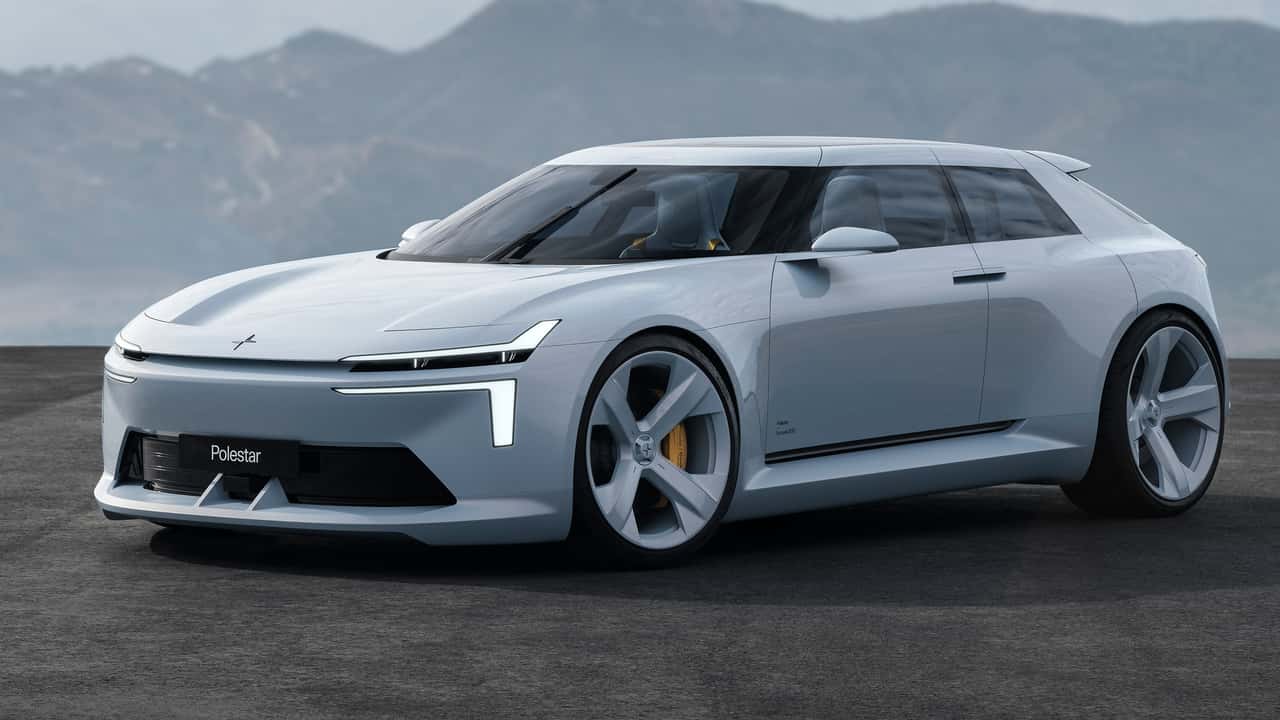
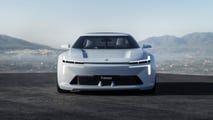
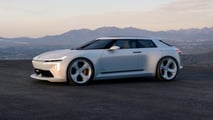
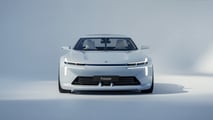
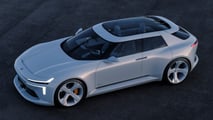
The Formula 2030 offers a glimpse of what's ahead in design, and it's stunning from just about every angle. Polestar has a healthy habit of designing attractive concepts, and this one is no exception. It's a futuristic sporty hatch with an aggressive stance, thanks to its widebody treatment, low-slung profile, and massive 22-inch center-lock wheels.
The profile makes us think of a Volvo C30 designed in the 2030s, but with a pillarless layout and an extra set of rear-hinged doors that make getting in and out a breeze. Look at the concept head-on, and you'll think it's a sports car rather than a practical four-seater with two trunks. At the back, Polestar even describes the concept as having a "UFO-esque rear," but what really caught our attention is the new taillight design, which finally ditches the ubiquitous light bar.

Polestar Formula 2030 concept
Low, Wide, And Full of Interesting Details
Measuring 184.3 inches (4,680 millimeters) long, 79.6 inches (2,021 mm) wide, and just 53.1 inches (1,350 mm) tall, the concept is bigger than the Polestar 2 but even lower than the new Polestar 4. Its 109.4-inch (2,780 mm) wheelbase is generous for a vehicle of this size, made possible by its dedicated electric vehicle platform.
Other interesting details include a single windshield wiper that rests vertically like those on race cars, a nearly all-glass roof that ends in a large spoiler, and a LiDAR sensor that deploys only when the autonomous driving system is activated. The wraparound windshield is echoed at the rear, creating a generous greenhouse despite the concept's low-slung proportions.
The Interior Has Eight Customizable Physical Controls
The interior also offers some interesting ideas. Formula 2030 features four individual seats with inflatable bolsters and cushions that adapt to each occupant. The cockpit is heavily driver-focused, with a 20-inch curved display mounted directly on the steering column and a 12.2-inch central touchscreen integrated into the center tunnel.
Thankfully, Polestar isn't going all-in on touchscreens. The concept features eight customizable physical controls below the central display, which can be configured with different types of switches and rotary controllers. That's a welcome change of pace in an industry seemingly determined to replace every button with a touchscreen.
Polestar Formula 2030 concept


The cabin also adapts to the selected driving mode. In Autonomous mode, the central display rises from the dashboard while the steering wheel and seat move apart. Switch to Performance mode, and the screen sinks into the center console as the steering wheel and driver's display move closer to the driver.
As for what makes this thing move, Polestar hasn't provided any powertrain specifications. We know it's an electric concept, but the company hasn't disclosed its output, battery capacity, or performance figures.
That's a shame, considering the aggressive styling and race-inspired Öhlins dampers suggest there's plenty of performance potential. There's even a dedicated space in the front trunk for race helmets and a fire extinguisher, framed by a gold strut brace to stiffen the chassis.
It's More Than Just A Design Exercise
The good news is that Formula 2030 isn't just a styling exercise with no relevance to future production models. Polestar has confirmed that several of its design elements will carry over to the next-generation Polestar 2 and the upcoming Polestar 7. The former is due in 2027, while the compact electric SUV is due in 2028.
So while this particular five-door sports car is unlikely to make it into production, some of its best ideas won't remain trapped in a design studio. And if future production cars look anything like this concept, we have good reason to be excited.
Catch Up With Polestar:
Source: Polestar
RECOMMENDED FOR YOU
Polestar 2026 US Inventory Is Almost Sold Out As Ban Nears
Honda’s New Ohio Plant Will Reportedly Build Next-Gen Acura MDX And Two Flagship SUVs
Ford’s 1,200-HP Bronco Is Built For Arctic Rescue
Ford: Mustang Mach-E Batteries Age Better Than Expected
Jeep's New Wrangler Scrambler SRT Is A V8-Powered Off-Road Beast
This Alpina Volkswagen Beetle Render Is Weird In All The Right Ways
Nissan Built Three Awesome Off-Road Rigs For SEMA