Why Good Design Still Matters For Affordable Sports Cars
From the MG Cyberster to legendary coupes of the past, we explore what the next generation of sports cars could look like.
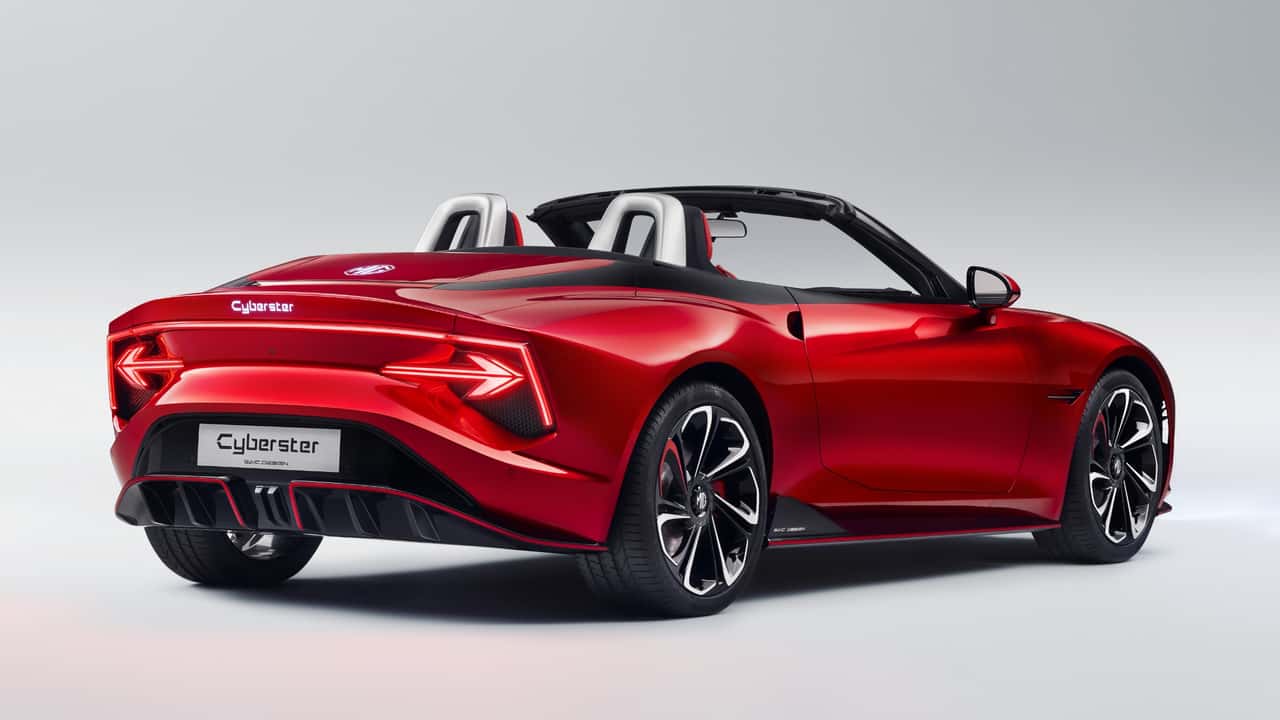

Sports cars haven't disappeared; for many buyers, they're simply harder to get their hands on.
At one end of the market, you have the premium brands—Ferrari, Lamborghini, McLaren, Porsche, etc. There are also high-performance models from Japan and a new wave of Chinese electric supercars. At the other end of the market, mainstream automakers have largely shifted their focus to SUVs and crossovers, leaving a noticeable gap once occupied by affordable coupes and roadsters.
That's where a car like the MG Cyberster stands out. It aims to bring back that formula with an electric sports car that's dramatic to look at without venturing into supercar territory.
A Sports Car's Shape Isn't Just for Looks
You can usually spot a sports car the moment you see it: a long, low hood, a compact cabin, a sleek roofline, and proportions that make it look planted. Those design cues aren't just for show—they're rooted in engineering. They improve stability, aerodynamics, and ultimately make the car more rewarding to drive.
The Cyberster checks many of those boxes. It's neither small nor lightweight, but it packages the weight of an EV into a low-slung, open-top roadster that still looks genuinely desirable. And with the Cyber GTS Concept revealed at Goodwood in 2026, MG has already hinted at what a coupe version could look like.
That's where design really matters. It's not enough to have 510 horsepower—you also need a shape that makes those numbers feel believable.
A Sports Car Is Designed To Drive Better
The best way to think about a coupe or roadster isn't as a less practical car, but as one that's built around a different philosophy. Everything is designed with driving in mind: a lower ride height, a lower center of gravity, better aerodynamics, and more attention paid to the steering, brakes, suspension, and driving position.
That's the opposite of the SUV approach. Even performance SUVs need huge power figures and oversized tires to overcome their extra weight and larger frontal area. A sports car, by contrast, relies on its shape. It's designed to be lighter on its feet, more efficient, more precise, and more engaging to drive. In that sense, the styling isn't just about looking good—it's a direct result of the car's purpose.

Fiat 128 Sport
Lancia Beta Coupe
When The Sports Car Becomes Suspect
During times of economic uncertainty, sports cars are often the first vehicles to fall out of favor. After the oil crisis of the 1970s, many automakers shifted toward designs that were still stylish but more practical.
At Fiat, the 128 Sport Coupe was replaced by the more versatile 128 3P, while Lancia expanded the Beta lineup with the more practical Beta HPE alongside the Beta Coupe. That shift was reflected in the design as much as the engineering.
Rear ends grew longer, hatchbacks added everyday usability, and sporty silhouettes evolved into shapes that felt easier to justify. The Lancia Beta Montecarlo, originally developed from a Pininfarina project for Fiat, remained the purist's choice. In an era defined by fuel shortages and austerity, it was a more daring proposition, though one that was easier to accept wearing a Lancia badge.
Opel Tigra A
Fiat Coupe
Europe Made Them Normal
The 1990s and early 2000s brought a new wave of affordable coupes to Europe. Cars like the Opel Tigra and Ford Puma took the underpinnings of everyday hatchbacks and transformed them into something lower, sportier, and far more distinctive. They weren't supercars, but they offered unique styling, sharper handling, and a driving experience that felt more special than the cars they were based on.
Larger models such as the Opel Calibra, Ford Cougar, and Fiat Coupe followed the same formula, while Alfa Romeo never abandoned the coupe altogether. The brand had long understood the value of a sporty two-door. Back in the 1950s, the Giulietta Sprint arrived before the sedan, proving that an eye-catching coupe could do more than sell cars—it could reshape a brand's image and redefine its place in the market.
Even Something Small Can Be Sporty
Japan's kei cars are a great example of how design can balance strict regulations with creative freedom. Built within incredibly tight size and engine limits, the segment produced ultra-practical, boxy city cars that made the most of every inch of space. But it also gave us tiny sports cars like the Suzuki Cappuccino, Honda Beat, Autozam AZ-1, and Daihatsu Copen.
The Copen even made its way to Europe, proving that compact dimensions don't have to lead to a single design formula. The same engineering constraints can produce either a practical city car or a fun little roadster. It all depends on what the designers choose to prioritize—and the shape of the car reflects that choice.
Daihatsu Copen
Autozam AZ-1
What Will Coupes Of The Future Look Like?
The future of the everyday sports car may not be an electric hypercar chasing lap records. Instead, it could be something much simpler: low, aerodynamic coupes and roadsters with modest battery packs, wheels pushed to the corners, snug cabins, and clean, uncluttered styling.
The new Honda Prelude points to one possible future. Reviving one of the brand's most iconic nameplates, it embraces a hybrid powertrain and focuses on balance rather than outright performance. Meanwhile, the Toyota GR86 and Subaru BRZ remain reminders of what many markets, especially Europe, are slowly losing: lightweight, attainable sports cars designed around the joy of driving rather than luxury or image.
Honda Prelude
Toyota GR86
A Future Of Driving, Not Just Transportation
There's one vision of the future where cars become little more than autonomous pods, moving in neat lines like individual railcars. For many trips, that future makes perfect sense. But it doesn't capture everything the automobile can be.
The alternative is a more human-centered approach: efficient cars—perhaps electric—that are compact, low, and rewarding to drive. Cars built for people who still enjoy being behind the wheel, without equating driving pleasure with outrageous speed or treating the car like an extension of a smartphone. Not exclusive supercars for the wealthy, but smart, attainable sports cars that preserve the sense of freedom driving has always promised.
More Sports Cars
Gallery: MG Cyberster at Goodwood Festival of Speed 2024


RECOMMENDED FOR YOU
Who Owns Who? Every Major Car Brand And Its Parent Company
Hyundai Had Another Record Sales Month Thanks To Hybrids
RIP: These Cars Won't Make It To 2027
Genesis' New Flagship SUV Could Show Up This Month
The Toyota Tacoma Has 8 Trims. Which One Should You Buy?
Man Returns Brand-New Acura To The Dealership. Then The Salesman Gaslights Him: 'That's Bare Metal'
Will Audi Finally Make A G-Class Rival? Here's Everything We Know