Ferrari's New 'Manual' Isn't What You Think. Here's How It Works
The 'Manuale By-Wire' system translates gear lever and clutch inputs into electronic signals.
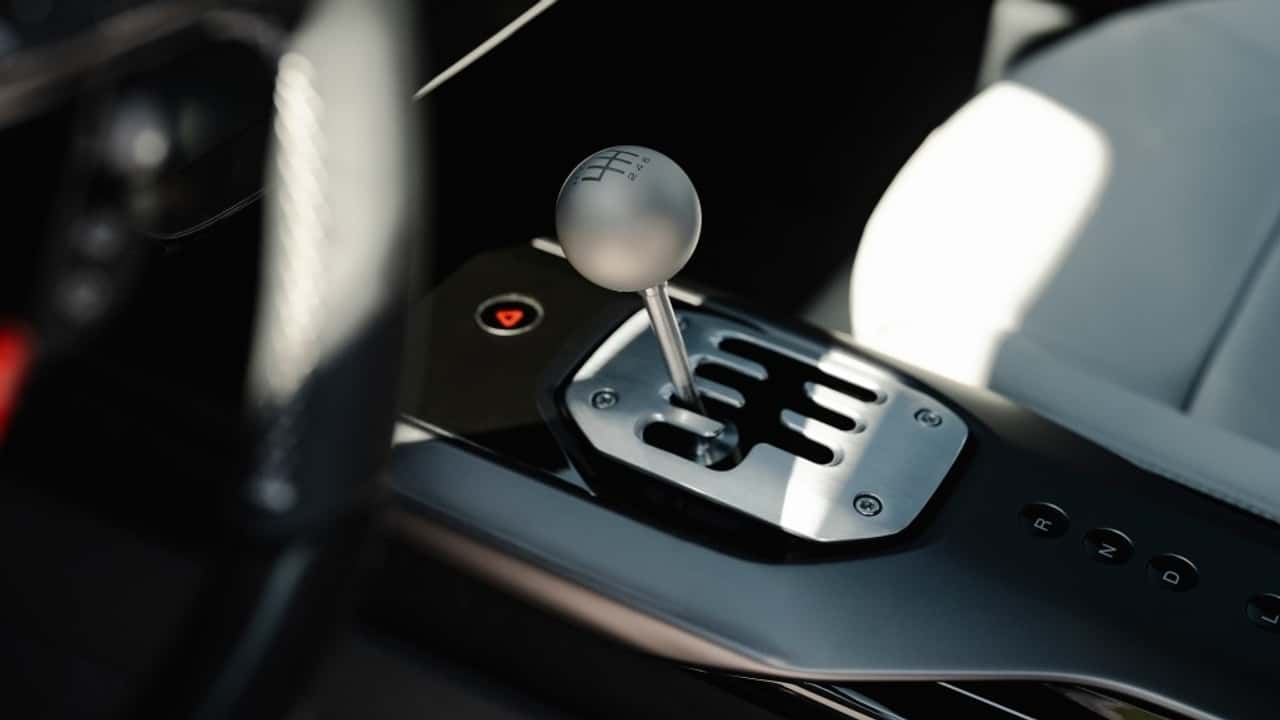

Let’s get one thing out of the way: the new Ferrari 12Cilindri Manuale doesn’t really have a manual transmission. Instead, it uses something far more complex—and potentially even more interesting.
Called "Manuale By-Wire," the system was developed entirely in Maranello. There’s a shift lever and a clutch pedal, and you operate them just like you would in any manual car. The difference is that neither is mechanically connected to the transmission. Every movement is converted into an electronic signal, which then commands the same eight-speed dual-clutch transmission (DCT) found in the standard 12Cilindri.
Mechanically, the powertrain is unchanged. The naturally aspirated 6.5-liter V12 still makes 819 horsepower and revs to a screaming 9,500 rpm. What Ferrari reinvented is everything between the driver's hands and feet and the gearbox. It's a fascinating piece of engineering.
This story originally appeared on Motor1 Italy

Ferrari 12Cilindri Manuale
The Shifter: Designed To Feel Mechanical
The shift assembly weighs less than 7.7 pounds, but it's packed with engineering you never see. At its core is a block of high-strength steel machined from solid billet to incredibly tight tolerances, ensuring the lever develops virtually no play even after years of use.
The mechanism uses two separate rotational movements: one selects the gear, while the other engages it. A system of eccentric rollers automatically returns the lever to the center position. But the real magic happens at the point of engagement.
A specially profiled rotating drum works with a preloaded mechanism to build resistance before suddenly releasing it. That release creates the satisfying "click" you feel through the shift knob, recreating the tactile sensation of a traditional manual gearbox using electronics instead of mechanical linkages. Ferrari even surface-treated the drum to ensure that feel remains consistent over the life of the car.
Two Hall-effect sensors continuously monitor the lever's position on both axes using magnetic fields rather than physical contact. Meanwhile, an electromagnetic solenoid acts as a lockout, physically preventing the lever from completing a shift if the transmission won't allow it.
Ferrari even engineered the sound of the mechanism itself so the acoustic feedback adds to the experience. Reverse is engaged by pushing the lever down and selecting the upper-left position of the shift gate, just like classic Ferraris.
The Clutch: What Happens When You Get It Wrong?
The pedal box is completely new to accommodate a third pedal. Like the shifter, the clutch is fully by-wire. An angular position sensor constantly measures pedal travel and translates the driver's input into hydraulic commands that operate the DCT's clutch packs.
The challenge was making an electronic clutch pedal feel like a real one.
Ferrari solved that issue with a passive mechanical system consisting of a preloaded spring, a cam, and a roller. Together, they recreate the resistance curve of a conventional clutch, building effort as you release the pedal before dropping away at the engagement point.
Because that resistance is generated mechanically rather than electronically, the pedal responds instantly, while the sensors synchronize everything with the engine and transmission.
From behind the wheel, it behaves much like a traditional manual. Nail your timing and shifts are smooth. Miss it, and you'll feel a jolt—or even stall the engine.
Manual mode controls the first six forward gears plus reverse, and it can only be activated using the clutch pedal. There are no steering-wheel paddle shifters, marking the first time in many years a Ferrari has done away with them entirely.
Switch to automatic mode, and the DCT handles the shifting on its own. Even then, you can preselect gears with the lever, and the digital instrument cluster previews how the shift will affect engine speed before it happens.
You can still perform a proper heel-and-toe downshift, matching revs by blending the throttle and brake. And if you abuse the clutch on launch, you can stall the engine. Those are experiences Ferrari owners haven't had in a very long time.
In other words, Maranello may have pulled off something remarkable. Whether it truly captures the magic of a traditional manual gearbox is something we'll only know once we get behind the wheel.
The Latest From Ferrari
RECOMMENDED FOR YOU
Ferrari CZ26 One-Off Turns SF90 Into A Radical Two-Box Supercar
Ford's Hypercar Finally Hits The Track, And It Sounds Amazing
Ferrari Files 'LC67' Trademark. Is Another Special Model Coming?
Toyota's Plug-In Hybrid Sales Are Exploding
Hot Wheels’ Ferrari F40 RLC Drop Lands August 18 With Tight Limits
I Drove Two Of Mercedes' Most Extreme Cars, 52 Years Apart: 300 SLS Vs SLR Stirling Moss
1958 Ferrari Reappears With A Shocking $5 Million Estimate