Home
News
Classics
Suzuki Kizashi (2009-2015): Do you remember?
When the Japanese launched an unsuccessful assault on the middle class
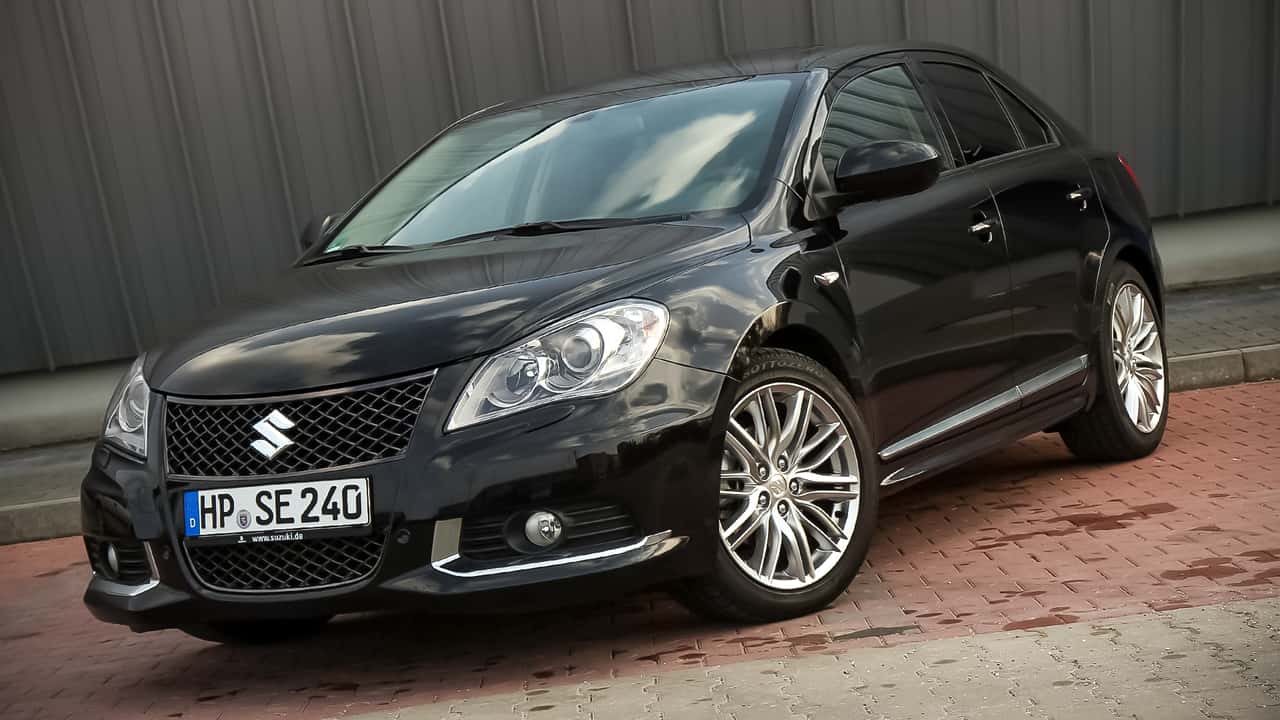
Photo by: Motor1.com

By: Roland Hildebrandt
Published by: Brian Potter
Jan 26, 2025 at 4:01am ET
Add Motor1.com as a preferred source in Google
- (https://twitter.com/intent/tweet?url=https%3A%2F%2Fwww.motor1.com%2Fnews%2F748558%2Fsuzuki-kizashi-2009-retrospective%2F&text=Suzuki%20Kizashi%20%282009-2015%29%3A%20Do%20you%20remember%3F&via=motor1com)
- copy
Share
Comment
You know them, and somehow you don't. We are not talking about our own neighbours, but about cars that have remained so obscure that only die-hard fans know about them. Such models were not necessarily flops, but they flew under the radar of the average car buyer.
From time to time, we bring these classic and vintage cars back from the brink of oblivion in our "Do you remember?" series.
Gallery: Suzuki Kizashi (2009-2016)

3
Source: Suzuki
In a way, this car is Suzuki's VW Phaeton which is an attack on a car segment in which the brand does not really belong. The name simply does not sound good enough, and you quickly realise that the attempt is doomed to fail. Meet the Suzuki Kizashi.
Kizashi is a Japanese word that means "something big is coming", "omen", "sign" or "warning". The production version was preceded by a total of three different concept vehicles, of which the first two in particular have little more in common with the production vehicle than the name. Only the third study, presented at the New York motor show at the beginning of 2008, was a notchback saloon, but with a significantly different design.
The series Kizashi was presented in the United States on 30 July 2009. The European market launch took place at the beginning of 2010, while in Germany it was in September 2010. Indirectly, the Chevrolet Evanda offered in the USA as the Suzuki Verona can be seen as the predecessor model of the Kizashi.
Suzuki Kizashi (2009-2016)
Photo by: Suzuki
The Kizashi was available in two versions: As a 2.4 4x2 MT with front-wheel drive and manual transmission and as a 2.4 4x4 CVT with an all-wheel drive system derived from the Suzuki SX4 and a continuously variable transmission. Both versions were equipped with a 2.4-litre four-cylinder petrol engine with an output of 178 PS.
And this was the crux of the matter as there was only this one engine without a turbo, and there was no diesel at all, which was still important for Europe at the time, nor was there an estate version. At least the price and standard equipment were right.
The only optional extra on the basic version of the car, which cost €26,900, was a metallic paint finish apart from the optional drive. All other features, including a glass sunroof and heated seats, were standard.
Suzuki Kizashi (2009-2016)
Photo by: Suzuki
We tested the 4.65 metre long Kizashi in October 2010 and asked ourselves "An alternative for conservative rebels?". We liked the look, as well as the 461-litre boot. However, the space on offer was rather mediocre with the well-tuned chassis scoring plus points. And of course the excellent price-performance ratio.
We drove it with front-wheel drive and a six-speed manual gearbox. Quote: "It quickly becomes apparent that the large petrol engine prefers a quiet pace, with a speed between 75 and 80 mph being ideal. In this range, the engine runs smoothly, with only a slight rumbling undertone reaching the ears of the occupants. At higher speeds, the engine's weakness becomes apparent: above 100 mph, acceleration is extremely sluggish, even though you are fully on the throttle."
And further: "Overall, the large petrol engine is not lame, but it lacks the punch of modern turbo engines. A look at the data clarifies this, because the maximum torque of 230 Newton metres is only available at 4,000 revs. As a result, you sometimes have to "squeeze" the engine, with corresponding consequences for noise levels and fuel consumption. On our 112-miles stage, we achieved an average of 10.7 litres, which is not quite up to date, despite long 75 mph stretches on the motorway. Suzuki itself states the average consumption as 7.9 litres. The precise six-speed gearstick is convincing."
Suzuki Kizashi (2009-2016)
Photo by: Motor1.com
At the time, the manufacturer stated: "Suzuki is keeping its sales forecast for the Kizashi on the carpet and is expecting a good 1,000 vehicles for 2011, although it could of course be more." But even these figures turned out to be too optimistic. Sales of the Kizashi in Germany were discontinued in July 2015. Between 2010 and 2015, a total of 1,887 Kizashi were newly registered in Germany. 788 of these had four-wheel drive. The best year in the USA was 2011 with around 7,000 units.
Suzuki only sold 3,379 vehicles in Japan between 2009 and 2015. The Kizashi was not a success in its home country - its large engine (more than 2 litres) and overall width meant it was subject to high additional taxes, while sales were also hampered by the fact that the Suzuki brand is associated with kei cars rather than large saloons in Japan.
What do you think?
View
Comments
Of the 3,379 vehicles sold, a quarter were purchased by the National Police Agency, meaning that on average only around 30 were sold to the public each month throughout its time on the Japanese market.
Do you remember?
Mazda 1000/1300 (1974-1977): Do you remember?
Seat 133 (1974-1981): Do you remember?
Alfa Romeo 90 (1984-87): Do you remember?
Seat Toledo III (2004-2009): Do you remember?
Back in December 2013, Suzuki announced that the Kizashi would be phased out in global markets and would not receive a successor. Despite a good technical record, the car had suffered from the after-effects of the global economic crisis, but also from Suzuki's withdrawal from the American and Canadian markets in 2013 and 2014 respectively. In December 2015, production of the Kizashi was discontinued at the Sagara plant in Japan.
We want your opinion!
What would you like to see on Motor1.com?
Take our 3 minute survey.
- The Motor1.com Team
Share this Story
- (https://twitter.com/intent/tweet?url=https%3A%2F%2Fwww.motor1.com%2Fnews%2F748558%2Fsuzuki-kizashi-2009-retrospective%2F&text=Suzuki%20Kizashi%20%282009-2015%29%3A%20Do%20you%20remember%3F&via=motor1com)
- copy
GO TO COMMENTS
(
)
Got a tip for us? Email: tips@motor1.com
View all comments ( )
Popular
Bugatti Restores One-Off Veyron With A Mirror-Like Aluminum Body
BMW Kept This Hatchback A Secret For Decades
Skoda Wants You To 3D Print Pieces Of Your Car At Home
The Gas BMW M3 Isn't Dead: Next-Gen Prototype Roars
latest articles
- The Ford Ranger Is Getting A Bigger V6 For 2027: Report Oct 20 - Rumors -
- BMW Already Has A Deal On The New i3. But It's Not Cheap Oct 20 - Pricing -
- Remember The Ford Flex? This Weird SUV Is Now A Great Used Buy Oct 20 - Why Buy? -
- Mercedes Isn't Sold On Extended-Range EVs: 'Would You Really Switch?' Oct 20 - Interview -
- Cadillac Driver Is Fed Up With Auto Stop. Then She Buys A $9 Item On Amazon To Disable It Oct 20 - Trending -
- Bugatti Restores One-Off Veyron With A Mirror-Like Aluminum Body Oct 20 - Supercars -
- Lexus NX Goes Hybrid Only For 2027 Oct 20 - Official -
RECOMMENDED FOR YOU
You Can Buy This Wild 1967 Alfa Romeo Giulia Built Like A Le Mans Racer
The Ford Ranger Is Getting A Bigger V6 For 2027: Report
A Hidden Corvette Collection Was Found In A Texas Trailer Park
BMW Already Has A Deal On The New i3. But It's Not Cheap
The Original Mercedes A-Class Is Now Old Enough To Be A Classic
Remember The Ford Flex? This Weird SUV Is Now A Great Used Buy
The First Maserati 5000 GT Frua Buried For 30 Years Resurfaces