Why Do Lamborghini Doors Open Up? Here's How It Started
The iconic scissor doors have a surprisingly practical origin—and they've helped define Lamborghini for decades.
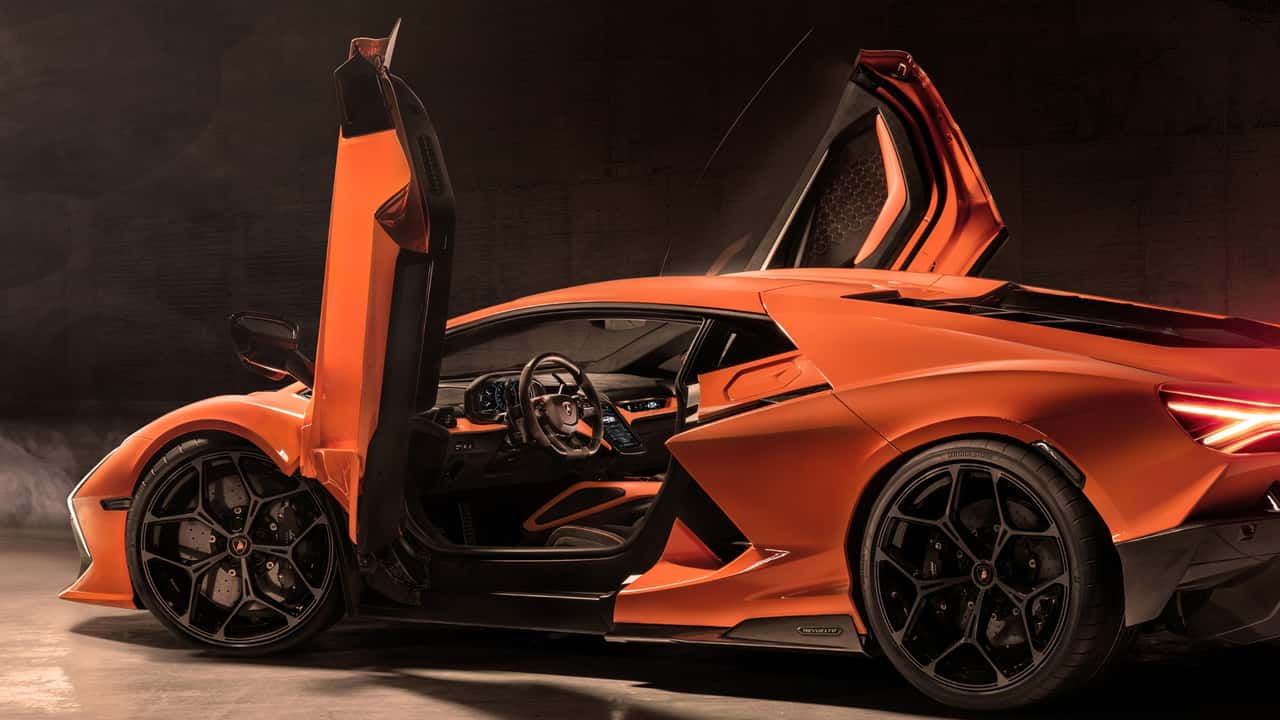

There are few automotive sights more instantly recognizable than a V12 Lamborghini supercar with its doors pointed toward the sky. The dramatic look and motion of scissor doors have become as much a part of the brand’s identity as screaming V10s (though not simultaneously), sharp-edged bodywork, and outrageous paint colors.
But why do Lamborghini doors open up in the first place? The answer is a little more interesting than simply, "Because it looks cool."
THE BREAKDOWN
Welcome to Motor101, our series dedicated to answering the internet's biggest automotive questions. From the origins of iconic designs to the engineering breakthroughs that shaped the world's greatest cars, we uncover the stories behind the vehicles you love.
It All Started With the Countach
Lamborghini’s famous scissor doors were introduced on the Countach, which debuted in 1974 as the world's first production car with this type of door. Designed by the legendary Marcelo Gandini during his Bertone years, the Countach helped lay out the dramatic visual language that still defines the Italian supercar maker to this day.
The Countach was an exceptionally low car, and that presented a practical problem. Its wedge-shaped body and wide stance left little room for a conventional door to swing outward. The solution was an unusual hinge arrangement that allowed the doors to rotate on a fixed front hinge before lifting straight up.
That design also happened to make it easier for a driver to get out in tight spaces. On a normal car, an open door can require considerable clearance beside the vehicle, but with a scissor door, much of that movement happens above the car.
There was another important benefit: visibility. The Countach was famously difficult to see out of, particularly toward the rear.
Lamborghini eventually developed a technique that became part of the car's lore: drivers could open the door, sit on its sill, and look over the roof while reversing. It wasn't exactly a modern parking-assistance system, but it was certainly memorable.
Why the Countach's scissor doors mattered:
- They solved a packaging problem: The Countach's wide and low, wedge-shaped body left limited space for conventional doors.
- They opened vertically: The doors rotated on a fixed front hinge and lifted upward, creating the signature scissor motion.
- They worked well in tight spaces: Much of the door's movement happens above the car rather than far out to the side.
- They improved rearward visibility: When reversing, drivers could sit on the door sill and look over the roof—a quirky but famously useful Countach technique.
So, Are Scissor Doors Actually Better?
Not necessarily.
They're more complicated than conventional doors, and the mechanism adds engineering complexity. Getting the hinges, gas struts, door structure, seals, and bodywork to work together requires careful design and precise assembly.
They're also not automatically more convenient. A conventional door can be simpler and faster to operate, while a scissor door requires a very different motion—and extra care in low garages.
But Lamborghini wasn't trying to make the world's most practical door; it was trying to make a supercar that looked unlike anything else on the road. And that worked.
The Doors Became Part of Lamborghini's Identity
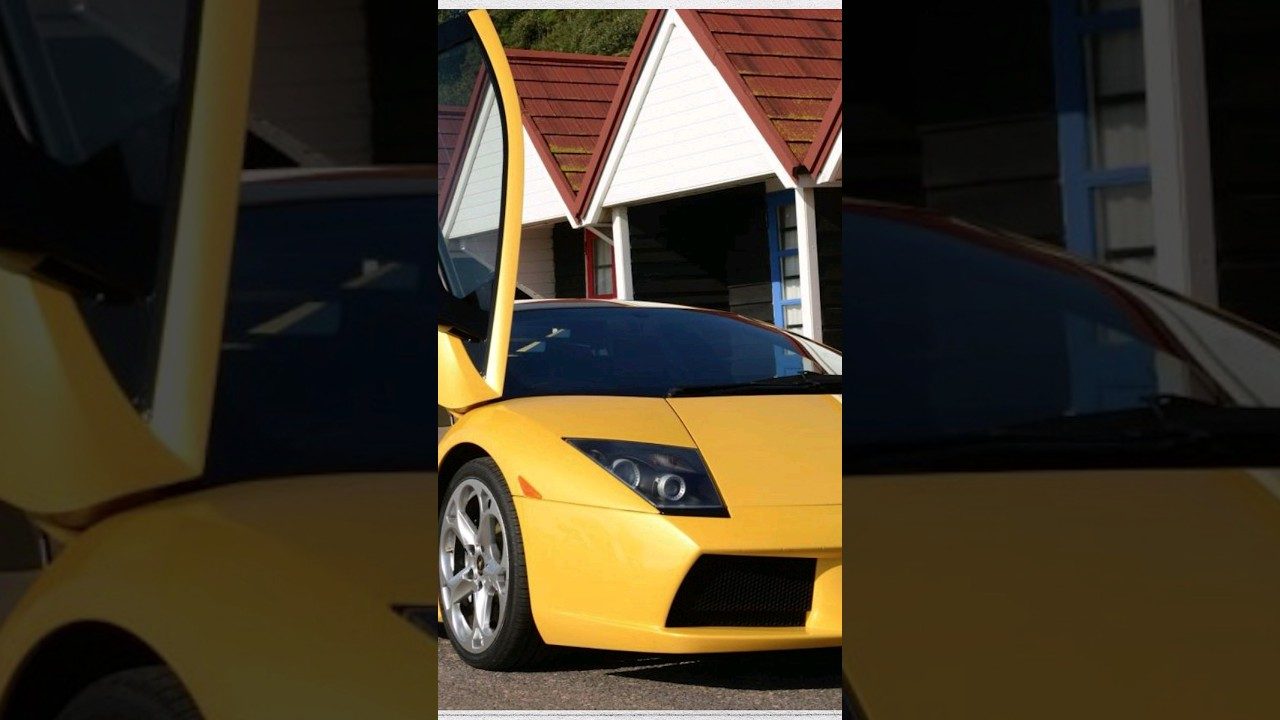
After the Countach, the upward-opening doors became strongly associated with Lamborghini's top-dog V12 models. The Diablo and Murciélago continued the tradition, turning the door itself into a visual signature.
That's important because there's a lot more to supercars than just specifications. A Lamborghini needs to feel special before the engine even starts, and the doors help accomplish that.
Park a Lamborghini next to a row of regular cars, and opening the doors creates an instant event. Instead of simply swinging open, they rise dramatically above the roofline, adding to the car's menacing look. It's theater built directly into the hardware.
Not Every Lamborghini Has Them
There's an important catch: not every Lamborghini uses scissor doors. The Huracán, for example, used conventional outward-opening doors, much like its successor, the Temerario. The Urus SUV does too.
That's because the scissor-door mechanism isn't a requirement for building a Lamborghini. It's a design choice that makes the most sense on certain low-slung, exotic models. Traditionally, scissor doors have been reserved for Lamborghini’s flagship V12 supercars and exclusive, ultra-rare editions.
Throughout the years, the scissor door has remained a staple of Lambo supercars. The limited-production Revuelto plug-in hybrid supercar, for example, continues the brand's tradition of making entry into a V12 flagship feel like an occasion.
Lamborghini Fans Still Debate the Doors
Lamborghini's scissor doors aren't just a styling gimmick; they're also a surprisingly good source of debate among owners and enthusiasts. Reddit discussions show that fans have very different opinions about why the doors exist and whether every Lamborghini should have them.
One recurring point is that the doors aren't necessarily easier to use. Owners say the low seating position is a bigger challenge than the door mechanism itself, particularly for taller drivers. At the same time, the doors can be helpful when another vehicle is parked close alongside because they don't require the same amount of space to swing outward.
There's also plenty of debate over why Lamborghini doesn't put scissor doors on every model. In one r/lamborghini discussion, commenters argued that keeping the feature primarily on the flagship V12 models helps maintain a distinction between the cars. Another commenter said the decision is partly practical, pointing out that the larger doors on the V12 cars were a reason for the vertical-opening design.

Why Keep Them Today?
Modern engineering means Lamborghini doesn't need scissor doors simply because its cars are low. The bigger reason is heritage.
The doors connect today's Lamborghinis with the Countach, one of the cars that helped define the modern supercar and prevented Lamborghini from going bankrupt in the 1970s.
They are instantly recognizable, endlessly photographed, and unmistakably Lamborghini. In other words, they're functional, but they're also branding you can physically see. That's the clever part, as a Lamborghini's doors don't just open. They announce the car.
And when a pair of doors rises into the air outside a restaurant, hotel, or gas station, there's very little chance anyone will mistake the car for something ordinary—including a lesser Lamborghini model.
More From Motor101
RECOMMENDED FOR YOU

The Screenification Of Cars Is Creating A New Problem: Sweeping Recalls
Woman Buys Chevy Cruze On Facebook Marketplace. Then She Tries To Transfer The Title: ‘They Messed Around…So I Wouldn’t Find Out'
Lamborghini Revuelto SV Is Setting Records Even Before Its Debut (Update)
Revealed: This Lamborghini Diablo Restomod Has No Roof, A V12, And A Manual
Who Owns Who? Every Major Car Brand And Its Parent Company
Maserati Could Bring Back The V8, Finally
Lamborghini Honors A Legendary Supercar With Some Fancy Paint