Mid-Size Trucks Are Booming. Now Everyone Wants In
Rising prices are pushing buyers toward smaller pickups, and automakers from Hyundai to Ram are eager to capitalize.
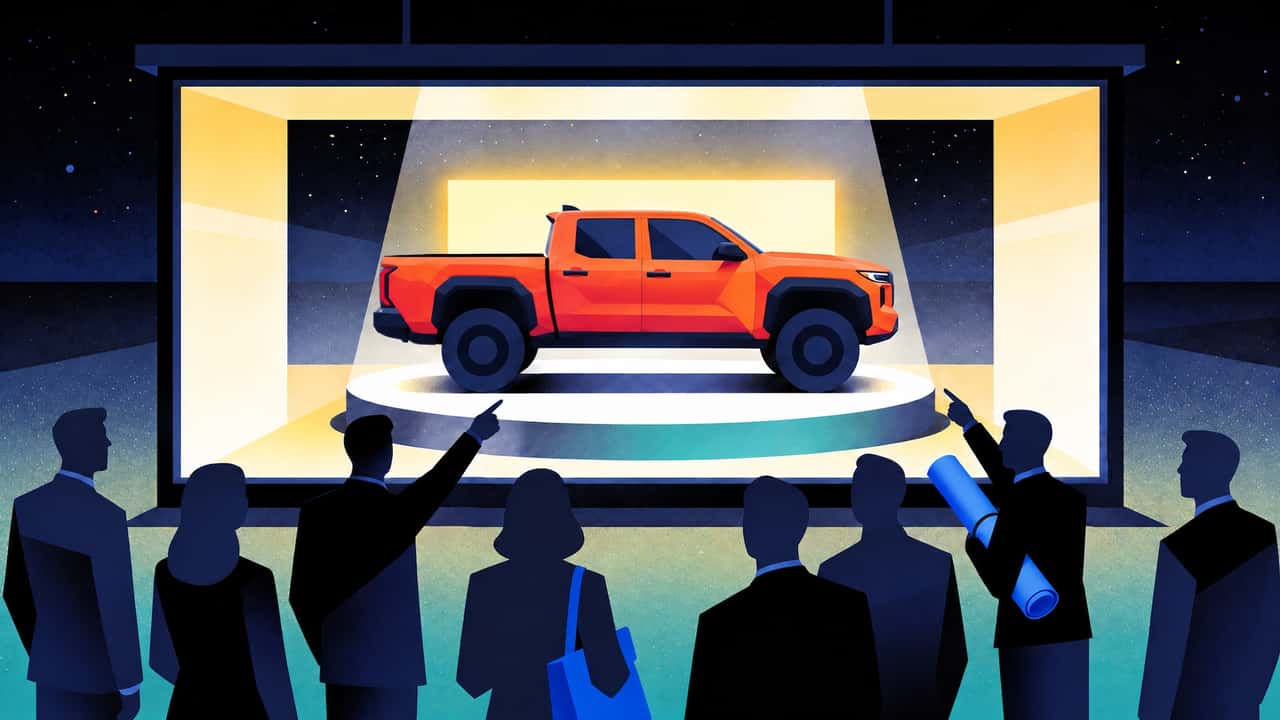

Today’s full-size trucks are a far cry from the utilitarian workhorses they were 50 years ago. They’re still plenty capable, but lately, they have more in common with luxury cars than they do with the no-frills pickups of the past.
That added refinement comes at a price. Well-equipped full-size trucks from Ford, Chevrolet, and other automakers can easily climb into the $70,000 to $80,000 range, with some topping $100,000 depending on the trim.
As prices keep climbing, buyers are downsizing their desires to something more affordable: mid-size trucks. And that shift is helping fuel one of the fastest-growing segments in the entire industry.
Mid-Size Success
Mid-size trucks are booming. Since 2015, the segment's share of the overall US vehicle market has grown from just 2.2 percent to as high as 4.5 percent in 2022. In 2025, more than 660,000 mid-size pickups found new homes, nearly double the segment's volume a decade earlier. And sales are already on a steady pace for another strong year in 2026, with no sign of that momentum slowing.
With that in mind, more automakers are looking to get in on the action, including companies from as far east as Korea. Several new trucks are on the way, all hoping to grab a piece of America's growing mid-size market.
But first, they'll have to take down the king.

Toyota Tacoma TRD Pro
The Tacoma Vs. Everyone
Over the past decade, sales of the segment's undisputed leader, the Toyota Tacoma, have surged. Toyota sold 274,638 examples in 2025, nearly 100,000 more than it did in 2015. And the nameplate has only gotten more popular since.
Today, the Tacoma accounts for nearly half of all mid-size truck sales. The second-best-selling model in 2025, the Chevrolet Colorado, didn't even come close, with fewer than half as many trucks sold.
Here's how the rest of the segment stacked up:
- Toyota Tacoma – 274,638 Units
- Chevrolet Colorado – 107,867 Units
- Ford Ranger – 70,960 Units
- Nissan Frontier – 65,232 Units
- Jeep Gladiator – 56,790 Units
- Honda Ridgeline – 48,448 Units
- GMC Canyon – 36,477 Units
Which Trucks Are Coming?
If you're a pickup fan, the next few years should be exciting. Several automakers have confirmed plans for new mid-size offerings, all hoping to challenge Toyota's dominance. And with so many new entries on the way, buyers should have more choices than ever.
Honda is among the latest to announce plans to expand its pickup lineup. And no, we're not talking about the next-generation Ridgeline, which is already in development. Honda is also expected to introduce a new body-on-frame pickup in the US starting in 2028, based on the Mitsubishi Triton. Mitsubishi is reportedly preparing to bring its own version back to America, too.
Hyundai is getting in on the action as well. In September 2025, the Korean automaker confirmed it would develop a proper mid-size, body-on-frame pickup for the American market. It's expected to arrive in 2029.
That new truck would mark a significant departure from the Santa Cruz, Hyundai's current unibody pickup. The compact truck never became a major seller, with annual sales peaking at 36,675 in 2023.
If you're a pickup fan, the next few years should be exciting.
One of the first new mid-size pickups to arrive, potentially as early as 2028, could be a familiar name: the Ram Dakota. Dodge originally introduced the Dakota in 1987, positioning it between compact and full-size pickups. Chrysler eventually rebadged it as a Ram for its final two model years before production ended in 2011.
The revived Dakota is supposed to be a proper truck, too. Former Ram CEO Tim Kuniskis said it needs to be a "real truck" with "real capability," just "a little smaller and a little bit more accessible."
Details are still scarce, but a Hemi V8 probably isn't in the cards. Instead, expect four- and six-cylinder engines, with a hybrid powertrain also a strong possibility. The current Tacoma already offers several four-cylinder options, including a 326-horsepower hybrid.
Hyundai Mid-Size Pickup Truck Rendering By Motor1
Hyundai's upcoming truck could follow a similar formula, with four- and six-cylinder engines and an emphasis on hybrid power. Kia is also preparing its own mid-size pickup using a body-on-frame platform, though its approach could be quite different. Rather than traditional gas engines, Kia's truck is expected to offer an all-electric or range-extended electric powertrain.
Volkswagen's plans are much less certain. The automaker only announced in September that it would begin studying a potential entry into the pickup segment. CEO Thomas Schäfer said the company would "explore opportunities," but stopped short of confirming a production model.
Still, VW has a potential shortcut. It could use the body-on-frame platform underpinning the Scout Terra, which is being developed to accommodate both battery-electric and range-extended powertrains. That would give Volkswagen a potential rival to Kia's upcoming truck without starting entirely from scratch.
Even Smaller Trucks Are On The Way
The mid-size segment isn't the only one attracting attention.
Ford has found considerable success with the Maverick, a compact pickup that sits below the Ranger and offers a more affordable alternative to traditional trucks. With Hyundai's Santa Cruz struggling to keep up, Ford has largely had this corner of the market to itself. And that stronghold could get even tougher with the upcoming Fathom.
But Ford may not be alone. Toyota has openly discussed the possibility of building a Maverick competitor, although the relatively small size of the compact truck market could make it a tougher business case. Ram, meanwhile, isn't waiting around.
The brand plans to bring the Rampage to the US as a smaller pickup positioned below the upcoming Dakota. Ram already sells the truck in international markets, where it uses unibody construction. That setup is expected to carry over to the American version, putting it squarely against the Maverick rather than traditional mid-size pickups.
Ford Fathom Prototype
All this new competition could make it harder for Toyota's rivals to catch up. The mid-size market is growing, but it isn't unlimited. Chevrolet, Ford, Nissan, and Jeep already have a tough time matching Tacoma sales, and now they'll have even more competitors fighting for the same customers.
Hyundai and Kia are coming. Ram has two pickups in development. Honda and Mitsubishi are joining forces, while Volkswagen is exploring its own options. Even Genesis has reportedly revisited the idea of building a pickup now that Hyundai is developing a dedicated platform.
The next few years should bring an entirely different mid-size truck landscape. Buyers will have more options, more powertrain choices, and hopefully more competitive pricing.
But with the Tacoma already so far ahead of the pack, there's no guarantee that any of these new arrivals will be able to knock Toyota off its throne. But here’s to trying.
More Columns
RECOMMENDED FOR YOU
Nissan Built Three Awesome Off-Road Rigs For SEMA
Buick Has A Sleek New Hybrid Sedan. But Not For America
16 Cars You Can Still Buy With A Naturally Aspirated V6
Ayrton Senna's Legendary Honda NSX Just Set An Auction Record: $1.7 Million
Ford’s 1,200-HP Bronco Is Built For Arctic Rescue
Mercedes Delays GLC Production In The US, Extending Its Tariff Troubles
This 800-HP Ford Pickup Restomod Took 15,000 Hours To Build