Home
Features
Motor101
Why Every New Car Has So Many Cameras
They’re hidden in the grille, mirrors, windshield, and dashboard. Here’s what all those lenses actually do.
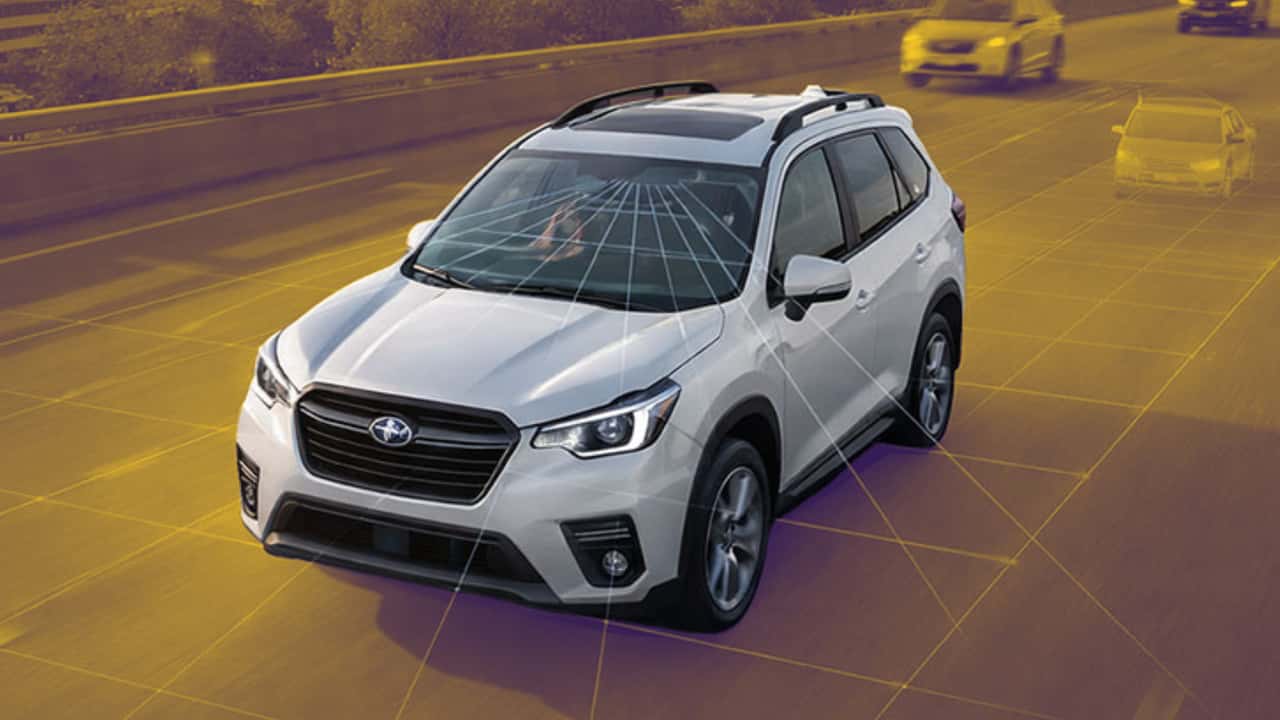
Photo by: Subaru

By: Motor1.com Team
Published by: Jeff Glucker
Jul 26, at 7:00am ET
Add Motor1.com as a preferred source in Google
- (https://twitter.com/intent/tweet?url=https%3A%2F%2Fwww.motor1.com%2Ffeatures%2F802715%2Fwhy-do-cars-have-so-many-cameras%2F&text=Why%20Every%20New%20Car%20Has%20So%20Many%20Cameras&via=motor1com)
- copy
Share
Comment
Walk around almost any new car, and you’ll start spotting cameras everywhere. There’s almost always one above the rear license plate. Another might be hiding in the grille. You could find two more beneath the side mirrors, several behind the windshield, and one inside the cabin aimed directly at your face.
That’s a lot of cameras for a vehicle that still expects you to handle the majority of the driving duty.
These cameras aren’t just there to keep you from scraping a wheel at the grocery store, though. They've become essential to modern safety systems, parking technology, and increasingly advanced driver-assistance features. And cars will probably keep adding more of them.
motor101
Welcome to Motor101, our series dedicated to answering the internet's biggest automotive questions. From the origins of iconic designs to the engineering breakthroughs that shaped the world's greatest cars, we uncover the stories behind the vehicles you love.
It Started With The Backup Camera
Not long ago, rearview cameras were expensive options reserved for luxury vehicles and higher trim levels. That changed in 2018, when the federal government began requiring rear-visibility technology on new passenger vehicles weighing less than 10,000 pounds.
Suddenly, every new car needed a camera, a screen, and the software required to connect them. Once that basic hardware was already in place, adding more cameras became easier to justify.
A front-facing camera could help with parking. Cameras beneath the mirrors could monitor the sides. Combine those feeds with the rear camera, stitch the images together, and you get the virtual 360-degree view now offered on everything from luxury SUVs to affordable crossovers.
It looks like a drone is hovering over your roof. Sadly, the drone assistant remains stuck in the realm of the concept car. For now, at least.
They Do Much More Than Help You Park
The camera mounted behind the windshield has a more important job. It watches the road.
Depending on the vehicle, it can identify lane markings, cars, pedestrians, cyclists, speed-limit signs, and other objects. That information supports features such as lane-departure warning, lane-centering assistance, automatic high beams, forward-collision warning, and automatic emergency braking. Think Subaru EyeSight as a good example of such tech.
Cameras are useful in these situations because they can help determine what an object actually is. Radar is excellent at measuring distance and speed. A camera can help the vehicle distinguish between a pedestrian, another car, a lane stripe, a curb, or a plastic bag blowing across the road.
Ideally, the software gets that distinction right.
One camera can also support several features at once. Automakers don’t necessarily need separate sensors for traffic-sign recognition, lane keeping, and pedestrian detection. They can send the same video feed to multiple systems.
That makes cameras compact, relatively affordable, and extremely valuable.
Advanced Driving Systems Need More Eyes
One forward-facing camera is useful. More cameras, of course, are even better.
Modern driver-assistance systems need to see much more than the road directly ahead. A car changing lanes needs to know whether another vehicle is alongside it. An automated parking system needs to identify curbs, painted lines, concrete pillars, and shopping carts.
A hands-free highway system must monitor traffic approaching from several directions. That requires overlapping views around the vehicle.
A Tesla Model Y, for example, uses cameras mounted around the windshield, grille, fenders, pillars, and rear of the car. Other manufacturers combine cameras with radar and lidar to build a more complete picture of the surrounding environment.
The more responsibility a vehicle assumes, the more information it needs. In other words, increasingly automated cars require an increasing number of "eyes."
So Why Can’t They Work as Dashcams?
That raises an obvious question: If cars already have cameras pointed in every direction, why can’t they record an accident? Drivers have been asking that for years.
In one r/cars discussion, a Reddit user questioned why new vehicles—especially expensive models with multiple high-resolution cameras—still force owners to stick an aftermarket dashcam to the windshield.
The hardware appears to be there. Why not save the footage? The answer is more complicated than you might think.
A built-in recording system needs storage, additional software, and hardware capable of surviving years of heat, freezing temperatures, vibration, and constant data overwriting. That's before we dive into the privacy and legal concerns.
Drivers may love having footage that proves someone else caused a crash. They might feel differently when the same footage records their speeding, distracted driving, or questionable decision-making.
The video that proves you’re innocent could also make it spectacularly clear that you’re not. Automakers would also need to determine who owns the footage, how long it's stored, whether it can be accessed remotely, and what happens when police, insurers, or attorneys request it.
There’s also the issue of cost. An integrated factory system must work reliably for years, receive software support, and potentially be covered under warranty.
Still, Reddit users have a point.
A car that can recognize pedestrians, generate a bird’s-eye parking view, and monitor the driver’s eyeballs should probably be able to remember who backed into it at Target.
One Camera Is Also Watching You
Not every camera points outside the car. Many newer vehicles have a small infrared camera near the steering column or on top of the dashboard. Its job is to determine whether the driver is paying attention.
Hands-free systems, such as GM’s Super Cruise and Ford's BlueCruise, still require the driver to watch the road and remain prepared to take control.
If the monitoring camera detects that the driver is looking away, falling asleep, or otherwise distracted, the vehicle can issue visual, audible, and physical warnings. Some systems may eventually slow the car or bring it to a stop if the driver fails to respond.
Your car is staring at you. It’s usually checking whether you’re staring at the road—not judging your music choices. At least, we don't think it's doing that, yet.
More Safety Rules Are Coming
Government regulations will continue pushing advanced safety technology into new cars.
The National Highway Traffic Safety Administration has finalized a rule requiring automatic emergency braking, including pedestrian detection, on new passenger cars and light trucks beginning later this decade.
The rule doesn’t specifically require cameras, but cameras already play a major role in many automatic-braking systems. There’s evidence that this technology works.
The Insurance Institute for Highway Safety (IIHS) found that combining a rear camera, parking sensors, and rear automatic braking dramatically reduced police-reported backing crashes.
That gives automakers another reason to keep adding sensors. Better safety ratings help sell cars, and preventing crashes generally makes owners happy.
Cameras Are Becoming as Important as Mirrors
The basic explanation is simple: Cameras give cars information. They help drivers see around large vehicles, avoid curbs, recognize potential collisions, monitor blind spots, and use increasingly advanced driving-assistance systems.
What do you think?
View
Comments
The same hardware can also support digital mirrors, automated parking, security recording, driver monitoring, and more. Modern cars aren’t covered in lenses because engineers suddenly became obsessed with cinematography.
They have so many cameras because nearly every new safety or convenience feature requires another view of the world. And as cars begin doing more of the driving themselves, expect them to keep watching everything... including you.
More from Motor101
 Why Modern Cars Are So Expensive to Repair
Why Most New Cars Don't Have Spare Tires Anymore
Most People Don't Know Costco Can Save You Thousands On A New Car
Why Replacing A Modern Car Key Costs So Much
We want your opinion!
What would you like to see on Motor1.com?
Take our 3 minute survey.
- The Motor1.com Team
Share this Story
- (https://twitter.com/intent/tweet?url=https%3A%2F%2Fwww.motor1.com%2Ffeatures%2F802715%2Fwhy-do-cars-have-so-many-cameras%2F&text=Why%20Every%20New%20Car%20Has%20So%20Many%20Cameras&via=motor1com)
- copy
GO TO COMMENTS
(
)
Got a tip for us? Email: tips@motor1.com
View all comments ( )
Popular
Audi Is Spending $4 Billion On A New US Factory For Big SUVs
Toyota's Next Mid-Engined Coupe Is Going Racing This Weekend
Alfa Romeo Has Had It With Huge Screens
Subaru Teases A New Manual WRX, But Only For Japan
latest articles
- Nissan Driver Gets An Oil Change. Then The Mechanic Sends Him Something Unexpected: 'I'm Upset That This Isn't Required By Law' Oct 25 - Trending -
- How Do Automatic High Beams Know When To Turn On And Off? Oct 25 - Motor101 -
- ‘Gave You The Midas Touch’: Man Takes Volkswagen To Midas For An Oil Change. He's In Shock When They're Done Oct 25 - Trending -
- Audi Is Spending $4 Billion On A New US Factory For Big SUVs Oct 25 - Manufacturing / Production -
- Man Buys 10-Year-Old Mercedes With Only 31,000 Miles. Then He Spots Something Fishy On The Tires Oct 24 - Trending -
- 'I Didn't Sign Up To...': Mechanic Asks Why People Leave The Job. They Don't Hold Back—But Can The Industry Be Fixed? Oct 24 - Trending -
- Couple Buys A Mazda. 30 Minutes Later, It Starts Making ‘Loud And Scary Noises'—It Passed The Pre-Purchase Inspection Oct 24 - Trending -
RECOMMENDED FOR YOU
The Story Behind Little Trees Is Even Stranger Than You Think
Man Buys 10-Year-Old Mercedes With Only 31,000 Miles. Then He Spots Something Fishy On The Tires
NASCAR's Coolest Stock Cars Were Too Good At Their Jobs
'I Didn't Sign Up To...': Mechanic Asks Why People Leave The Job. They Don't Hold Back—But Can The Industry Be Fixed?
How A Tire Company Created The World's Most Famous Blimp
Couple Buys A Mazda. 30 Minutes Later, It Starts Making ‘Loud And Scary Noises'—It Passed The Pre-Purchase Inspection
The Mercedes 300 SL's Gullwing Doors Weren't Just For Looks. They Solved A Problem