Home
Polestar
News
Polestar Won't Fight US Ban, Effectively Ending Its American Future
The automaker says it won't challenge a federal ban on future vehicle sales, despite now building some of its cars outside China.
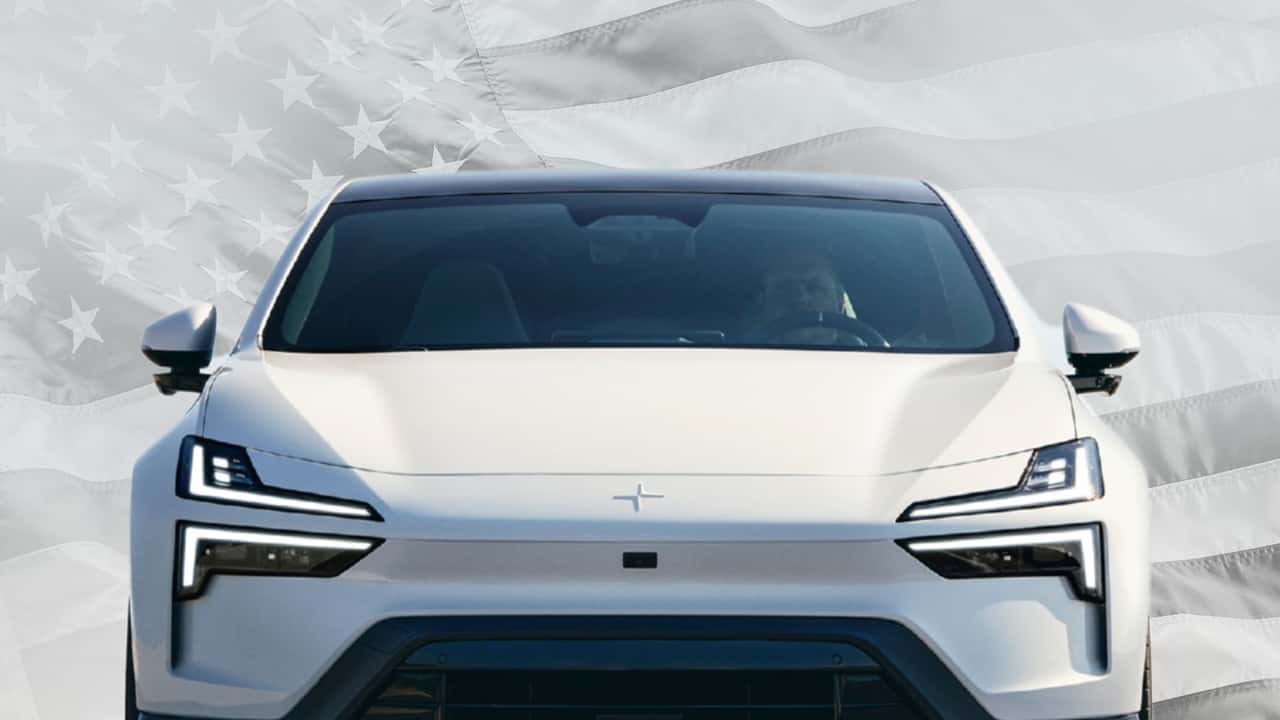
Photo by: Jeff Perez / Motor1
Jeff Perez 
By: Jeff Perez
Jul 20, at 4:42pm ET
Add Motor1.com as a preferred source in Google
- (https://twitter.com/intent/tweet?url=https%3A%2F%2Fwww.motor1.com%2Fnews%2F802235%2Fpolestar-wont-fight-us-ban%2F&text=Polestar%20Won%27t%20Fight%20US%20Ban%2C%20Effectively%20Ending%20Its%20American%20Future&via=motor1com)
- copy
Share
Comment
the breakdown
- Polestar won't appeal the US government's decision to block future vehicle sales.
- The ban stems from new connected-car security rules targeting Chinese software in internet-connected vehicles starting with the 2027 model year.
- Polestar will shift its focus to Europe.
Polestar is officially giving up on the US market, it seems. According to a new report from the Wall Street Journal, the Chinese-backed automaker won't challenge the US government's decision to block future sales of its vehicles.
The decision effectively ends the Swedish EV maker’s presence in one of the world's biggest auto markets. Instead of appealing the Commerce Department's ruling or pursuing legal action, Polestar says it will shift its attention elsewhere.
"We will instead focus our investments on markets where we have a strong brand position and ability to achieve profitable growth, with a strong weighting towards Europe," Polestar spokesman Michael Ofiara told the WSJ.
Ofiara added that the company had held "significant dialogue" with US officials and concluded an appeal was unlikely to succeed. Motor1 reached out to Polestar for an official statement.

Polestar 3 Performance
Photo by: Polestar
Why Polestar Was Banned
The Commerce Department's decision to ban Polestar in the US stems from new connected-vehicle security rules. Those rules prohibit Chinese software in internet-connected vehicles beginning with the 2027 model year.
US officials argued that cameras, GPS systems, and other connected technologies could pose national security risks if controlled by foreign adversaries. Polestar, which is majority-owned by China's Zhejiang Geely Holding Group, said it was denied a special authorization that would have allowed it to continue selling vehicles despite the new rules.
Volvo, also majority-owned by Geely, received that approval earlier this year after demonstrating how it handles vehicle data and cybersecurity. The Commerce Department has declined to explain why the two companies received different outcomes.
Ironically, Polestar no longer sells Chinese-built vehicles in the United States. The Polestar 2 left the market after tariffs on Chinese-built EVs took effect, while the Polestar 3 is built in South Carolina alongside the Volvo EX90 (which is sold in the US). The new Polestar 4 is built in South Korea.
What do you think?
View
Comments
The move could also hurt existing owners, with Polestar's departure likely to have a huge hit on resale values, especially now as the company is clearing out remaining inventory with discounts reportedly reaching as much as $25,000.
Motor1's Take: Polestar's exit is big, not just because the company was a major sales player, but because it raises questions about how the US is applying its new connected-car security rules. Polestar and Volvo share ownership, engineering, and even production facilities, yet one brand received approval while the other was shut out.
The Latest From Polestar
Polestar's Gorgeous Convertible Is Nearly Ready—But There's A Problem: Tariffs
Polestar Sets Its Sights On BMW M And Mercedes-AMG
Source: Wall Street Journal
We want your opinion!
What would you like to see on Motor1.com?
Take our 3 minute survey.
- The Motor1.com Team
Share this Story
- (https://twitter.com/intent/tweet?url=https%3A%2F%2Fwww.motor1.com%2Fnews%2F802235%2Fpolestar-wont-fight-us-ban%2F&text=Polestar%20Won%27t%20Fight%20US%20Ban%2C%20Effectively%20Ending%20Its%20American%20Future&via=motor1com)
- copy
GO TO COMMENTS
(
)
Got a tip for us? Email: tips@motor1.com
View all comments ( )
Popular
12 Cars With Names That Make Absolutely No Sense
BMW Kept This Hatchback A Secret For Decades
Bugatti Restores One-Off Veyron With A Mirror-Like Aluminum Body
The Gas BMW M3 Isn't Dead: Next-Gen Prototype Roars
latest articles
- The 2027 Honda Passport TrailSport Looks Noticeably Taller Next To Last Year's Model Oct 20 - Off-Road -
- 12 Cars With Names That Make Absolutely No Sense Oct 20 - Lists -
- The Ford Ranger Is Getting A Bigger V6 For 2027: Report Oct 20 - Rumors -
- BMW Already Has A Deal On The New i3. But It's Not Cheap Oct 20 - Pricing -
- Remember The Ford Flex? This Weird SUV Is Now A Great Used Buy Oct 20 - Why Buy? -
- Mercedes Isn't Sold On Extended-Range EVs: 'Would You Really Switch?' Oct 20 - Interview -
- Cadillac Driver Is Fed Up With Auto Stop. Then She Buys A $9 Item On Amazon To Disable It Oct 20 - Trending -
RECOMMENDED FOR YOU
Polestar 2026 US Inventory Is Almost Sold Out As Ban Nears
12 Cars With Names That Make Absolutely No Sense
Mercedes-AMG GT SUV Revealed: Up To 1,153 HP And Three Electric Motors
The Ford Ranger Is Getting A Bigger V6 For 2027: Report
Renault Has About 1,000 Orders For Its $180,000 Electric Hot Hatch
BMW Already Has A Deal On The New i3. But It's Not Cheap
The Next Volkswagen ID. Buzz Will Fix Its Biggest Problem: The Price