Mechanic Warns: Stop Pumping Gas Once The Handle Clicks Off. It Just Put This Chevrolet In The Shop
"You're gonna start having all those kind of issues.”
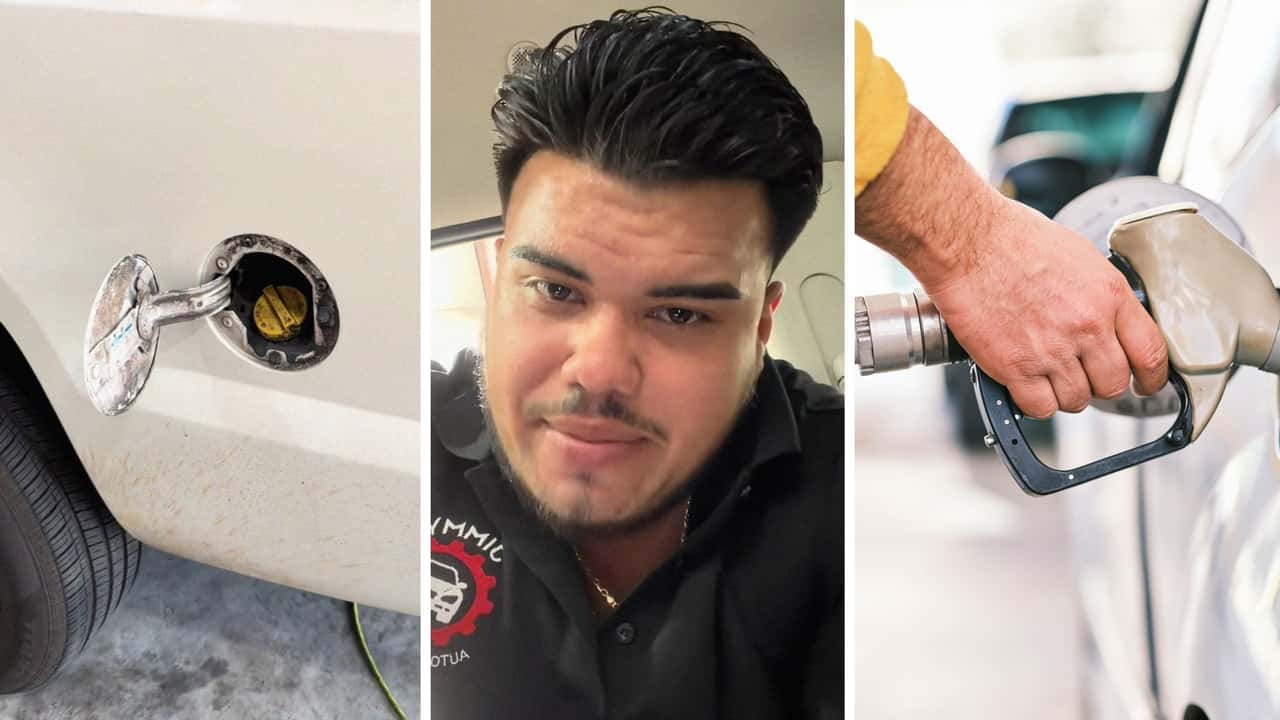

A little extra gas after the pump shuts off may feel harmless. It might even seem like a way to squeeze a few more miles out of the tank and delay the next fill-up.
But a Houston mechanic took to TikTok with a warning to resist that urge or risk an expensive repair down the road. Creator Jimmy Avila (@boss_shittg) opened up a customer’s Chevrolet EVAP system to demonstrate the potential damage caused by owners habitually squeezing in a few extra fluid ounces at a time.
“That extra gas you think you're getting, it's gonna go to the charcoal canister. After it goes to the charcoal canister, it's gonna weaken up all that charcoal and it's gonna clog up your whole EVAP system,” he said in the clip that’s been viewed more than 25,000 times. “After it clogs it up, you're gonna start having all those kind of issues.”
Problems At The Pump
The first warning sign will probably come at the pump. Avila said once the damage has been done, the nozzle can begin shutting itself off almost immediately, forcing the driver to restart the flow again and again even when the tank still has plenty of room.
“Every couple cents, the pump’s gonna stop, acting like the car is full even though it’s not,” he said.
That kind of behavior can send drivers searching for the right angle, depth or position for the nozzle. According to Avila, though, the real problem is farther inside the vehicle, where the vapor-control hardware is no longer moving air through the system as intended.
To illustrate, he then turned the camera toward the components beneath the vehicle. The charcoal canister, which is designed to capture gasoline vapors, appeared to have broken down internally.
Avila said loose granules had migrated into the surrounding passages and begun restricting them. “I don’t know if y’all can hear it, but there’s a whole bunch of charcoal in there,” he said, before showing viewers some of the small black particles that weren’t among those that had collected inside the system.
Those granules matter because the canister is supposed to hold its filtering material in place. Once the filter granules start escaping, Avila said the problem can spread and interfere with the venting needed during refueling.
He said fixing the Chevy would be a much larger job than replacing one valve; the tank would have to come down so the affected passages could be cleared and the damaged hardware addressed.
“The correct repair is to drop the gas tank, flush all the lines, unclog the whole system and most likely replace the vent valve,” he said.
The process is labor intensive because it requires reaching parts tucked beneath the vehicle, cleaning out contamination and checking whether the system can once again breathe properly.
Gallery: Shell gasoline pump

How To Avoid EVAP Issues?
Avila’s advice lines up with Chevrolet’s own instructions to drivers to stop filling when the nozzle automatically shuts off. The Environmental Protection Agency says activated-charcoal canisters capture and store fuel vapors until those vapors can be pulled into the engine and burned.
In plain English, the canister is meant to manage vapor, not serve as an extra reservoir for liquid gasoline.
On its own, a gas pump that repeatedly clicks off does not prove that a driver’s itchy nozzle finger caused the failure, since trouble with a vent valve, a blocked passage, a damaged canister, or a leak elsewhere in the EVAP system can produce overlapping symptoms. A technician will likely need to inspect the system and perform tests rather than diagnose the vehicle based only on its behavior at the pump.
The final bill to find and fix these interlocking problems can range from a few hundred dollars for diagnosis and replacement of a relatively accessible valve to roughly $400–$800 for a new charcoal canister on many vehicles. If damaged material has spread through the system and the job requires lowering the fuel tank, clearing multiple lines and replacing several components, the cost can climb past $1,000, depending on the model and local labor rates.
Several viewers recognized the frustration Avila described. One Chevrolet Impala owner said she has to rotate the nozzle repeatedly just to add fuel, even when the car is running on empty.
“I have to turn the nozzle 10 different ways to get it to take in gas,” she wrote.
“This might be the problem you have,” Avila replied.
Another commenter said a 2007 Chevrolet Tahoe had developed similar refueling trouble and was now displaying a P0455 large-EVAP-leak code. Rather than declaring that vehicle had the same failure, Avila suggested smoke-testing the system to locate a possible leak.
Other viewers were less concerned about the temptation to squeeze in extra fuel.
“With these gas prices, no need to tell me twice,” one wrote.
For drivers who still like to round up the price or force in another splash, Avila’s advice leaves little room for interpretation: Once the nozzle shuts itself off, it's time to hit the road.
Motor1 reached out to Avila via direct message and comment on the clip. We'll update this if they respond.
RECOMMENDED FOR YOU
Texas Woman Shops For Used Car On Facebook Marketplace. Then She Spots A Red Flag Most People Miss
This Is One Of The Rarest Mercedes G-Classes Ever Made, And It Just Sold For $143,000
Woman Drives On The ‘Most Haunted Road’ In The U.S.A. Then She Films What Happens At Mile 11
Should You Get Your Oil Changed At Walmart? The Pros And Cons
Man Trades In Ford Explorer. Then The Dealership Pulls The Carfax: ‘How Isn’t This A Crime?’
Why Modern Cars Are So Expensive to Repair
Woman Buys Chevrolet. Then She Tries To Use The Warranty—And Runs Into Biggest Misconception There Is: ‘It’s Bumper To Bumper?'