Tow Truck Driver Picks Up Mustang. At First She Thinks It’s Covered In Bird Poo. Then She Realizes It’s Something Else Entirely
'So what you're saying is he cheated.'
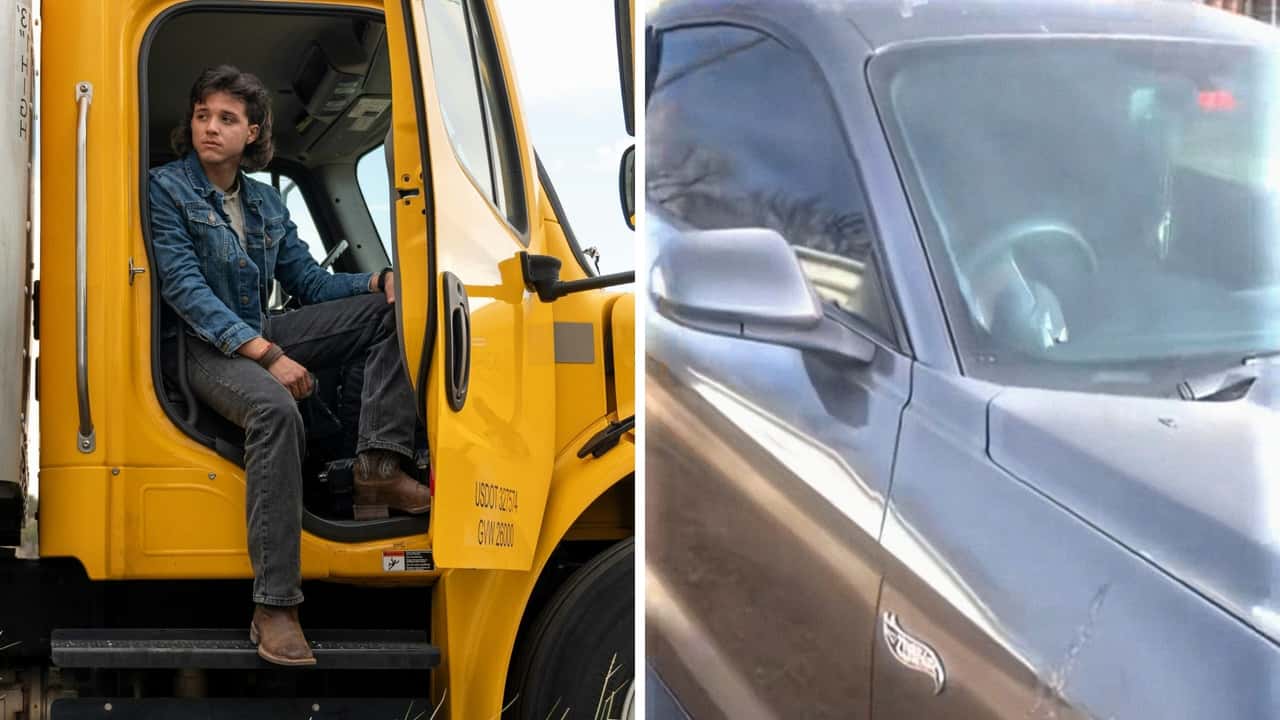

Most acts of automotive vandalism seem like obvious quick-hit incidents, where the perpetrators were letting off some steam, committing low-grade damage that could be cleaned up pretty quickly. That is very much not what we're seeing in a viral TikTok clip that features a Ford Mustang that served as a kind of canvas for some deliberate and well-thought-out acts of vehicular destruction.
Tow truck driver and creator @javyslife serves as our narrator and tour guide around and inside the Mustang. From the severe paint damage all over the hood in front of the car to a hardened yellow foam that's bubbled out of the interior and several portions of the car's mechanical systems, she's at a kind of loss for what she's seeing.
“Upon first glance, I'm like, [expletive], that's a lot of bird [expletive],” she said at the start of the clip, which has been viewed more than 1.4 million times. She quickly realizes what she thought were bird droppings are actually spots of severe paint damage, which is just the lead-off to the rest of what she sees.
Ford Mustang Vandalism: Revenge Or Repo?
The closer she looked, the more the Mustang seemed less like the victim of a single act of vandalism than a methodical campaign against nearly every part of the car. After noticing the paint damage, her attention shifted to the open fuel door, where a mass of hardened yellow foam appeared to have been forced into the filler neck.
Looking inside only deepened the mystery. The same material protruded from dashboard air vents and had even found its way into the seat belt assembly.
The bright yellow blobs were also visible around the wheels and tucked into crevices throughout the cabin. Curious to see whether the damage stopped there, she released the hood latch and peered into the engine bay, where she was greeted by more hardened foam spread across components under the hood.
The clip never explains how the Mustang ended up in that condition or why it was being towed, leaving viewers to fill in the blanks themselves. That uncertainty helped to fuel the video's popularity, with the comments section splitting into competing theories about what could have led to such an unusually thorough destruction of the car.
One of the most liked responses jokingly suggested the damage looked less like random vandalism than the aftermath of an especially ugly relationship dispute. "As someone who works in the auto repair industry," one commenter wrote, "in my professional opinion someone tripped and fell into another woman and the partner found out."
Others pointed out that since the vehicle appeared to be in the custody of a tow operator, it had likely been repossessed. Several commenters who said they had experience around repossessions claimed they had seen owners intentionally damage vehicles before they were recovered by lenders.
One person wrote that they had encountered similar acts while handling bank repossessions, while another argued that an owner angry about losing a financed car might decide to make it as difficult and costly as possible for someone else to deal with afterward.
If that were the motivation, though, it would likely be self-defeating since vehicles recovered through repossession are typically sold at auction to cover the remaining debt. What that means in this instance is that a far lower sale price would translate into money still being owed to the loan company connected to the Mustang.
An Impossible Mess
The clip offers no follow-up to identify the owner or explain the Mustang's condition. Instead, it leaves viewers trying to solve how all of that foam ended up in so many different places and caused so much damage.
The yellow material that’s penetrated and hardened throughout the car closely resembles cured expanding polyurethane foam, a product commonly sold at hardware stores for sealing gaps around doors, windows, pipes, and other openings in homes. Once dispensed, the foam rapidly expands before hardening into a rigid, lightweight mass that by design is difficult to remove.
Manufacturers typically recommend mechanically scraping or cutting it away after it cures, since most solvents have little effect once the chemical reaction is complete. If that is indeed what was used here, the foam forced into a fuel filler, HVAC vents, engine components, or other mechanical systems could require extensive disassembly simply to determine the full extent of the contamination.
Depending on how deeply it penetrated critical systems, repair costs could quickly climb into the thousands of dollars, raising the possibility that an insurer would determine the vehicle is a total loss.
Motor1 reached out to the creator via direct message and comment on the clip. We’ll update this if they respond.
RECOMMENDED FOR YOU

Ford's Most Sinister Mustang Loses Its Roof But Keeps The Supercharged V8
Woman Leaves Dodge Charger Parked Outside. Then Her Airbags Deploy For No Reason: ‘Never Seen This Happen Before’
Ford's Four-Door Mustang Is Getting Closer To Reality. And It'll Be Fast: Report
Monterey Car Week 2026: Every New Supercar, Hypercar, And Concept
Man Buys Ford F-150 For $62,000. Then He Tries To Shift Into Drive: ‘I’ve Been Sitting Here For 2 Hours’
Woman Goes To 7-Eleven For Gas. Then She Remembers Why She Only Goes To Costco: 'Still Being Charged'
Ford Bronco Driver Runs Over Valentino High Heel. Then She Sees What It Did To Her Tire: 'Girl Math'