Man Gets License Plates For Chevrolet Blazer. Then He Realizes It’s $180 More Expensive Than For His Equinox: '$250 In NC'
"I wish I had known about it before buying an electric vehicle."
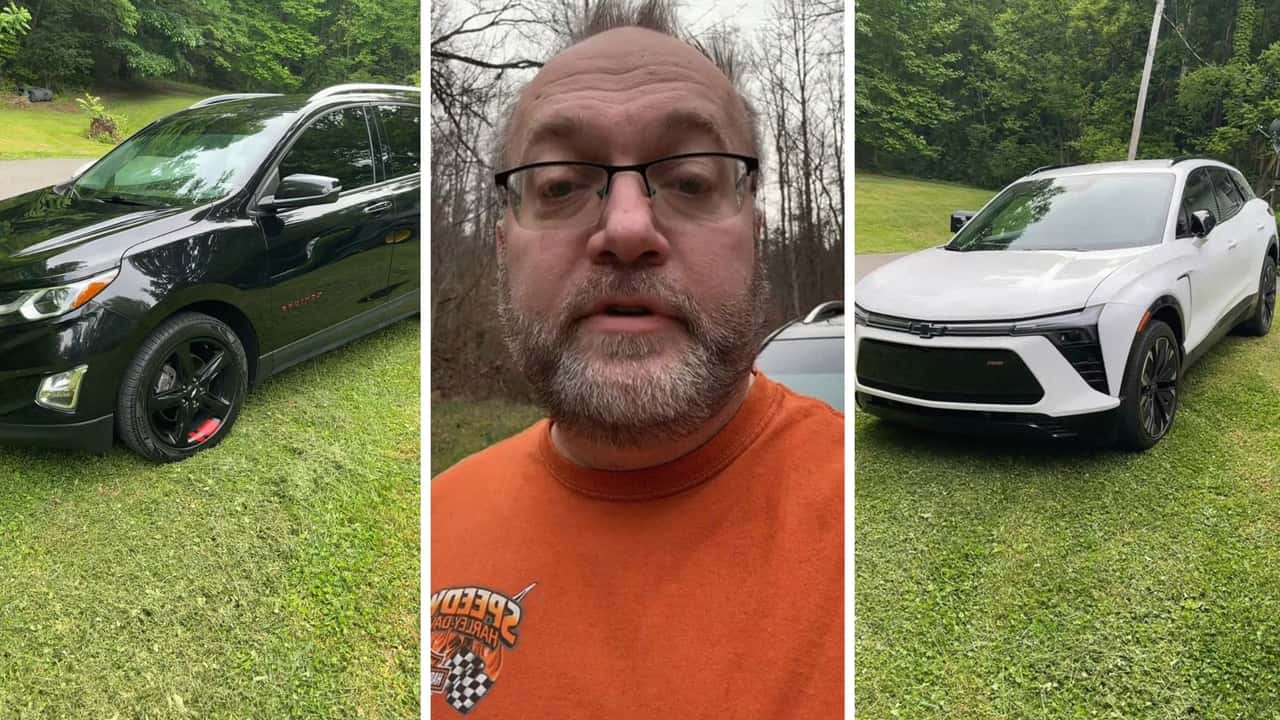

Most electric vehicle buyers expect to deal with charging times, range anxiety, and the intricacies of different public charging networks. Few expect the government to hand them a $200 bill at registration renewal on top of all of that.
That's exactly what happened to one Chevrolet Blazer EV owner, who says the fee from the state of Tennessee became one of the things he wishes he'd known before buying an electric vehicle. Creator Crunch O’Malley (@crunchomalley) details his thoughts and lingering questions as a recent EV buyer in a TikTok that’s been viewed more than 1,600 times.
“I've got three things for you that I wish I had known about before buying an electric vehicle. And I don't necessarily know that they're all a negative, but let me talk to you about them,” he said.
Hidden Costs And Concerns Of EV Ownership
The first surprise came when O'Malley compared the registration renewal costs for the two Chevrolets sitting in his driveway. His family's 2019 Chevrolet Equinox costs roughly $30 to renew in Tennessee. The Blazer EV, meanwhile, carries an additional fee of about $200 because it doesn't consume gasoline and therefore doesn't contribute to state fuel tax collections.
Unlike many online complaints about EV-related fees, O'Malley doesn't spend much time arguing against the concept itself. In fact, he acknowledges the reasoning behind it.
"The Blazers have a $200 tax on them because we don't buy gasoline," he said. "I don't have that big of an issue with it because they're right, I don't pay any gas tax."
The fee nevertheless caught him off guard and prompted questions about how high such charges could eventually climb. Tennessee is among a growing number of states that have adopted special registration fees for electric vehicles as lawmakers look for ways to replace fuel-tax revenue traditionally used to maintain roads and transportation infrastructure.
The second item on O'Malley's list wasn't something he's experienced personally yet, but rather something he'd been warned about repeatedly before purchasing an EV.
Because battery packs add substantial weight and electric motors deliver instant torque, many EV owners report accelerated tire wear compared to traditional gasoline-powered vehicles. To illustrate the point, O'Malley walks viewers through a side-by-side comparison of the tires on both vehicles.
His Blazer EV has accumulated nearly 22,000 miles and still looks to be in suitable shape for many more miles, while the older Equinox has nearly 60,000 miles on the odometer. Looking over the tread on the Blazer's tires, he says his experience hasn't matched some of the horror stories he's encountered from EV owners who report replacing tires after only 20,000 miles or so.
The final lesson centers on something many EV veterans consider essential: home charging.
"Charging anxiety is extremely real," O'Malley admits.
He points viewers to the Level 2 charger installed at his home, explaining that life with an EV became dramatically easier once he could reliably recharge overnight. While a standard Level 1 charger plugged into a household outlet can work for drivers with short commutes, he says the faster charger makes far more sense for the distances his family travels each day.
When they first purchased an EV, he says, finding charging stations and monitoring battery levels created a steady source of stress. Today, he compares the battery gauge to a fuel tank, noting that he can glance at a 50% charge and know he still has plenty of driving left before needing to plug in.
"In New Hampshire, I Paid An Additional $100"
The comments section added another wrinkle to the discussion when one viewer asked whether he had experienced any problems with the Blazer EV itself. O'Malley replied that his biggest frustration hasn't been the vehicle but rather getting software updates completed at his local dealership.
One New Hampshire driver said the registration fees O'Malley described sounded familiar.
"In New Hampshire I paid an additional $100 for my 2024 Mustang Mach-E and my husband has a 2024 Mazda CX90 plug in hybrid and he pays an extra $50," the commenter wrote.
The same commenter said the costs didn't stop at registration. After installing a home charging setup, the family was forced to upgrade their electrical panel as well.
"Plus we installed a level 2 universal Tesla charger and that caused us to update our electrical panel costing $4500 total," they added.
O'Malley replied that his own installation had been considerably cheaper, with a $400 installation charge.
Not everyone in the comments was convinced electric vehicles were worth the tradeoffs. One viewer bluntly declared, "Gas only!! Never an electric!!!"
O'Malley didn't take the bait. "As is your choice," he replied.
Aside from his handful of minor concerns, he said he's been happy with the purchase. After roughly 23,000 miles, he praised the Blazer EV's instant torque, smooth ride, inexpensive electricity costs, and the fact that he hasn't needed a single oil change.
Motor1 reached out to O’Malley via direct message and comment on the clip. We’ll update this if he responds.
RECOMMENDED FOR YOU

Man Buys A Chevrolet From Dealership. Then He Has To Replace The Same Part 3 Times: 'This Is Getting Ridiculous'
This New Italian Supercar Turns A Porsche 911 Into An 800-HP Custom Machine
Man Makes Offer On His Dream Car. Then He Tries To Pay With His American Express: 'Not A Credit Card'
Man Hits Traffic Lane Divider In His $50,000 Honda. Then He Sees Smoke: ‘That Actually Totaled It’
Woman Buys Chevrolet Tahoe. Then Her Wheel Flies Off. Then The Dealership Ghosts Her—After Agreeing To Take Accountability
The Volkswagen Atlas Just Got More Expensive
This Company Built A Simulated Manual For Ferraris Before Ferrari Did