Technology explained: Audi's new MHEV plus hybrid system in detail
Even more economical on the road with the full hybrid - without a plug

Hybrids are often seen as a bridging technology (if you look at it positively) or a crutch to true electric mobility. However, modern hybrids offer many advantages. Plug-in models, for example, combine the best of both worlds and thus outweigh the disadvantages of both concepts.
Full hybrids or mild hybrids do not need to be recharged, but use energy that would otherwise be wasted in the environment. Audi has now unveiled its new MHEV plus system, which can even turn a mild hybrid (electric support for the combustion engine) into a full hybrid (temporary full electric driving). The same technology will, of course, also be available at a later date at the Group's sister companies Volkswagen, Skoda and Seat/Cupra.

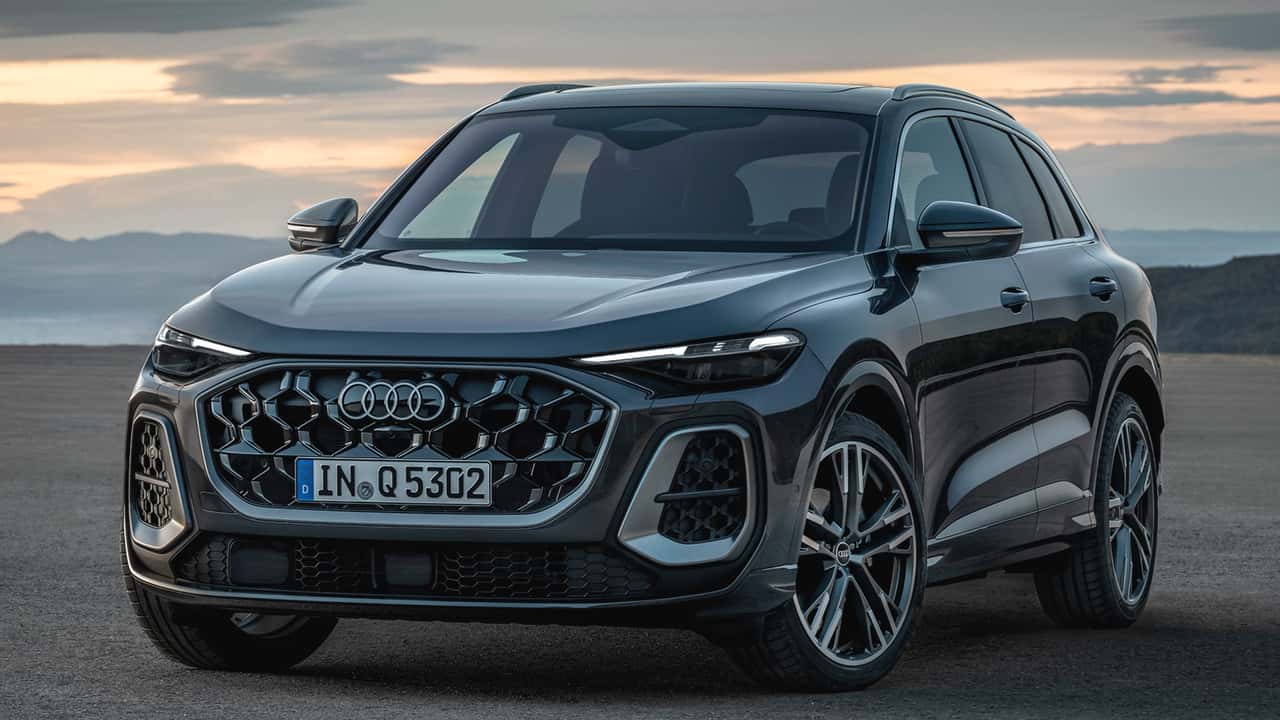
Audi's advanced mild hybrid technology, launched with the new A5 and Q5 models based on the Premium Platform Combustion (PPC), is designed not only to increase efficiency but also to enhance the driving experience. The MHEV plus system combines a 48-volt battery, a powertrain generator (PTG) and a belt starter generator (BSG) to support the internal combustion engine, reduce CO2 emissions and improve vehicle agility.
What is particularly remarkable is that the PTG allows the car to be driven purely electrically, relieving the burden on the combustion engine. This makes the Audi a part-time full hybrid!
Additional power helps
At the heart of the MHEV plus system is the powertrain generator, an electric drive module mounted directly on the transmission output shaft. With an electrical output of up to 24 PS and a maximum torque of 230 Nm, the PTG provides immediate support to the combustion engine, especially when moving off. This power makes it possible to move the car more efficiently in many driving situations.
The PTG operates up to a speed of 87 mph before decoupling from the drivetrain via a claw clutch. The PTG also contributes to recuperation and recovers up to 25 kW of energy when the vehicle brakes or decelerates, which further reduces fuel consumption.
The MHEV plus system's lithium iron phosphate (LFP) battery has a capacity of 1.7 kWh. This battery stores the energy recovered through recuperation and provides additional power to the system when it is needed. A water-cooling circuit ensures that the battery operates under optimum conditions and maintains its maximum performance at different temperatures. Due to the small size of the battery, the additional weight is negligible compared to the plug-in system.
More comfort, less consumption
In practice, the MHEV plus system not only improves efficiency but also significantly increases comfort. The belt starter generator (BSG) ensures a quiet and fast engine start and helps to supply energy to the battery. The system also supports "electric sailing", where the car continues to roll without engine assistance, and emission-free driving during slow manoeuvring or parking.
The combination of PTG, BSG and the 48-volt battery offers an impressive increase in efficiency. The 2.0-litre TDI in the Audi A5 with front-wheel or quattro drive saves up to 10 grams of CO2 per kilometre and 0.38 litres of fuel per 100 km. The 3.0-litre TFSI in the Audi Q5 even achieves savings of up to 17 grams of CO2 per kilometre and 0.74 litres of fuel per 100 km, significantly reducing the vehicle's environmental impact. More importantly from the manufacturer's point of view, less CO2 also means fewer EU fines.
Say goodbye to poor acceleration?
The MHEV plus system not only improves the vehicles' fuel efficiency and CO2 emissions, but also their driving dynamics. Precise control of the additional electric power ensures spontaneous and agile response, especially when moving off and in stop-and-go traffic. So far not the strong point of Volkswagen Group engines... Audi relies on a sophisticated operating strategy that achieves the optimum balance between power output and energy recovery depending on the driving mode (D or S).
With the introduction of MHEV plus technology, Audi is trying to think ahead when it comes to fleet fuel consumption because, unlike plug-in hybrids, which are much more effective in this respect, these engines will still achieve a significant reduction due to their high sales share. The fact that this also benefits the individual customer in terms of lower consumption and greater comfort is, of course, a nice bonus.
More technology:
Source: Audi
RECOMMENDED FOR YOU
Reborn Audi A2 Reveals Funky Styling After Losing Camouflage
The New Nissan Leaf Nismo Is All Show Without The Extra Go
The Audi Q7 Gets A Price Hike, While The SQ7 Nears $100,000
Woman Sits In Line For An Hour At Take 5. Then They Say They Don’t Have Her Oil Filter—And Ask Her To Do Something That Shocks Her
Audi Q7 Vs BMW X5: Which New Luxury SUV Is Worth Your Money?
The Range Rover GT Is The Most Car-Like Range Rover Ever
Spotted: Audi Is Making An RS Model It's Never Offered Before