The great inflation of car prices: +18% in 5 years
New cars are getting more expensive in the UK and things are no better in Europe
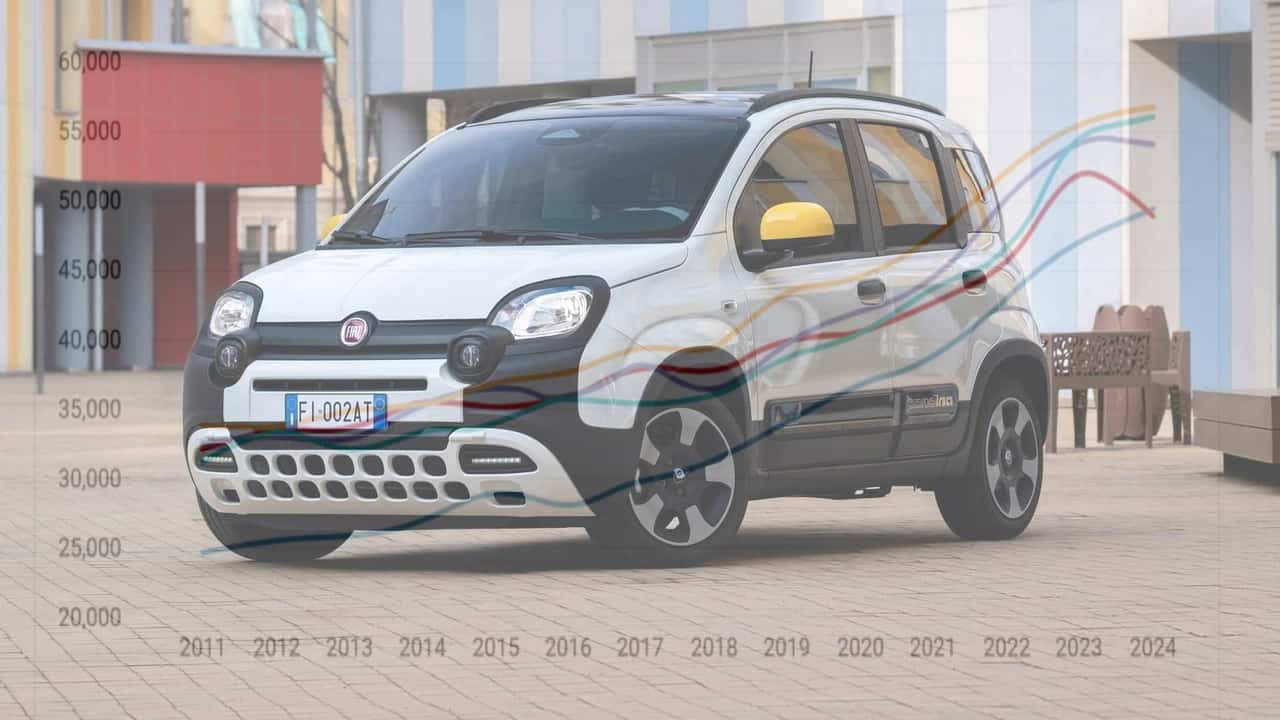

New cars always cost more. Everyone knows that, but now we know exactly how much, or rather, we know the increase in the average price over the last few years, between pre- and post-pandemic that has turned just about everything upside down. Doing the maths was consulting firm, JATO Dynamics, which analysed the price lists of 2010 and compared them with those of 2024. And yes, the increases are incredible.
The first consequence of this trend we can see month after month: fewer and fewer cars are being sold, and although 2024 will close - barring cataclysms - with a slight increase over 2023, the comparison with 2019 will be merciless.
New car, but how much it costs me!
Let's cut to the chase. In Italy in 2019 the average price of a new car was €37,045, compared to an average income (source: Istat) of €21,800 net per year. In 2024, on the other hand, buying a new car will cost an average of €43,871, against an average salary that has risen to just €25,522. It is no better in the rest of Europe. The research by JATO Dynamics portrays a situation of general and widespread increases in the major markets of the Old Continent.
| ICE | Country | BEV | ||||
| Prices 2019 | Prices 2024 | Difference | Prices 2019 | Prices 2024 | Difference | |
| €37,045 | €43,871 | +18% | Italy | €49,080 | €64,603 | +32% |
| €38,264 | €42,207 | +10% | France | €59,197 | €55.430 | -6% |
| €42,120 | €53,109 | +26% | Germany | €60,971 | €64,146 | +5% |
| £32,835 | £42,493 | +29% | United Kingdom | £51,035 | £59,461 | +17% |
| €37,577 | €44,243 | +18% | Spain | 62,035 | €63,235 | +2% |
As can be seen, Italy is bucking the trend of other markets, with electric car prices rising more than combustion cars. France also differs and has seen average BEV prices fall over the past five years: -6% from €59,197 in 2019 to €55,430 today.
Why do cars cost more?
That's the million euro question. As explained by JATO, the main reasons are the increase in energy costs - especially due to the Russian invasion in Ukraine - which has led to higher costs for manufacturers. Then there is inflation, a topic that has occupied the pages of newspapers (economic and otherwise) in recent years. Moreover, there is more and more technology, between driving assistants, engines that emit less and less and infotainment that is now computer-like.

Fiat Panda 2024
Volkswagen Golf
It is a wide gap that has not been exploited by production in China. On the contrary, with rising tariffs on electric cars produced within the Asian giant's borders, the situation will only get worse.
The story is simple: over the past 20 years, virtually every Western manufacturer (along with the Japanese and Koreans) has set up factories in China, in order to grab even a small piece of what has become the world's largest car market, thereby increasing profits. After years and years of continuous sprinting, however, sales in China also declined, leading to an increase in exports without prices being positively affected. Quite the contrary.
As reported by JATO, cars assembled in China and sold there at competitive prices record price hikes once they cross the border.
| Price in China (euros) | Model | Price in Europe (euro) |
| 52,741 | BMW iX3 | 74,600 (Spain) |
| 20,170 | smart #1 | 34,990 (Germany) |
| 27,312 | Cupra Tavascan | 67,551 (UK) |
| 17,136 | Citroen C5 X | 53,500 (France) |
| 6,336 | Dacia Spring | 17,900 (Italy) |
Differences ranging from 41 to 183% and which cannot be attributed solely to import costs which, in the table above, are still not affected by duties.
BMW iX3
Dacia Spring 2024
Something is therefore not working and will not work in the long run. Certainly the pandemic and the problems it has created (chip crisis, to name but one) have contributed decisively. The fact remains that European manufacturers have been unable to meet the challenges, responding only with price increases and product strategies that have failed to reverse the trend.
Read also:
RECOMMENDED FOR YOU
The 2027 Audi Q9 Configurator Is Already Live. We Maxed It Out
Ram's Hemi V8 Is Losing Its Hybrid System—And Automatic Stop/Start
The Genesis GV60 Magma Is $9,000 Pricier Than Its Hyundai Sibling
Mercedes-AMG's New Sedan Just Claimed A Nürburgring Record: 'Fastest Car In Its Class'
The Toyota Corolla GRMN Costs Supra Money
What Do I Do If My Key Fob Battery Dies?
2027 Ram Rumble Bee Pricing: $35,000 Gap Between Cheapest And Most Expensive