Tesla's robotaxi will be driven by real people... remotely
The manufacturer confirms that the Cybercab will be supervised remotely for safety reasons and to speed up self-learning.
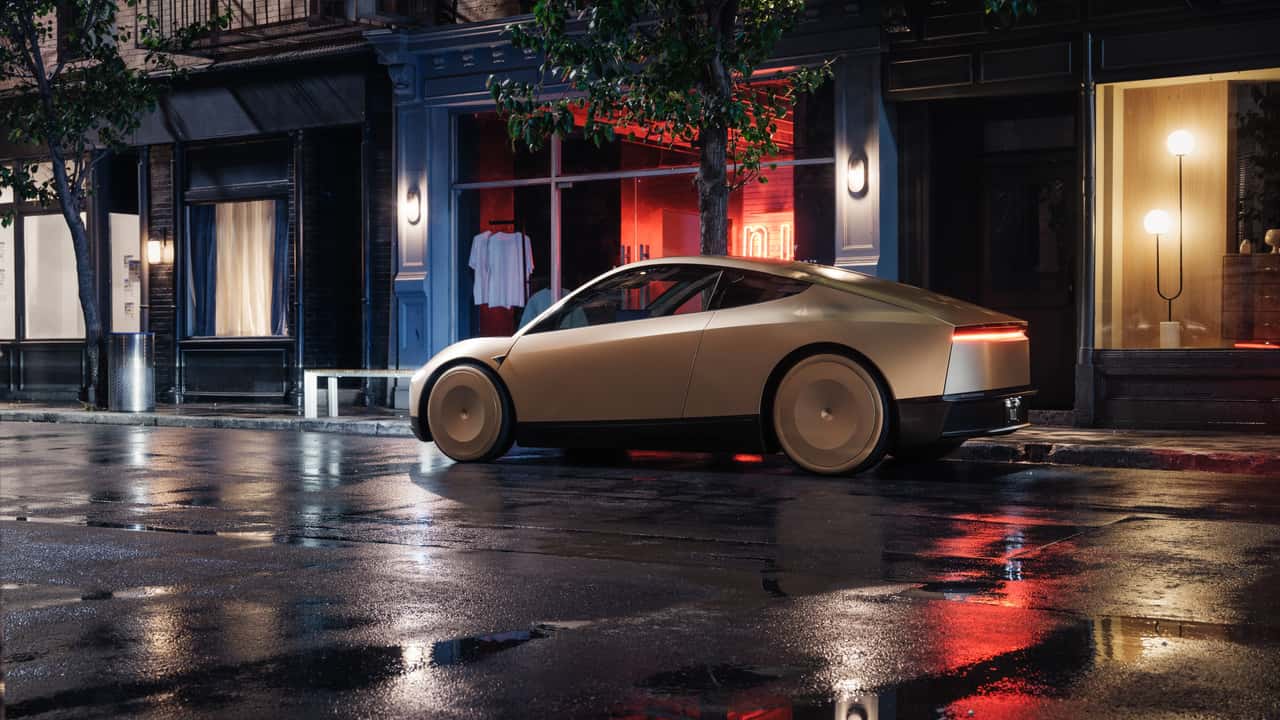

Will Tesla's robotaxi be safe? Yes, says Elon Musk, as fully autonomous driving becomes smarter and more reliable. However, to remove any doubts and avoid mishaps and accidents, the company will also be using remote management technologies for its fleet of driverless vehicles.
Tesla is reportedly already testing the possibility of remote control of the cars, at least at an early stage, to allow a flesh-and-blood human being to take control of the robotaxi and drive it remotely.
Remote control for safety
This is what Travis Axelrod, Tesla's head of investor relations, was quoted as saying in a meeting with Deutsche Bank representatives. Axelrod also spoke about the mysterious £25,000 Tesla Model Q, which is due to be unveiled in the first half of 2025.

Tesla Robovan et Tesla Cybercab
But back to the Cybercab. According to Mr Axelrod, the presence of remote human supervision will have a dual function. On the one hand, it will increase safety while driving, and on the other, it will speed up the self-learning processes of the neural networks that manage autonomous driving.
In a recent communication, the company stated that "Tesla believes it is reasonable to assume some form of remote supervision, at least at an early stage, for safety and redundancy reasons".
More recent news about Tesla:
This is why the new team was created
These latest developments also clarify the role of the new team of engineers that Tesla plans to create by opening up new positions. At the end of November, the company's official website announced that it was recruiting programmers with a mastery of the C++ language, specifically to contribute on the Full-Self Driving front (and on the operation of the Optimus humanoid robots).
In the same announcement, it was explained that these technicians would use state-of-the-art VR headsets to control and drive the robots remotely by simulating a real driving condition in the vehicle.
But will Tesla's autonomous driving really be autonomous? In a sense, yes, because the cars will be able to drive themselves. But in a way, no, because they can be driven at any time by a human being, even from a distance.
Gallery: Tesla Cybercab






RECOMMENDED FOR YOU
RIP: These Cars Won't Make It To 2027
Audi Claims The New A2 E-Tron Is Its Most Efficient Car Ever
Woman Shops For Tesla. Then She Learns The Real Reason It's Better To Lease—Not Buy
Mechanic Works On Land Rover Discovery—He Accidentally ‘Totals’ It: 'Don't Tell The Customer'
Man Spots Tesla Cybertruck Towing A Boat. Then He Looks Closer And Sees Who's Really Doing The Heavy Lifting
Man Buys Lease On New Car. The Salesman Steps In To Clarify—Toyota Leases Are Different: 'I Do This With Subaru'
Man Turns On Full Self-Driving In His Tesla. Then He Pulls A Ferris Bueller To Fool It: 'So Here's The Secret...'