Rover 75 (1998-2005): Classic of the future?
The chic Retro-Brit was launched 25 years ago ...


That's what you call unfortunate timing. On 20 October 1998, the new Rover 75 was presented with great pomp. The British brand's beacon of hope was due to go on sale in mid-1999.
But what did Bernd Pischetsrieder, head of the then Rover owner BMW, do? He criticised the British government's attitude towards financial support for the redevelopment of the Rover plant in Longbridge (where the new Mini and the R30 were to have been produced) and suggested that Rover was in crisis.
This was interpreted in the press as BMW being unhappy with the continuing financial losses and intending to close Rover. This undoubtedly put off many potential buyers, despite the very positive reaction to the car itself.
Gallery: Rover 75 (1999-2005)

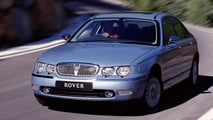
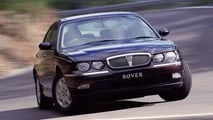
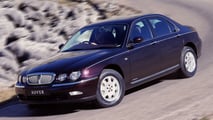
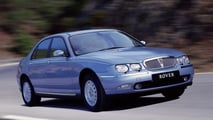

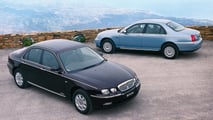
Indeed, it could compete very favourably with the Jaguar S-Type, which was launched at the same show. Rover's brand image was also damaged by the "Seventy-Five" (as Rover wanted the 75 to be pronounced) despite its positive reception in the specialised media.
Looking back a few years, the basic idea for the Rover 75 came about as part of a group of three new designs for the company under the direction of Richard Woolley: a large saloon codenamed "Flagship", a smaller vehicle (codenamed "Eric") and the 75. Of these designs, only the 75 concept was pursued.
Originally, the Rover 600 (launched in April 1993) was to be redesigned, but after the takeover by BMW in 1994, it was quickly decided that this platform would not be reused, but replaced by an all-new model planned for launch in the late 1990s.
Work on the new model, codenamed the R40, progressed without significant interference from BMW; the design was enthusiastically received by the management and both companies felt that the classic look would be the ideal direction for Rover. Inside, the 75 boasted plenty of wood and chrome.
The 4.74 metre long Rover 75 saloon made its debut at the Birmingham Motor Show on 20 October 1998 and went on sale on 17 June 1999 after being extensively tested by the trade press. Interested parties in Germany received a video cassette with detailed information about the car. This is what the film looked like at the time:

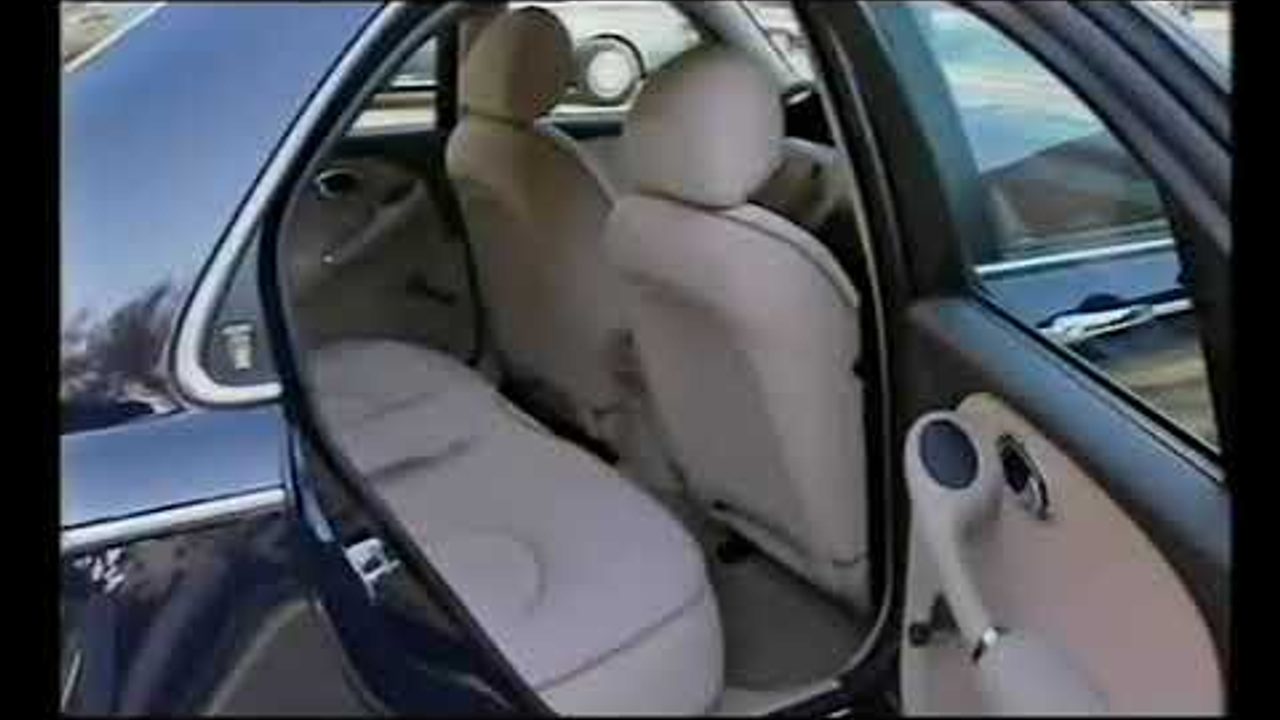
The 75 had a range of petrol and diesel engines with a displacement of 1.8 to 2.5 litres. The petrol engines were the Rover four-cylinder K-series with a displacement of 1.8 litres and the KV6 with four camshafts, which was offered with a displacement of either 2.0 or 2.5 litres.
Rover 75 Tourer (2001-2005)
The 2.0-litre engine was later discontinued with the introduction of the 1.8-litre turbo engine for emissions reasons. A diesel engine was offered through the BMW Group. The 4-cylinder M47R (M47 Rail) developed by the engineers of the Rover Group and Steyr for transverse installation differed from the M47D20 engines of the 3 and 5 Series by a different turbocharger and more sophisticated systems for temperature management.
In July 2001, after the separation of Rover and BMW, Rover launched the estate version of the 75 with the designation Tourer. The tailgate was optionally equipped with an opening rear window. BMW fans were familiar with the system. The pretty 75 Coupé Concept remained just a study.
Gallery: Rover 75 Coupé Concept
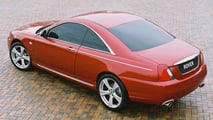
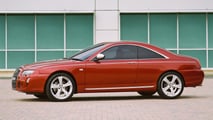
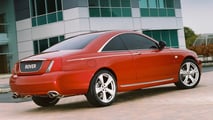
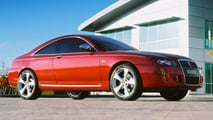
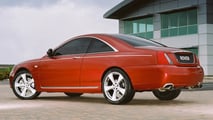
Let's move on to the super-rare variants of the Seventy-Five. A stretched version of the Rover 75 - initially under the name Vanden Plas (later simply the saloon) - was introduced in 2002. Developed in co-operation with vehicle manufacturer S. MacNeillie & Son Limited in Walsall, England, the model was stretched by 200 mm in the rear floor pan and the rear doors were modified.
It was only available in the Connoisseur version and was produced by MacNeillie in Longbridge after an initial small series. The 75 was a ministerial vehicle in the British government, and Tony Blair had access to one during his time as Prime Minister.
Rover 75 Vanden Plas
Rover 75 Facelift
In spring 2004, Rover introduced a facelift of the 75, which included a completely new radiator grille and bumper as well as one-piece headlights with halogen projectors. The rear also received a new bumper with a revised chrome boot handle.
The new design received a mixed reception from the motoring press, and Rover announced the new V8 model with a completely different grille design just a few months later. It is said that this grille was inspired by previous V8 models, but it caused some irritation as it looked similar to that of the new (later introduced) large Audi.
At the 2004 Geneva Motor Show, Rover announced a V8 model. Following the MG ZT 260 launched in 2003, this was the first Rover with a V8 engine since the demise of the Rover SD1 in 1986. The platform was extensively redesigned for the Ford 4.6-litre V8 engine and rear-wheel drive, including a stiffer transmission tunnel and bespoke rear suspension.
Rover 75 V8
Like the ZT 260, the 75 V8 was built on the normal assembly line, removed for the necessary structural modifications and installation of the V8 drivetrain, and then placed back on the assembly line for finishing. Instead of the Tremec TR-3650 manual gearbox of the MG ZT 260, the Rover 75 V8 was fitted with Ford's 4R75W four-speed automatic transmission.
Other features included quad exhaust pipes, special emblems and a "premium" bumper with a deeper radiator grille. 166 examples were produced in the saloon and tourer body variants, compared to 717 MG ZT 260s, i.e. a total of 883 V8 vehicles.
Other Classics From The 1990s:
Maximum exclusivity with regard to the total number of 75s: exactly 211,175 examples of the Rover 75 were produced up to 2005, the end of the MG Rover Group. But that was not the end for the 75. After the insolvency, the construction plans for the Rover 75 were sold to the Shanghai Automotive Industry Corporation and the production lines and machines were sold to the Nanjing Automotive Company. As the technically and visually revised Roewe 750, the Seventy-Five continued to roll off the production line in China until 2016.
RECOMMENDED FOR YOU
This Lovely Mercedes 190 Evo II Restomod Packs 765 Horsepower
Man Goes To Firestone. Then He Catches The Worker In A Lie: ‘Why Are You Even Looking Under My Hood?’
This Is One Of The Rarest Mercedes G-Classes Ever Made, And It Just Sold For $143,000
Woman Goes To Toyota Dealership For Routine Service. 2 Hours Later It Cancels Her Lifetime Warranty
Morgan's Best Performance Car Is Coming To America Without An Important Feature
Why Don't Some Cars Have Rear Wipers?
'A Tribute To The Very Beginnings:' McLaren Rebuilt Its First Road Car To Absolute Perfection