Electric Cars Have A Weight Problem. This Battery Design Could Help
Structural batteries make EVs lighter, cheaper, and stronger, but there's a catch when it comes to repairs.


Electric cars have one major disadvantage compared with their gas-powered counterparts: weight. Their large battery packs can add hundreds or even thousands of pounds, take up valuable space underneath the cabin, and require substantial supporting structures to protect them.
Automakers are looking for ways to address these challenges, and one increasingly popular solution is to make the battery pack part of the vehicle itself. It's called a structural battery, and it could change how future electric cars are designed.
What Is A Structural Battery?
In a conventional electric vehicle, the battery pack is a separate assembly installed underneath the cabin, usually between the front and rear axles. It contains individual battery cells grouped into modules or arranged directly inside a protective enclosure. The vehicle's chassis supports the battery, while the pack has its own housing to protect it from impacts and environmental damage.
A structural battery changes that arrangement. Instead of simply attaching the battery to the vehicle, engineers integrate it into the chassis or body structure, allowing the battery assembly to contribute to the vehicle's rigidity and load-bearing capabilities.
This approach is commonly associated with cell-to-chassis (CTC) and cell-to-body (CTB) designs. These systems reduce the separation between the battery and the vehicle's structure, sometimes eliminating traditional modules and integrating cells directly into the floor assembly.
It's worth noting that most production vehicles described as having structural batteries don't use battery cells that independently function as structural materials. Instead, the battery pack and its surrounding structure work together as an integrated component.
Why Are Automakers Integrating Batteries Into The Chassis?
The biggest motivation is weight reduction. Traditional battery packs require protective enclosures, mounting brackets, supporting structures, and other components that add mass to an already heavy vehicle. Integrating the battery into the chassis can eliminate some of these parts.
A lighter vehicle generally requires less energy to accelerate and maintain speed, potentially improving driving range without increasing battery capacity. Automakers can also use the additional packaging efficiency to install larger batteries or create more interior space. There are several potential advantages:
- Improved structural rigidity: A properly engineered battery enclosure can contribute to the vehicle's overall stiffness.
- Better packaging: Integrating the battery into the floor can free up space and give designers more flexibility.
- Fewer components: Integrating the battery and chassis can reduce the number of individual parts required during manufacturing.
- Manufacturing efficiency: Combining multiple assemblies could simplify certain production processes.
- Potential cost savings: Fewer components and streamlined assembly could reduce manufacturing expenses at scale.
However, these benefits depend on the specific design. Structural integration doesn't automatically make every electric car lighter, cheaper, or more efficient.
Tesla, BYD, And BMW Are Taking Different Approaches

Several major automakers have already introduced or announced battery integration technologies.
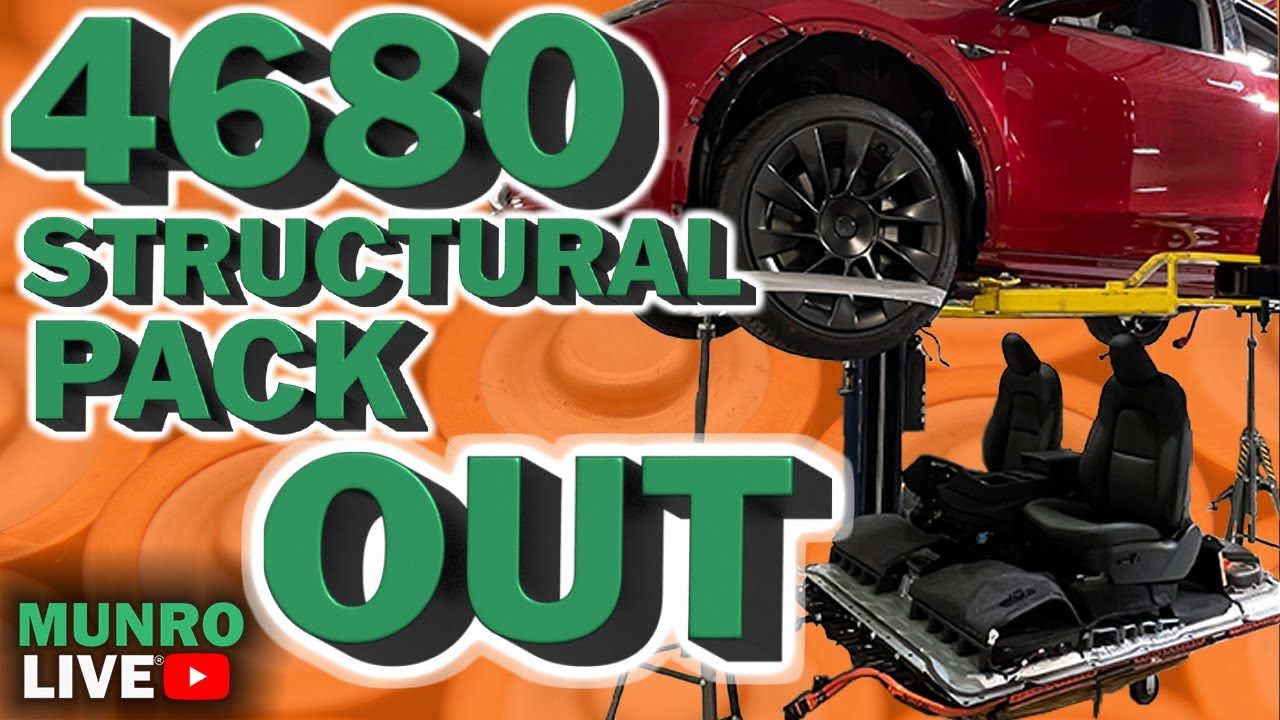
Tesla is one of the most recognizable examples. The company introduced its structural battery pack concept using large-format 4680 cylindrical cells, combining the battery assembly with the vehicle's front and rear structural sections. The approach works alongside large cast-aluminum body components to reduce the number of individual parts required.
BYD has developed its Cell-to-Body technology, which integrates the battery into the vehicle's floor structure. The BYD Seal is one example of a production vehicle using this approach, with the battery contributing to the overall body architecture.
BMW is also moving in this direction with its Neue Klasse platform. Its sixth-generation battery technology is designed around an integrated structural floor, helping improve packaging and make more efficient use of available space.
Although these manufacturers use different engineering solutions, the underlying idea is similar: the battery should do more than store electricity. It should also contribute to the vehicle's overall construction.
Are Structural Batteries Safer And Easier To Repair?
Safety is one of the most important considerations when integrating a battery into a vehicle's structure. A conventional battery enclosure can be designed as a separate protective assembly, but a structural battery requires engineers to consider how the cells, enclosure, and surrounding body components respond together during an accident.
Manufacturers must account for side impacts, underbody damage, vibration, deformation, and thermal events. Battery cooling is equally important, particularly during fast charging and demanding driving conditions.
Repairability presents another challenge. When a battery is more closely integrated into the chassis, replacing or repairing damaged components can become more complicated. Depending on the design, damage to the battery enclosure could affect the vehicle's structural integrity.
That doesn't mean structural batteries are inherently unsafe or impossible to repair. Their safety and serviceability depend on the materials, engineering, protective systems, and repair procedures developed by each manufacturer. However, these considerations could make certain repairs more expensive than they would be with a conventional modular battery pack.
Balancing efficiency and manufacturing costs with safety and repairability results in several trade-offs, as Nature Reviews Clean Technology details in a June 2026 technical analysis.
What Do EV Owners Think About Structural Batteries?
Reddit discussions reveal that EV enthusiasts are divided over whether structural batteries are worth the potential repair complications. In a discussion on r/electricvehicles about Kia and Hyundai exploring structural battery packs, users pointed out that an integrated battery is not necessarily impossible to remove. However, replacing individual cells can be more difficult when they're bonded into the structure.
A separate r/teslamotors discussion about removing the Model Y's structural battery pack offered an interesting counterpoint. Users discussed a teardown showing that the complete assembly could be dropped from the vehicle, challenging the assumption that structural integration automatically makes battery replacement impractical.
Meanwhile, a discussion about the Model Y's removable structural battery on r/electricvehicles highlighted the potential complexity of the process, including removing interior components and the floor assembly.
Are Structural Batteries The Future Of Electric Cars?
Structural battery integration is likely to become increasingly important as automakers search for ways to make electric vehicles lighter, more efficient, and less expensive to manufacture. Combining the battery and chassis could reduce component counts, improve packaging, and simplify certain aspects of vehicle production.
There are still challenges to overcome, particularly when it comes to crash protection, battery replacement, recycling, and long-term repair costs. Manufacturers must find the right balance between integration and serviceability rather than simply eliminating as many components as possible.
For now, structural batteries represent an important evolution in electric vehicle engineering. The biggest change is not necessarily how much energy a battery can store, but how much more it can contribute to the vehicle around it. Instead of being something an electric car simply carries underneath its cabin, the battery is becoming part of what makes the car a car.
More From Motor101
RECOMMENDED FOR YOU

From Detroit To Tokyo: Where Every Major Automaker Calls Home
Why Modern Cars Are Designed To Fall Apart In A Crash
BMW’s Next Electric Wagon Spied Ahead Of 2027 Reveal: Video
Lego Has Competition. Hot Wheels Expands Its Brick Shop With New Buildable Sports Cars
BMW Creates One-Off M3 Tribute To A Motorsport Legend
This Guy Is Building A 300-HP Street-Legal Off-Road Go-Kart. It's Insane.
The Toyota Supra And BMW Z4 Have Officially Sold Out