What Really Happens When You Put Your Car In Sport Mode
That little button can transform how your car feels, but what is Sport mode actually doing under the hood?
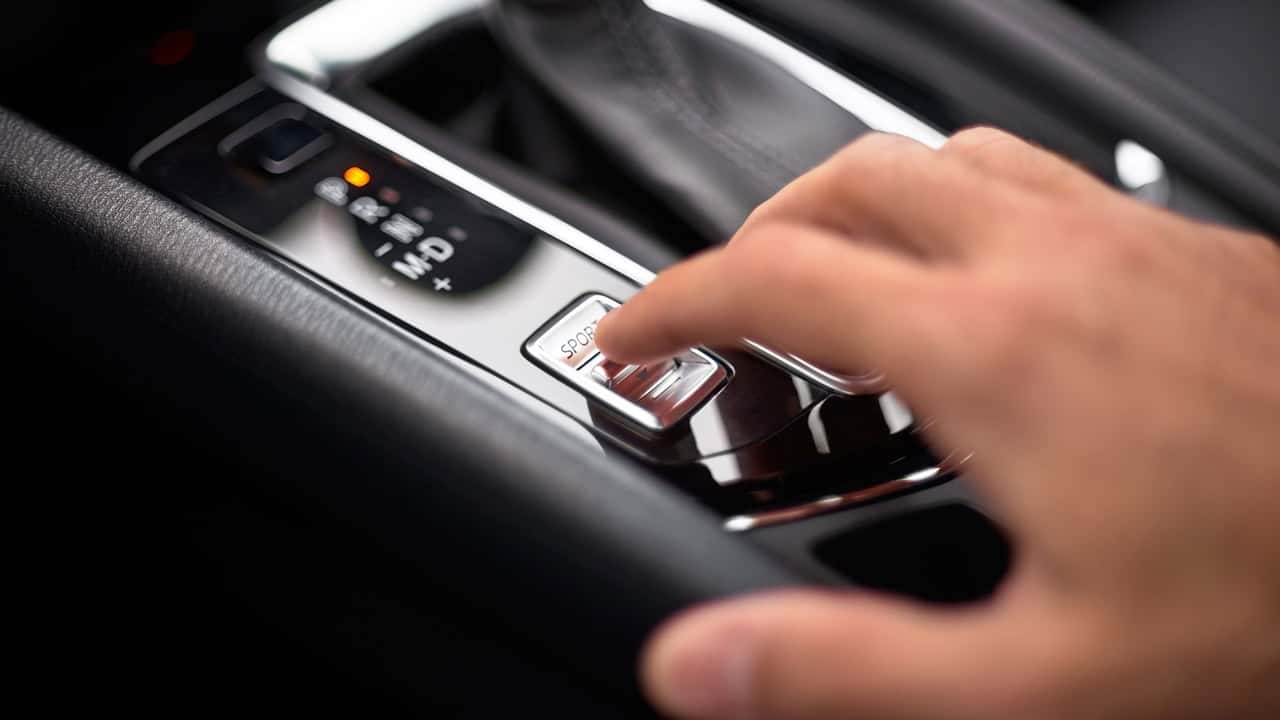

Walk through a modern car's drive-mode menu and you'll probably find an option called Sport. Sometimes it's activated with a button. Sometimes it's buried in a touchscreen menu. And sometimes it's represented by a little checkered flag that magically makes the car feel considerably more exciting than it did five seconds earlier.
But what actually happens when you press it? For many drivers, Sport mode is one of those features they try once, enjoy for a few minutes, and then forget about. That is understandable because, in everyday traffic, there isn't always an obvious reason to change the car's behavior. Yet the feature can make a surprisingly large difference to how a vehicle responds.
What Sport Mode Actually Changes
The important thing to remember is that Sport mode doesn't mean the car suddenly becomes a sports car. Instead, it changes a variety of settings to make the vehicle respond more aggressively to driver inputs.
The exact recipe varies from one automaker to another, but Sport mode commonly adjusts the engine, transmission, steering, throttle, and sometimes the suspension or stability control system. That can mean a sharper throttle response, quicker gear changes, heavier steering, or a suspension that feels firmer.
In some cars, Sport mode also changes the exhaust note or uses electronic sound enhancement to make the engine seem louder. Others alter the digital instrument display, turning a conventional dashboard into something that looks more performance-focused.
So while pressing the Sport button might feel like one action, several systems can be changing underneath the surface at once.
Why Does Sport Mode Feel Faster?
One of the biggest tricks is throttle response. In normal mode, the accelerator pedal may be calibrated to make the car's power delivery smooth and predictable. That's useful when you're creeping through a parking lot or sitting in traffic.
Sport mode can make the accelerator feel more immediate. A small movement of the pedal can produce a stronger response from the engine, making the car feel quicker even if its maximum power output hasn't changed.
The transmission can also play a major role. An automatic gearbox may hold lower gears for longer to reach higher rpms, downshift more readily, and avoid shifting into the highest gear as quickly. That will keep the engine closer to its more responsive part of the rev range.
The result is a car that feels more eager whenever you press the accelerator.
It Can Change More Than The Engine
Sport mode isn't exclusively an engine setting, even though that's the most important. Depending on the vehicle, activating it can alter:
- Throttle response: The accelerator can feel sharper and more immediate.
- Transmission behavior: Automatic gearboxes may hold gears longer and downshift sooner.
- Steering: The system can add weight to the steering for a more substantial feel.
- Suspension: Cars with adaptive dampers and/or air suspension may switch to a firmer setting.
- Stability control: Some vehicles allow more wheel slip before electronic intervention.
- Exhaust sound: The car may open exhaust valves or increase artificial engine noise.
- All-wheel-drive behavior: Some systems can change how torque is distributed between the axles.
Not every car changes all of these settings. Some may only alter the transmission and throttle, while higher-end performance models can modify nearly everything at once.

Why You Probably Don't Use It
The biggest reason is simple: normal mode is already designed for normal driving. If you're commuting to work, navigating city traffic, or taking a relaxed highway trip, there's often little benefit to having the transmission hold onto a lower gear or making the throttle more sensitive.
In fact, Sport mode can sometimes make an ordinary commute less pleasant. The car may feel more eager to accelerate when you barely touch the pedal. Automatic transmissions can keep the engine at higher revs, and a firmer suspension can make bumps and rough pavement more noticeable.
There's also the fuel-economy factor. Sport mode doesn't automatically make a car dramatically less efficient, but keeping the engine at higher rpm and encouraging more aggressive acceleration can make it easier to use more fuel. For many drivers, that's enough reason to leave the button alone.
When Sport Mode Actually Makes Sense
There are situations where Sport mode can be genuinely useful, mind you. A winding back road is an obvious example. Keeping the transmission in a lower gear can make acceleration out of corners more immediate, while sharper throttle response can make the car feel more connected to the driver's inputs.
It can also be useful when towing in vehicles that offer a dedicated sport-oriented transmission setting, although the manufacturer's recommended towing mode should always take priority.
Some drivers also use Sport mode when merging onto a highway or passing another vehicle because the transmission may respond more quickly to an aggressive accelerator input, enabling quicker merging and overtaking.
But there's an important distinction: Sport mode isn't a replacement for good driving technique. A car doesn't necessarily corner better simply because a button has been pressed. Tires, suspension, brakes, road conditions, and the driver's skill remain far more important.
What Drivers Think About Sport Mode
Reddit's car communities have plenty of opinions about Sport mode, and one theme comes up repeatedly: there's no universal Sport mode.
In a recent r/CarTalkUK discussion, drivers pointed out that Sport can change much more than throttle response. Depending on the vehicle, it may alter the transmission, steering, suspension, regenerative braking, and even engine or exhaust behavior.
Owners in r/cars have made similar observations, noting that Sport mode can make steering heavier, hold gears longer, sharpen throttle response, and reduce stability-control intervention.
But not everyone likes the result. Some Reddit users in an r/BMW thread say Sport mode makes their cars feel more responsive and engaging, while others find the sharper responses tiring in everyday traffic.
The takeaway? Sport mode can be genuinely useful, but how useful it is depends heavily on the car—and how you drive it.
The Sport Button Is Often More About Feel Than Performance
Perhaps the most interesting thing about Sport mode is that it can change how a car feels without dramatically changing what it can actually do.
A car might accelerate only marginally faster, yet feel significantly more exciting because the transmission keeps the engine at higher rpm and the throttle reacts more quickly.
That's not necessarily a bad thing. Cars are designed to be driven, and part of the appeal of a performance-oriented vehicle is how it communicates with the person behind the wheel. Sport mode simply turns up some of those sensations.
For everyday driving, though, most owners are perfectly happy leaving the car in its default setting. And that's probably why Sport mode remains one of the most frequently ignored buttons in a modern car—even though pressing it can reveal a completely different personality hiding underneath.
More From Motor101
RECOMMENDED FOR YOU

Why Is WD-40 Called WD-40?
Woman Takes Her Car To The Dealership. Then A Tech Asks Her To Replace Every Lug Nut: ‘That Expensive?’
You're Probably Not Checking Your Tire Pressure Enough
Cadillac Is Considering A V-Series.R Track Car For Customers
Why Your Steering Wheel Might Shake At Highway Speeds
Genesis G90 Flagship Sedan Spied With New Face
Your Car's Engine Sound Might Be Fake. Here’s Why Automakers Pipe It Through The Speakers