Home
Features
How Long Do Brake Pads Last?
Some brake pads last 20,000 miles. Others survive for more than 60,000. Here's what really determines when yours wear out.
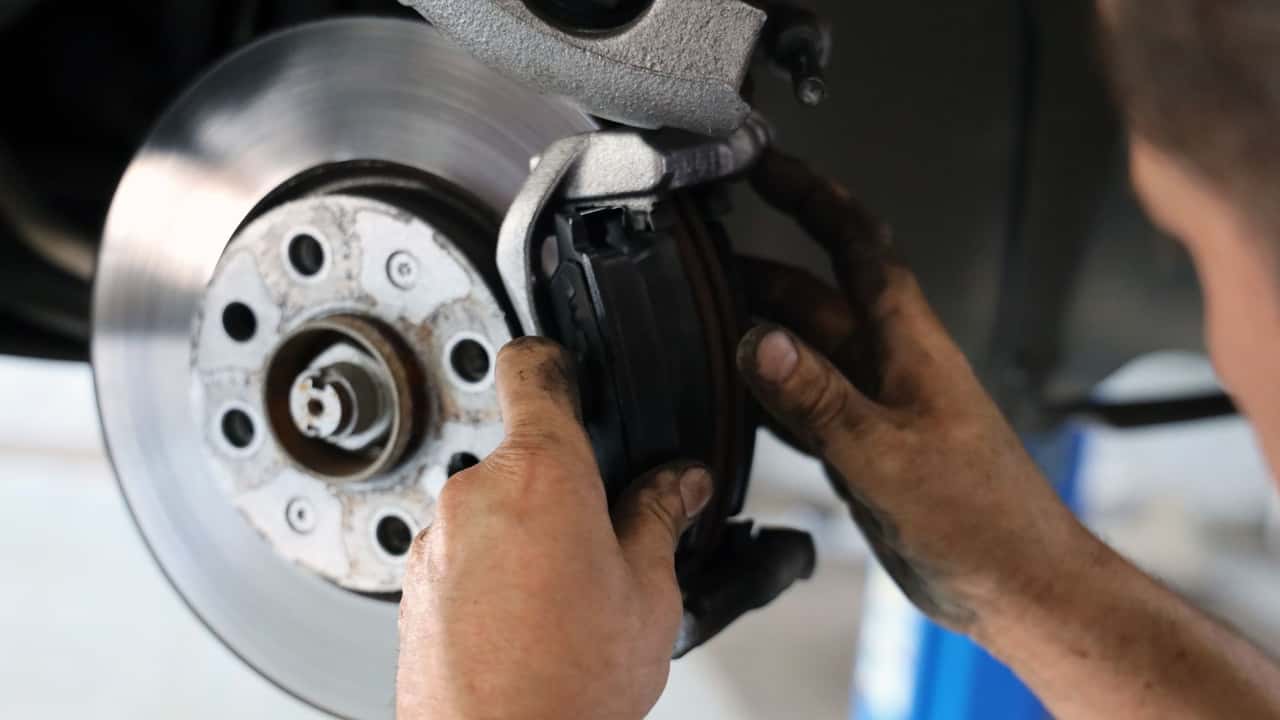
Photo by: Getty Images
Dan Mihalascu 
By: Dan Mihalascu
Aug 18, at 7:00am ET
Add Motor1.com as a preferred source in Google
- (https://twitter.com/intent/tweet?url=https%3A%2F%2Fwww.motor1.com%2Ffeatures%2F805209%2Fhow-long-do-brake-pads-last%2F&text=How%20Long%20Do%20Brake%20Pads%20Last%3F&via=motor1com)
- copy
Share
Comment
Brake pads are one of those car parts most drivers don't think about until they start making noise. Unlike engine oil or tires, there's no universal mileage number that tells you exactly when brake pads need to be replaced. One set might last tens of thousands of miles, while another can wear out much sooner.
A typical set can last roughly 20,000 to 60,000 miles, although the actual lifespan varies significantly with driving style, vehicle weight, brake design, and road conditions. So, how do you know when yours are running out?
How Many Miles Should Brake Pads Last?
There's a surprisingly wide range. Front brake pads wear much faster than rear pads because the front brakes handle a greater share of the vehicle's braking force. But even two identical cars can go through pads at very different rates.
Frequent hard braking, stop-and-go traffic and driving in hilly areas can accelerate wear. A driver who spends most of their time cruising on highways may get considerably more life from the same pads.
That's why automakers generally don't treat brake-pad replacement as a simple mileage-based service. Chevrolet, for example, says brake wear varies with driving habits and conditions and recommends regular inspections rather than a specific mileage interval.
What Makes Brake Pads Wear Faster?
Your driving habits are probably the biggest factor, but they're not the only one. Brake-pad life can be shortened by:
- Frequent stop-and-go driving: Constant braking creates more wear.
- Aggressive braking: Hard, repeated stops generate more heat and friction.
- Hills and mountains: Descending steep grades can keep the brakes working continuously.
- Heavy vehicles: More weight means more energy has to be dissipated during braking.
- Towing: Additional load can put extra demand on the braking system.
- Road conditions: Mud, dust and corrosive environments can contribute to accelerated wear.
Even the brake-pad material matters. Different compounds can offer different balances of durability, noise, heat resistance and braking performance.
How Do You Know Your Brake Pads Are Worn Out?
Your car can give you several warnings. One of the most recognizable is a high-pitched squeal or scraping sound.
Many brake pads have a mechanical wear indicator that contacts the rotor when the friction material gets low, producing an audible warning. Some newer vehicles use electronic wear sensors and display a warning on the dashboard instead.
You may also notice changes in braking performance, unusual noises, vibration or the vehicle pulling to one side. Those symptoms don't necessarily mean the pads are worn, but they warrant an inspection.
And there's an important distinction: occasional brake noise is not always a sign that the pads are finished. Nissan notes that occasional squeak, squeal or other brake noise can be normal under some driving and climate conditions.
Drivers Say Brake Pad Life Is All Over The Map
Reddit discussions make one thing clear: there's no universal mileage figure for brake pads.
In one r/COROLLA thread, owners reported getting 70,000, 100,000 and even 150,000 miles from original brake pads, while others said they were replacing pads much earlier. Drivers repeatedly pointed to driving style, traffic and how much they use the brakes as major factors.
A newer r/Camry discussion is even more extreme. One owner reported reaching 134,000 miles on the original pads, largely because of highway driving.
Meanwhile, an r/CX5 user dealing with Boston's stop-and-go traffic reported needing another brake job for its Mazda CX-5 after roughly 30,000 miles, with commenters again blaming driving conditions and braking habits.
The takeaway from these discussions is pretty simple: mileage is only part of the story. Highway driving and gentle braking can make pads last dramatically longer, while city traffic, aggressive braking and heavier vehicles can wear them out much sooner.
Can You Check Your Brake Pads Yourself?
Yes, although it depends on the wheel design of your car. If the wheel gives you a clear view through the spokes, you may be able to see the friction material on the pad. Some vehicles also have inspection openings in the caliper.
But measuring pad thickness accurately can be difficult without the right access and tools. Ford's inspection guidance, for example, calls for checking the pad lining through the caliper inspection hole and specifies a minimum thickness of 1.5 mm for the procedure cited.
The important thing is not to rely on a single mileage figure. A proper inspection can tell you how much material remains and whether the rotors or other brake components also need attention.
What Happens If You Wait Too Long?
Ignoring worn brake pads can turn a relatively routine repair into a much more expensive one. Once the friction material becomes excessively worn, the backing plate can contact the brake rotor. That can damage the rotor and reduce braking performance.
Manufacturers explicitly warn against continuing to drive with worn pads. Kia, for example, says ignoring its high-pitched brake-wear warning can eventually lead to reduced braking performance and potentially a serious accident.
That's why a warning squeal isn't something to simply turn up the radio to ignore. You need to take it seriously.
The Bottom Line
There's no magic number of miles that guarantees a set of brake pads will need replacing. 20,000 miles might be reasonable for one vehicle and driver, while another could go far beyond 60,000 miles. And that's not counting electric vehicles, whose brake pads can last well beyond 100,000 miles thanks to one-pedal driving (regenerative braking).
The real answer depends on how and where you drive, how much your vehicle weighs, the brake components it uses and how aggressively you use them.
What do you think?
View
Comments
The best approach is simple: pay attention to warning sounds, dashboard messages and changes in braking behavior, and have the brakes inspected regularly.
Brake pads are designed to wear out. The important part is making sure they don't wear out without you noticing.
More From Motor101
 What All Those Numbers And Letters On Your Tires Actually Mean
Why Every New Car Seems To Have A Giant Screen Now
Your Car Has a Hidden Mechanical Key. Here's Why It's There
Why Does The Mercedes-Benz Logo Have Three Points?
We want your opinion!
What would you like to see on Motor1.com?
Take our 3 minute survey.
- The Motor1.com Team
Share this Story
- (https://twitter.com/intent/tweet?url=https%3A%2F%2Fwww.motor1.com%2Ffeatures%2F805209%2Fhow-long-do-brake-pads-last%2F&text=How%20Long%20Do%20Brake%20Pads%20Last%3F&via=motor1com)
- copy
GO TO COMMENTS
(
)
Got a tip for us? Email: tips@motor1.com
View all comments ( )
Popular
Scout Still Has Plenty To Prove. But Its Comeback Is Starting To Feel Very Real
Audi Has 7 New Models Coming In 2027. Here's All Of Them
Honda Debuts New Three-Row SUV With Next-Gen Hybrid Technology
What If Koenigsegg Had A Sterrato Fighter? Meet The Jesko Terrang
This Jaguar XJ220 Won At Le Mans. Now You Can Drive It On Public Roads
Latest Stories
- Hyundai Sonata Dead In Australia, But America Still Wants Sedans Nov 20 - Manufacturing / Production -
- Waymo Just Paused Driverless Freeway Rides Across The US (Update) Nov 20 - Autonomous Vehicles -
- Hyundai's Supercar Dream Is (Probably) Dead Nov 20 - Manufacturing / Production -
- Koenigsegg Is Now Worth $1.4 Billion After New Investment Nov 20 - Corporate / Financial -
- What If Koenigsegg Had A Sterrato Fighter? Meet The Jesko Terrang Nov 20 - Renderings -
- Audi Has 7 New Models Coming In 2027. Here's All Of Them Nov 20 - Industry -
- Lamborghini Temerario Spyder Gets Apple Vision Pro Immersive 3D Experience Nov 20 - Technology -
RECOMMENDED FOR YOU
Chip Foose Rebuilds Fire-Destroyed 1955 Chevy With LS3 V8
Hyundai's Supercar Dream Is (Probably) Dead
GM Is Quietly Looking For Its Next CEO: Report
Koenigsegg Is Now Worth $1.4 Billion After New Investment
GM Might Finally Build A Real F-150 Raptor Rival: Report
What If Koenigsegg Had A Sterrato Fighter? Meet The Jesko Terrang
Hot Wheels Crowns 2026 Legends Tour Winner After Worldwide Search