Home
Features
Motor101
Why Is WD-40 Called WD-40?
That strange name is not a random product code. It actually tells the story of how this iconic garage staple was invented.
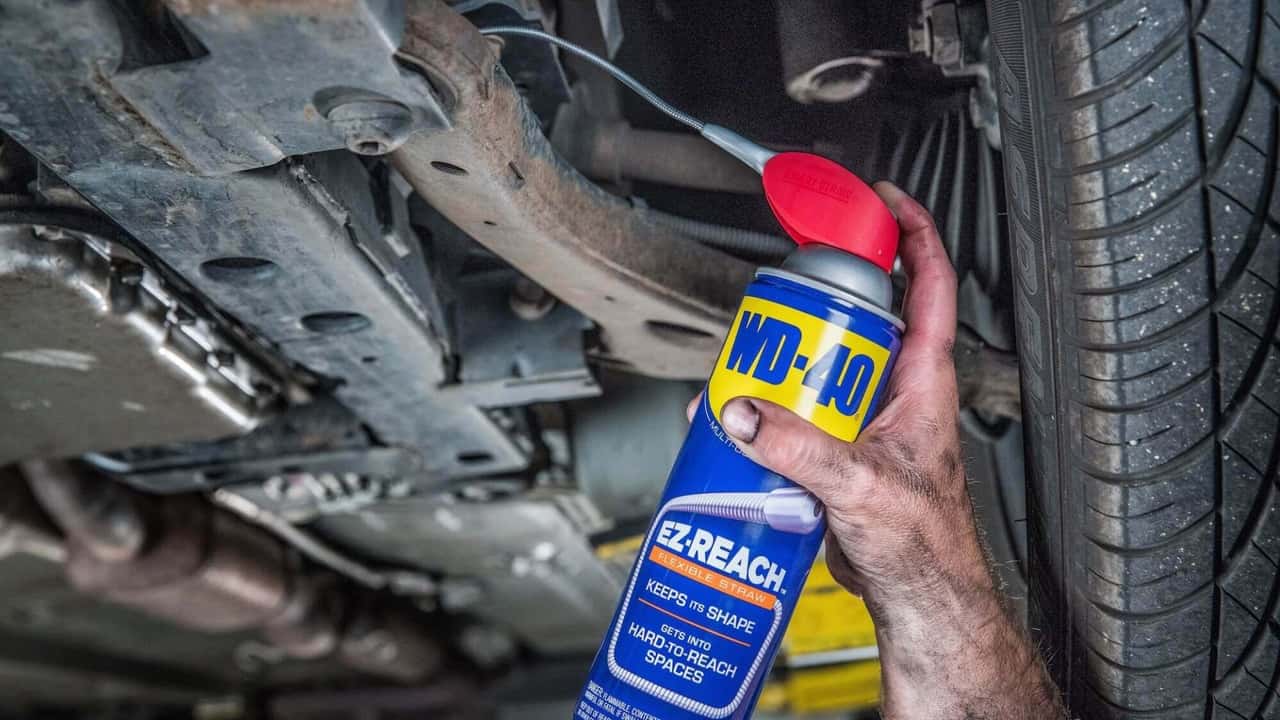
Photo by: WD-40
Dan Mihalascu 
By: Dan Mihalascu
Aug 19, at 4:00pm ET
Add Motor1.com as a preferred source in Google
- (https://twitter.com/intent/tweet?url=https%3A%2F%2Fwww.motor1.com%2Ffeatures%2F805444%2Fwhy-is-wd-40-called-wd-40%2F&text=Why%20Is%20WD-40%20Called%20WD-40%3F&via=motor1com)
- copy
Share
Comment
Few products have become as recognizable as WD-40. The blue-and-yellow can can be found in garages, workshops, toolboxes, and sheds around the world—and its name has become almost synonymous with fixing a squeaky hinge or loosening a stubborn fastener.
But the name itself sounds like a product code rather than a brand. So, what does WD-40 actually mean? The answer goes all the way back to a small laboratory in San Diego in 1953—and it involves 40 attempts to get a formula right.
WD Stands For Water Displacement
The "WD" in WD-40 isn't a person's initials or an abbreviation for a mysterious chemical. It stands for Water Displacement.
The product was originally developed by Rocket Chemical Company as a rust-prevention solvent for the aerospace industry. The goal was to create a formula capable of displacing water and helping protect metal surfaces from corrosion.
The company wasn't initially trying to create the household product we know today. Its original purpose was much more specialized: protecting aerospace components from rust and corrosion.
And The 40 Means The 40th Formula
The second half of the name is even more straightforward. According to WD-40's official history, it took 40 attempts before the company's team perfected its water-displacing formula. The successful formula became WD-40—short for Water Displacement, 40th formula.
So there isn't a complicated code hidden in the name. The number 40 is essentially a record of persistence. The product that eventually became a household name was the result of the team's 40th formulation attempt.
So why didn't they just give it a normal name? Well, that's part of what makes WD-40's name so effective. Instead of inventing a traditional brand name, the company essentially kept the laboratory designation that described what the product was and how it was developed. Simple and effective.
It Started With Rockets, Not Squeaky Hinges
WD-40's aerospace origins are probably the most surprising part of its story. The product's original purpose wasn't to help homeowners loosen rusty bolts or silence squeaky hinges.
Developed in 1953, it was first used commercially by Convair, an aerospace contractor working on the Atlas missile program, to protect the outer skin of the missile from rust and corrosion, particularly during storage and handling.
The formula worked so well that some Convair employees reportedly began taking cans home for their own household uses. That helped reveal something important: a product developed for the aerospace industry could also be remarkably useful around the garage and home.
WD-40's fame went beyond the aerospace industry simply because it could solve plenty of everyday problems, too.
How WD-40 Became A Garage Staple
Once people discovered the product's versatility, Rocket Chemical Company began looking beyond its original industrial application.
Company founder Norm Larsen eventually experimented with putting WD-40 into aerosol cans, making it easier for consumers to use at home. The product first appeared on store shelves in San Diego in 1958.
The company eventually leaned so heavily into its most famous product that Rocket Chemical Company changed its name to WD-40 Company in 1969.
What started as a specialized solution to an aerospace corrosion problem was becoming an everyday household product—and eventually one of the most recognizable names in the garage.
What Do Car Owners Frequently Use WD-40 For?
WD-40 has plenty of uses around a vehicle, although it's important to use the right product for the job. The company lists automotive applications ranging from loosening corroded fasteners to protecting metal from rust. Some of the more common uses include:
- Quieting squeaky hinges: A small amount can help lubricate door and hood hinges.
- Loosening stuck bolts: Spraying corroded nuts and bolts can help make disassembly easier.
- Protecting chrome and metal: A light coating can help guard exposed metal against moisture and corrosion.
- Removing grease and grime: WD-40 can help loosen stubborn automotive dirt without scratching painted surfaces when used as directed.
- Displacing moisture: It's designed to push water away from metal and electrical components, making it useful for certain moisture-related problems.
- Lubricating latches and linkages: Hood latches and other suitable moving metal parts can benefit from lubrication.
- Cleaning stubborn residue: It can help remove things such as adhesive, road grime, and some sticky contaminants from appropriate surfaces.
That versatility explains why a can of WD-40 has become such a common fixture in garages. Still, it's not a universal automotive lubricant or repair solution, and drivers should follow the product label and avoid surfaces the manufacturer says aren't suitable.
What WD-40 Users Think About The Name
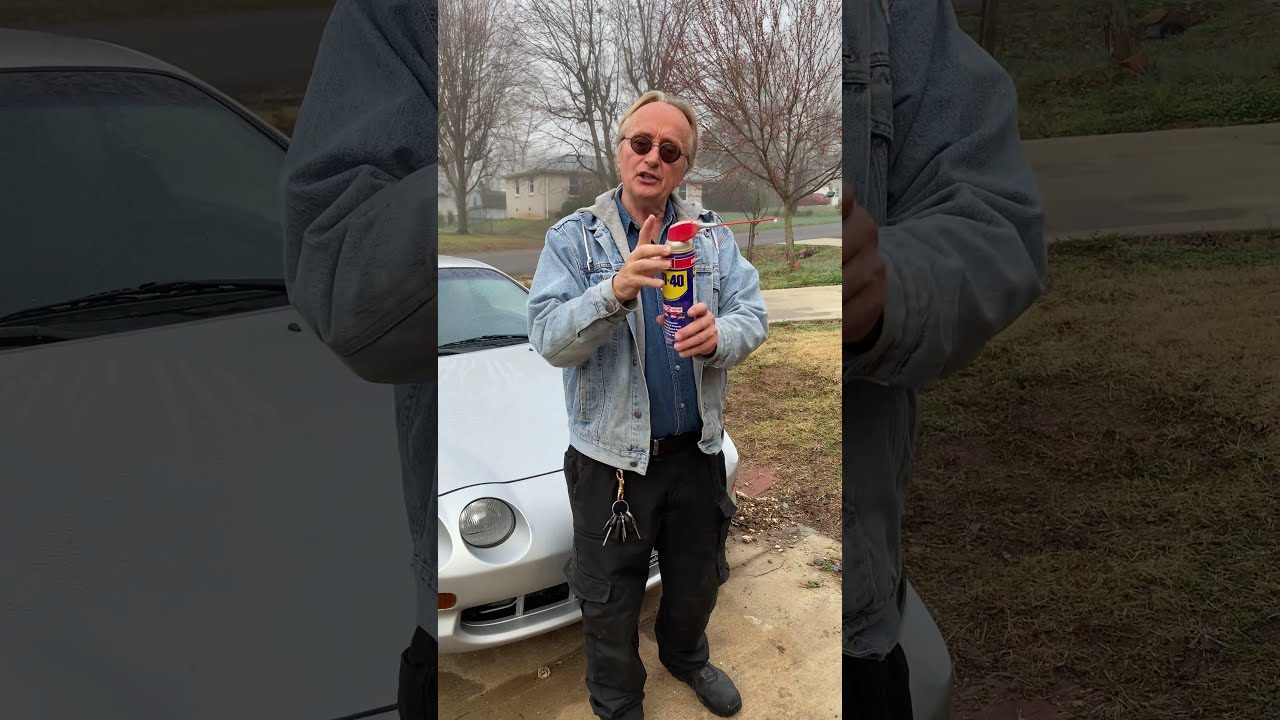
Reddit users have repeatedly discovered that WD-40's name is much more literal than they expected. A 2023 r/todayilearned post explaining that “WD” means Water Displacement and “40” refers to the 40th formulation attempt received more than 3,500 upvotes.
The comments also show how common misconceptions about the product remain. Some users were surprised to learn that WD-40 isn't primarily intended to be a lubricant, while others discussed its original purpose as a water-displacing and rust-prevention product.
The same explanation appeared in another popular Reddit discussion, where users clarified that the 40 refers to the successful 40th formula—not a strength rating or product version.
So Reddit's reaction reinforces the appeal of the story: one of the world's most recognizable product names is essentially a laboratory shorthand that never went away.
The Formula Is Still A Secret
There's another interesting detail hiding behind the simple name: nobody outside the company knows the complete original formula.
WD-40 says its formula is a trade secret and that the company never patented it, which allowed the exact ingredients to remain undisclosed. That means the name may be easy to understand, but the chemistry inside the can remains considerably more mysterious.
What do you think?
View
Comments
So the next time you reach for a can of WD-40, remember that its strange-sounding name isn't marketing jargon. WD means Water Displacement, and 40 refers to the 40th formulation attempt.
What sounds like a random product code is actually a short history lesson about how a sequence of attempts eventually produced one of the world's most recognizable garage products.
More From Motor101
 Why Your Steering Wheel Might Shake At Highway Speeds
Your Car's Engine Sound Might Be Fake. Here’s Why Automakers Pipe It Through The Speakers
We want your opinion!
What would you like to see on Motor1.com?
Take our 3 minute survey.
- The Motor1.com Team
Share this Story
- (https://twitter.com/intent/tweet?url=https%3A%2F%2Fwww.motor1.com%2Ffeatures%2F805444%2Fwhy-is-wd-40-called-wd-40%2F&text=Why%20Is%20WD-40%20Called%20WD-40%3F&via=motor1com)
- copy
GO TO COMMENTS
(
)
Got a tip for us? Email: tips@motor1.com
View all comments ( )
Popular
Audi Is Spending $4 Billion On A New US Factory For Big SUVs
Toyota's Next Mid-Engined Coupe Is Going Racing This Weekend
Alfa Romeo Has Had It With Huge Screens
Subaru Teases A New Manual WRX, But Only For Japan
latest articles
- Every Detail Packed Into The Bentley Torcal First Edition Oct 25 - Special Editions -
- Woman Buys Brand-New Tesla, Notices A Crack In The Windshield. Then She Tries To Get Tesla To Fix It Oct 25 - Trending -
- These Defensive Driving Habits Could Save You From A Crash Oct 25 - Motor101 -
- Nissan Driver Gets An Oil Change. Then The Mechanic Sends Him Something Unexpected: 'I'm Upset That This Isn't Required By Law' Oct 25 - Trending -
- How Do Automatic High Beams Know When To Turn On And Off? Oct 25 - Motor101 -
- ‘Gave You The Midas Touch’: Man Takes Volkswagen To Midas For An Oil Change. He's In Shock When They're Done Oct 25 - Trending -
- Audi Is Spending $4 Billion On A New US Factory For Big SUVs Oct 25 - Manufacturing / Production -
RECOMMENDED FOR YOU
These Defensive Driving Habits Could Save You From A Crash
Every Detail Packed Into The Bentley Torcal First Edition
How Do Automatic High Beams Know When To Turn On And Off?
Woman Buys Brand-New Tesla, Notices A Crack In The Windshield. Then She Tries To Get Tesla To Fix It
The Story Behind Little Trees Is Even Stranger Than You Think
Nissan Driver Gets An Oil Change. Then The Mechanic Sends Him Something Unexpected: 'I'm Upset That This Isn't Required By Law'
NASCAR's Coolest Stock Cars Were Too Good At Their Jobs