Your Car's AC Smells Like Wet Socks? Here's What's Causing It
Don't dismiss that funky smell from your car’s AC as random because there could be mold, mildew, or moisture inside the system.


That first blast of cold air on a hot day should be refreshing. Instead, sometimes it smells like wet socks, mildew, vinegar, or a damp basement.
The good news is that a funky smell doesn't necessarily mean your car's air-conditioning system is failing. In many cases, the culprit is moisture trapped inside the HVAC system, where bacteria, mold, mildew, dirt, and other organic material can accumulate.
Find out what's actually causing that smell and when it's worth doing something about it.
Motor101
Welcome to Motor101, our series dedicated to answering the internet's biggest automotive questions. From the origins of iconic designs to the engineering breakthroughs that shaped the world's greatest cars, we uncover the stories behind the vehicles you love.
Why Does Car AC Smell Musty?
Your car's AC system naturally produces water. As the evaporator cools the air entering the cabin, moisture condenses on its surface.
That water is supposed to drain away through a tube underneath the vehicle. That's why you may notice a small puddle of clear water beneath your car after running the AC on a hot day.
The problem starts when moisture remains in the HVAC system. A damp evaporator combined with dust, pollen and other debris can become an ideal environment for microbial growth. Eventually, those odors can get blown through the vents and into the cabin.
That's why the smell is often strongest right when you turn the AC on. The HVAC system has been sitting, allowing the odor to build up before the blower pushes it into the cabin.
Your Cabin Air Filter Could Be Part Of The Problem
Before assuming there's mold growing deep inside your dashboard, there's an easier place to look: the cabin air filter.
The filter catches dust, pollen and other airborne debris before it enters the passenger compartment. Over time, it can become dirty or contaminated, potentially contributing to unpleasant odors.
A dirty filter can also restrict airflow, making the vents feel weaker than they normally do. The replacement interval varies by vehicle and driving conditions, so the owner's manual is the best source for determining when yours should be changed.
If you've never replaced it—or can't remember the last time you did—it's a relatively simple thing to check before paying for more extensive AC work.
Why Does The Smell Sometimes Go Away?
This is what makes AC odors so confusing. You may get a powerful blast of musty air when you first switch on the system, only for the smell to fade after a few seconds or minutes.
That doesn't necessarily mean the problem has disappeared. If the source is a damp evaporator or contaminated part of the HVAC system, fresh airflow can temporarily dilute the odor. Once the vehicle sits again, the smell can return.
In some cases, a musty smell can be particularly noticeable around changes in the system's airflow mode. In other situations, moisture and microbial growth around the evaporator can be the most common explanations.
Not Every Bad Smell Means The Same Thing
The type of odor coming from your vents can provide an important clue about what's happening.
- Musty, damp, or dirty-sock smell: Usually points toward moisture and microbial growth around the evaporator or other HVAC components.
- Sweet smell: Can indicate coolant, particularly if you also notice coolant loss or other signs of a cooling-system problem.
- Burning or electrical smell: Could indicate an electrical or mechanical issue and shouldn't be dismissed as ordinary AC funk.
- Sulfur or rotten-egg smell: May point toward an emissions-related problem rather than the AC itself.
In other words, don't assume every unpleasant smell coming from the vents has the same cause.
In other words, don't assume every unpleasant smell coming from the vents has the same cause.
No General Consensus On How To Get Rid Of The Smell
Car owners have plenty of theories about eliminating AC odors, but Reddit discussions show just how stubborn the problem can be.
In a recent r/MechanicAdvice thread, one Honda CR-V owner described a musty smell that returned after using AC cleaning products and replacing the cabin air filter. The owner had already tried multiple odor treatments, illustrating how simply spraying something into the vents doesn't always solve the underlying problem.
Another 2026 r/Camry discussion is even more persistent. The owner had replaced the cabin filter, checked the drain and cleaned the evaporator with a Toyota-recommended cleaning kit, while also running the fan before parking to dry the evaporator. Despite all that, the "dirty sock" smell eventually returned.
An r/Audi owner reported a similar issue in July 2026: a strong mildew smell appeared for several seconds whenever the AC started, even after replacing the cabin air filter.
The common thread is that an AC odor can have a stubborn source that's deeper than the cabin filter. If cleaning or replacing the filter doesn't fix it, the evaporator, drain system or other HVAC components may need inspection.
How Can You Get Rid Of The Smell?
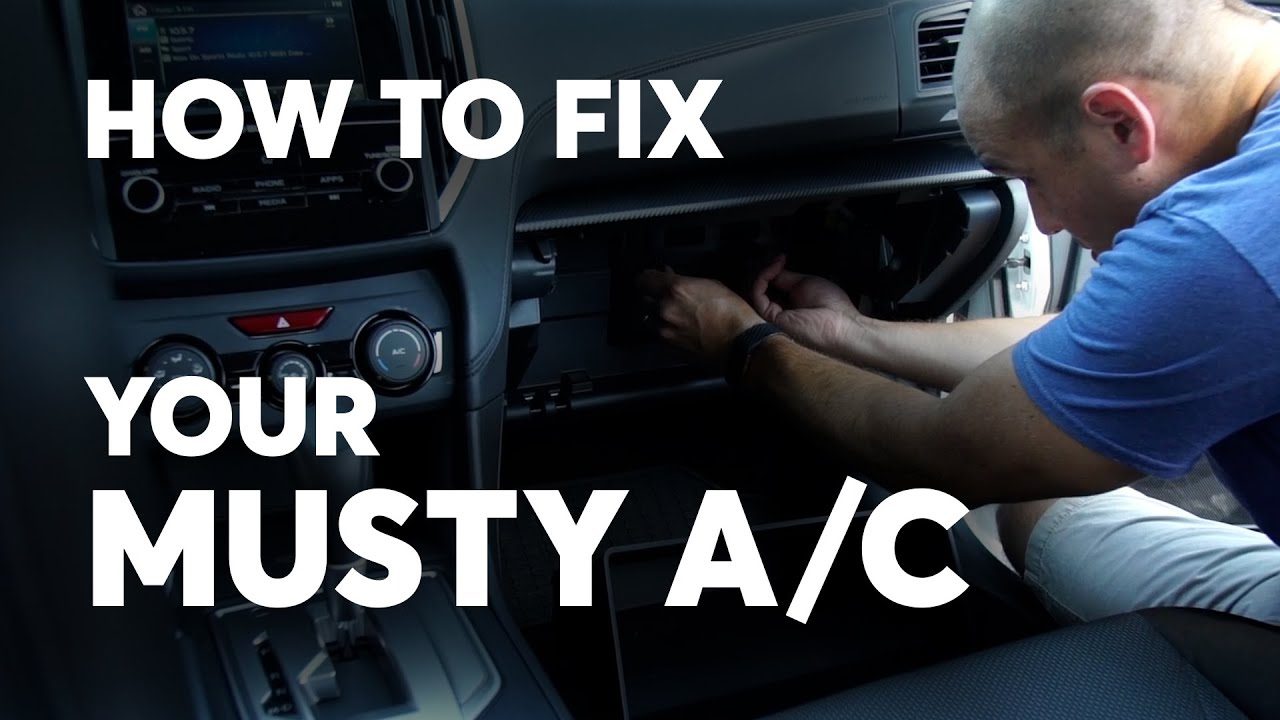
Start with the simplest possibilities. Check the cabin air filter and replace it if it's dirty or contaminated. It's also worth checking the filter housing and fresh-air intake for leaves, dirt and other debris.
If the odor remains, the evaporator and surrounding HVAC components may need to be cleaned. The AC drain should also be checked to make sure condensation can escape properly. Water that's supposed to leave the system but instead remains trapped can contribute to the conditions that produce odors.
Some drivers also try switching off the AC compressor while leaving the fan running for a short period before parking. The idea is to allow airflow to dry some of the residual moisture in the HVAC system.
If the smell keeps returning despite these steps, that's when a professional HVAC inspection makes sense.

Should You Be Worried About A Smelly AC?
A brief musty smell isn't necessarily a sign of a major mechanical problem. But if the odor is strong, persistent, getting worse, or accompanied by weak airflow, water inside the vehicle, unusual noises, or an AC system that isn't cooling properly, it's worth having the system checked.
Most importantly, don't assume that adding refrigerant will fix a bad smell. Refrigerant affects the system's ability to cool; it doesn't remove mold, mildew, debris or a contaminated cabin filter.
The good news is that a smelly AC is often a maintenance problem rather than an indication that the entire air-conditioning system is about to fail.
So if your car gives you a blast of air that smells more like a basement than a summer afternoon, don't just reach for the air freshener. Your AC may be telling you there's moisture, dirt or microbial growth hiding somewhere inside the HVAC system.
More From Motor101
RECOMMENDED FOR YOU

Your Car Isn't Stalling At Red Lights. Here's What It's Actually Doing
Prius Architect Hiroshi Okuda Dies At 93, Reshaped Toyota
What Actually Happens If You Shift Into Neutral While Driving?
Car Saleswoman Reveals 'You're Not Safe' If You Bring Car In For Service: 'The Dealership WILL Use Your Car For Parts'
Your Brakes Are Squeaking. Here's What Your Car Might Be Telling You
McLaren's New Supercar Brings Back The Manual After 34 Years
The Driving Habit That Slowly Damages Your Transmission