This Trailer Drives Itself Into The Campsite
The Aboard T4 has electric drive, a remote control, and seven days of autonomy.

THE BREAKDOWN
-
The Aboard T4 is a hybrid-electric travel trailer with its own battery and electric drive system.
-
It can be remotely maneuvered into tight campsites using a smartphone app.
-
The T4 showcases a future where travel trailers actively assist with driving, parking, and power management
Anyone who's ever tried backing a large travel trailer into a tight campsite knows the routine: one person cranks the wheel, the other waves directions, and before long neither is on the same page—while, naturally, no one is to blame in the end.
That is exactly the scenario the new Aboard T4 aims to make easier. And it does so not with better mirrors, but with a substantial amount of technology more commonly associated with the EV world.
The basic idea is not entirely new, but it has been implemented here in a thorough way. Similar concepts have recently been shown by models such as the Pebble Flow and the Lightship L1. Here, the trailer is no longer just passive ballast, but an active part of the towing setup. In practical terms, that means its own drive system, its own battery, and ideally less range loss for the tow vehicle.


Dedicated Battery And Electric Assist Drive
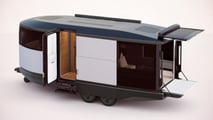
And that is exactly where the T4 comes in. Instead of putting a full strain on an EV while towing, the trailer simply helps out. Mounted under the floor is a battery pack with about 100.0 kilowatt-hour, along with an electric assist drive. At first glance, that may sound like overkill, but it makes sense: the trailer contributes propulsion instead of just being pulled along.
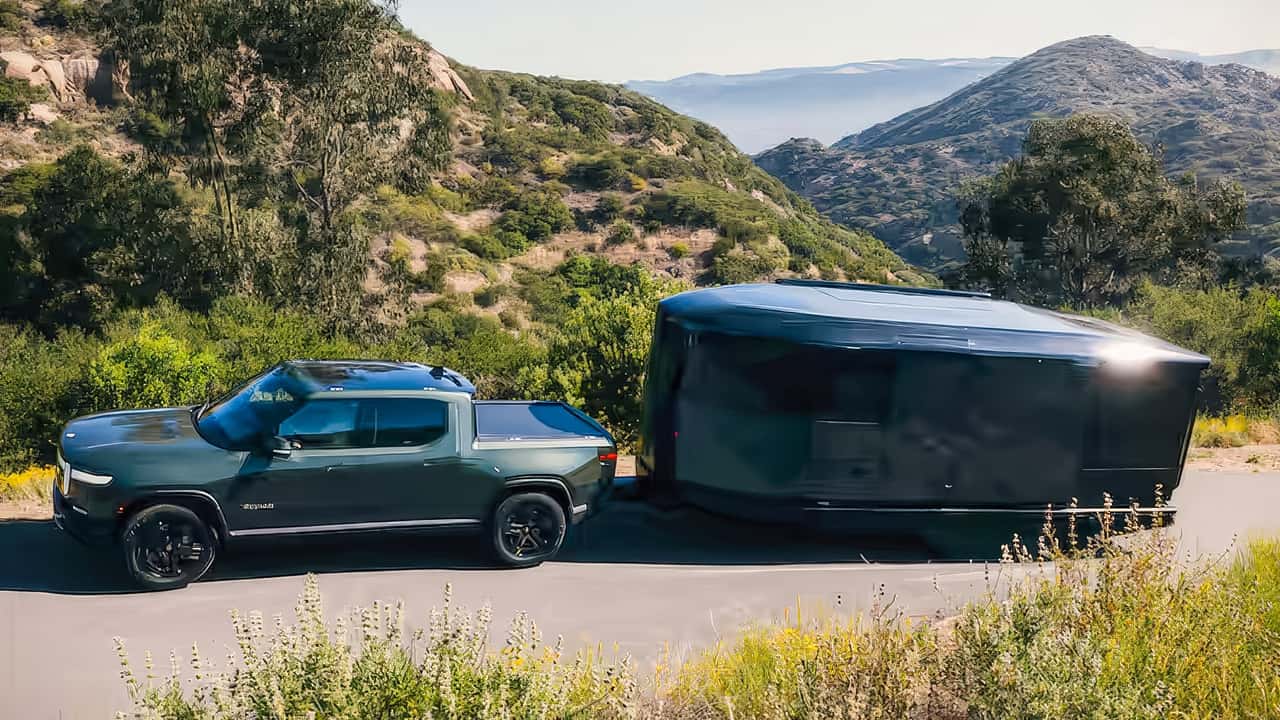
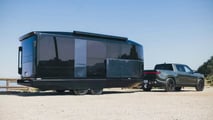
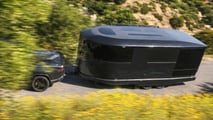
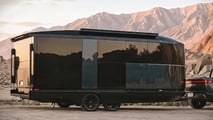
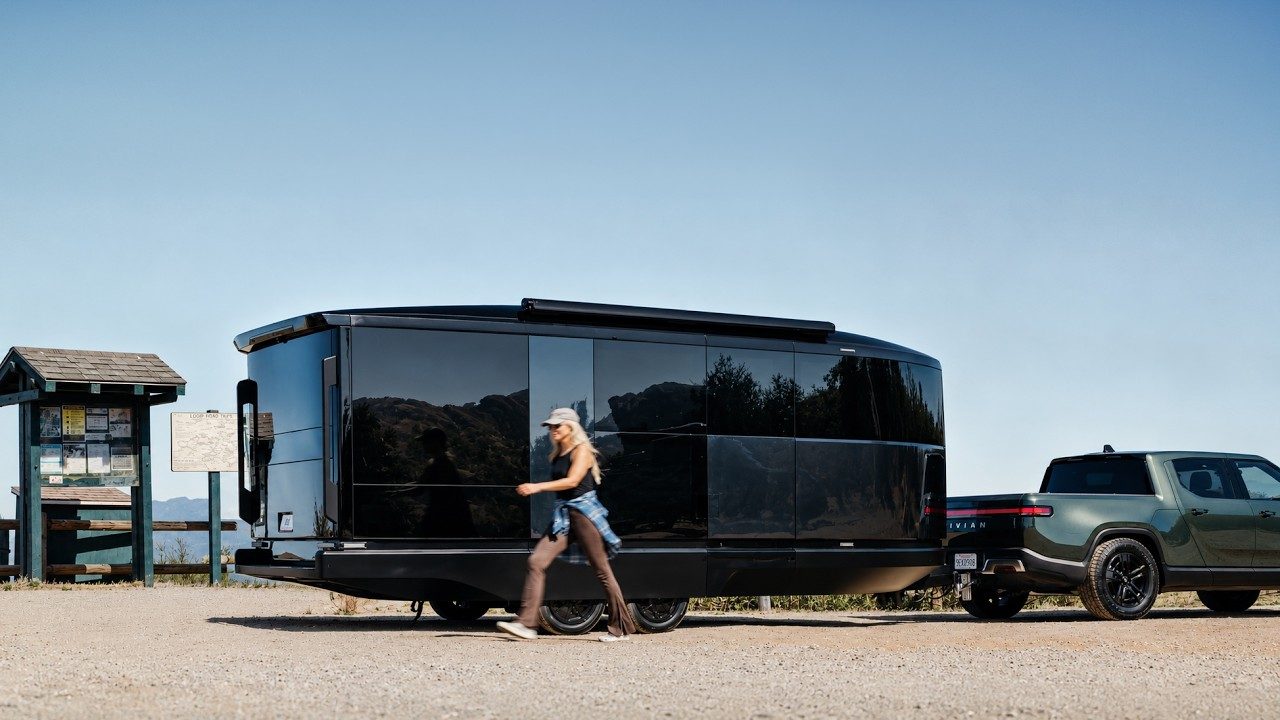
Visually, the T4 makes no attempt to hide the fact that it does not come from the traditional trailer school. There are no rounded edges and no typical “white box with windows.” Instead, it features clean surfaces, large dark glass areas, and a shape that looks more like a concept vehicle than a family travel trailer. Even next to modern pickups such as the Rivian R1T, the T4 looks as though it came from an entirely different development department—which is probably exactly the point.
Remote Maneuvering Much Easier
Things get especially interesting when it comes to maneuvering. Instead of a conventional trailer mover, remote control, and a lot of patience, there is an app. The T4 can be moved by smartphone or remote—and with a high degree of precision. Anyone who has ever tried squeezing into a spot between two trees or into a crowded campground knows how much stress that could save. In the best-case scenario, the trailer simply drives itself exactly where it needs to go.
Off-grid capability also plays a central role. According to the manufacturer, the T4 can remain self-sufficient for up to seven days without an external power hookup. That is made possible by the large battery, roof-mounted solar panels, and an energy system that can power not only the trailer itself, but external devices as well.

A Focus On Livability
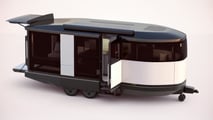
Inside, the T4 feels far less like a futuristic tech lab than the exterior might suggest. Instead of screens and gimmicks, buyers get light-colored materials, large windows, and a layout that feels more like a modern tiny house. Up front, there is a spacious wraparound seating area with a wide view outside, followed by the kitchen, bathroom, and sleeping area. Functional, but still comfortable and inviting.
It also includes various hatches, slide-outs, and expandable outdoor areas. The usable space grows significantly once parked, which should be especially appealing for longer stays away from traditional campgrounds. The focus is clearly on living around the trailer—not just inside it.
No Pricing Or Launch Details (Yet)
That said, there are still some big question marks. Many technical details have not yet been released, and there is still no firm information on launch timing or pricing, especially for Europe. One thing is clear, however: it is unlikely to be cheap. Models such as the Pebble Flow and Lightship L1 are already approaching luxury RV price territory, and the T4 is expected to land in that same range.
Even so, the concept gives a very clear picture of where the segment is headed. The trailer is evolving from a passive attachment into an active participant. It helps while driving, moves independently around the campsite, and brings enough onboard energy to remain self-sufficient for several days. A few years ago, that might have sounded like pure science fiction, but now it feels surprisingly tangible.
Other Notable Travel Trailers
Anyone looking for something even more adventurous in the world of unconventional trailers may want to check out the Polydrops P21X. It is much more angular, much more off-road-focused, and closer to an expedition trailer than a conventional travel trailer. On the more traditional side, there is the Knaus Nordwind. With ALDE heating and a winter-capable design, it is aimed more at year-round campers than at buyers interested in tech-heavy features.
And for anyone wondering where the broader market stands today, it is worth taking a look at the updated model ranges from LMC or Hobby. These new trailers show that modern RVs already offer much more than just a bed, kitchen, and dinette—even if they still cannot drive themselves into a campsite.
Motor1's Take: The Aboard T4 is one of the most compelling examples yet of how electrification could transform the camping experience. Instead of treating a trailer as dead weight, it uses onboard propulsion and energy storage to improve towing efficiency while adding meaningful convenience through remote parking and extended off-grid capability.
More Camping Stories
RECOMMENDED FOR YOU
The Ford Nugget Isn't Food: Cute Camper Van Turns 40
RIP: These Cars Won't Make It To 2027
Ari 458 Pro Surprises As A Mini-Camper.
Mercedes Admits It Went 'Too Far' Removing Buttons. But Screens Aren't Going Anywhere
Meet The Woman Who Lives Full-Time In A Smart Car
New Hyundai Tucson SUV Spied With A Bold Redesign
Honda Turned This CR-V Into a Clever Camper. But You Can't Buy One