Bigger Hyundai Tucson Spied With Massive Screen
Not so compact anymore, the next-generation crossover is expected to debut before the end of 2026.

THE BREAKDOWN
- The next Hyundai Tucson was caught in a parking lot in South Korea.
- It appears much larger than the current-generation model, roughly as big as the previous Kia Sorento standing next to it.
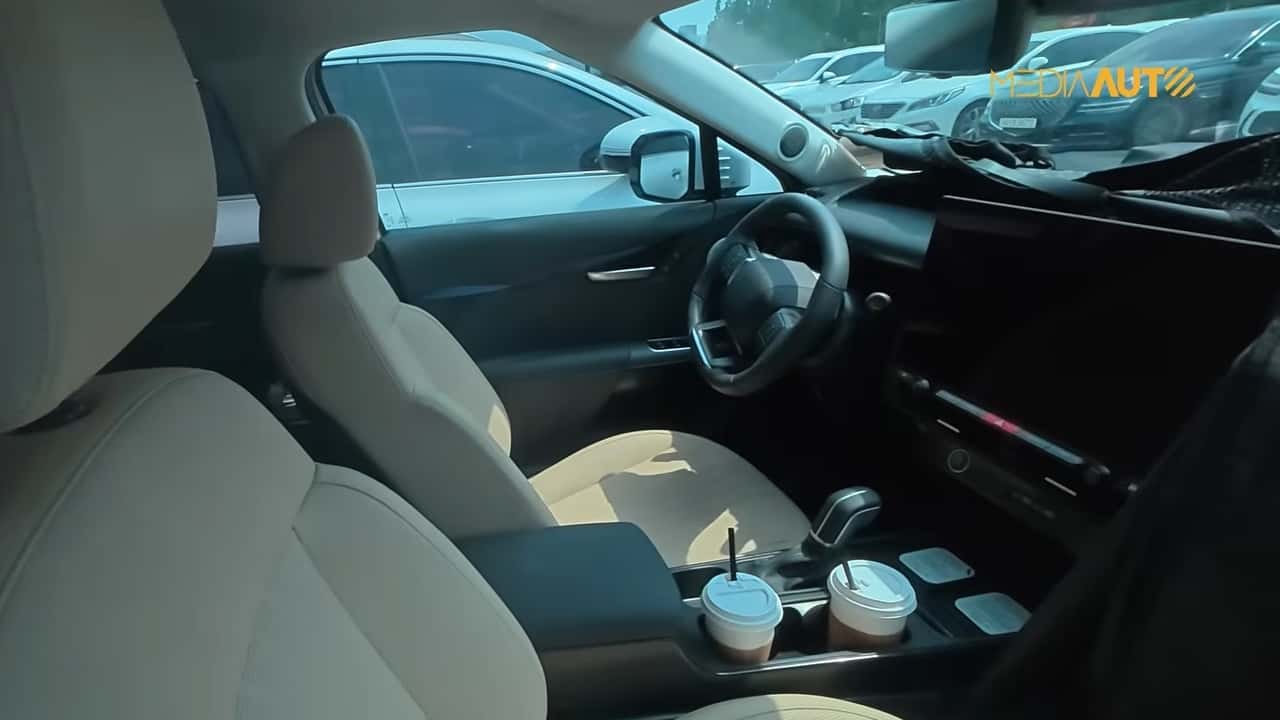
- The revamped interior has Hyundai's new Pleos infotainment with a large tablet-like setup.
UPDATE: During the Q2 2026 earnings call, Hyundai confirmed the new Tucson will be launched in South Korea during the fourth quarter of this year.
We don’t have to wait until the new Tucson debuts later this year to see its fully redesigned interior because this is essentially it. Camouflaged on the outside but with an exposed cabin, the next generation of Hyundai’s popular compact crossover was filmed by YouTuber mediaAUTO in a parking lot somewhere in South Korea, possibly at the R&D center in Namyang. Before we get to its radically different interior, the apparent increase in size is impossible to ignore.
If the previous-generation Sorento parked next to it is any indication, the Tucson appears poised for a growth spurt. At first glance, it looks roughly as large as the SUV from the segment above in Hyundai’s sister brand Kia’s lineup. The elongated body should provide a more spacious interior, assuming the wheelbase grows accordingly. For reference, today’s Tucson is about 177 inches (4.5 meters) long, whereas the old Sorento measured a little over 187 inches (4.8 meters).
It’s unlikely to be quite that large since the camouflage makes it appear bigger than it really is, but the body does seem considerably longer than the outgoing Tucson. Elsewhere, it appears to be hiding some funky headlights and taillights beneath the camouflage; not that we’re surprised, given Hyundai’s fondness for experimenting with outlandish lighting designs.
While Hyundai did its due diligence by covering the body, it left the Tucson’s cabin mostly exposed. The new Pleos infotainment system takes center stage and looks absolutely massive, yet there are thankfully still some physical controls underneath it. The tablet-style display appears larger than the optional 14.6-inch screen inside the new Elantra/Avante. In the flagship Grandeur, the display stretches to a stately 17 inches.

The driver still gets a separate digital instrument cluster perched atop the dashboard, much like in the Elantra and Grandeur sedans. While I don’t mind it, it’s surprising to see an old-school, chunky gear lever on the lower center console. It’s particularly puzzling because the current Tucson originally had buttons between the seats before the facelift switched to a small stalk behind the steering wheel. Perhaps this setup is reserved for a lower-end trim or certain markets, but either way, it doesn’t look like a provisional layout only a prototype would use.
Other details we can spot include dual wireless charging pads, large cup holders, a 60:40-split rear bench, and plenty of buttons on the steering wheel and driver’s door. The generous rear legroom does seem to suggest a longer wheelbase, and there’s a good chance cargo capacity has increased significantly as well. It all goes to show that vehicle bloat is far from over, especially if it gives automakers room to slot new models below.
Although the wraps should come off in South Korea in the coming months, the new Tucson is unlikely to go on sale globally until later in 2027. Next year will also bring a full redesign of its Kia sibling, the revamped Sportage.
Motor1's Take: Hyundai has a habit of giving its models dramatic overhauls for each new generation, and the Tucson doesn’t appear to be an exception. We can already see the all-new interior, while the cutouts in the exterior camouflage hint at major changes beyond the immediately noticeable increase in size.
Once again, Hyundai isn't afraid to take risks with one of its best-selling models. It’s a strategy that continues to pay off, with sales remaining strong despite growing competition from Chinese automakers.
Catch Up With Hyundai:
Source: mediaAUTO 미디어오토 / YouTube
RECOMMENDED FOR YOU

Hyundai Sales Are Soaring Thanks To Hybrids
Porsche's Cost-Cutting Drive To Claim Another 5,000 Jobs: Report
Hyundai Recalls 96,000 SUVs For Bad Displays
Woman Gets Breakup Text On Her CarPlay. Then Her Nissan Texts Back Something Unhinged: ‘Can Someone Help Me Sue Nissan?’
Hyundai's Spiciest EV Just Got A Massive Price Cut
Mechanic Says Your Toyota May Be Getting The Wrong Oil. Then He Changes Mobil 1 Formula: ‘As A Warranty Inspector This Would Void’
Man Goes To Take 5 For $50 Oil Change. Then He Has To Pay For $375 Tow Truck