Aston Martin Delays EVs To Keep The V12 Alive
In a world where big engines are going extinct, Aston Martin is preserving them for enthusiasts.

THE BREAKDOWN
- Aston Martin has found a way to keep building the V12 engine.
- The company can produce fewer than 1,000 V12s per year.
- Aston will delay EVs until the 2030s due to a lack of demand.
- Future Aston models will feature improved dynamics.
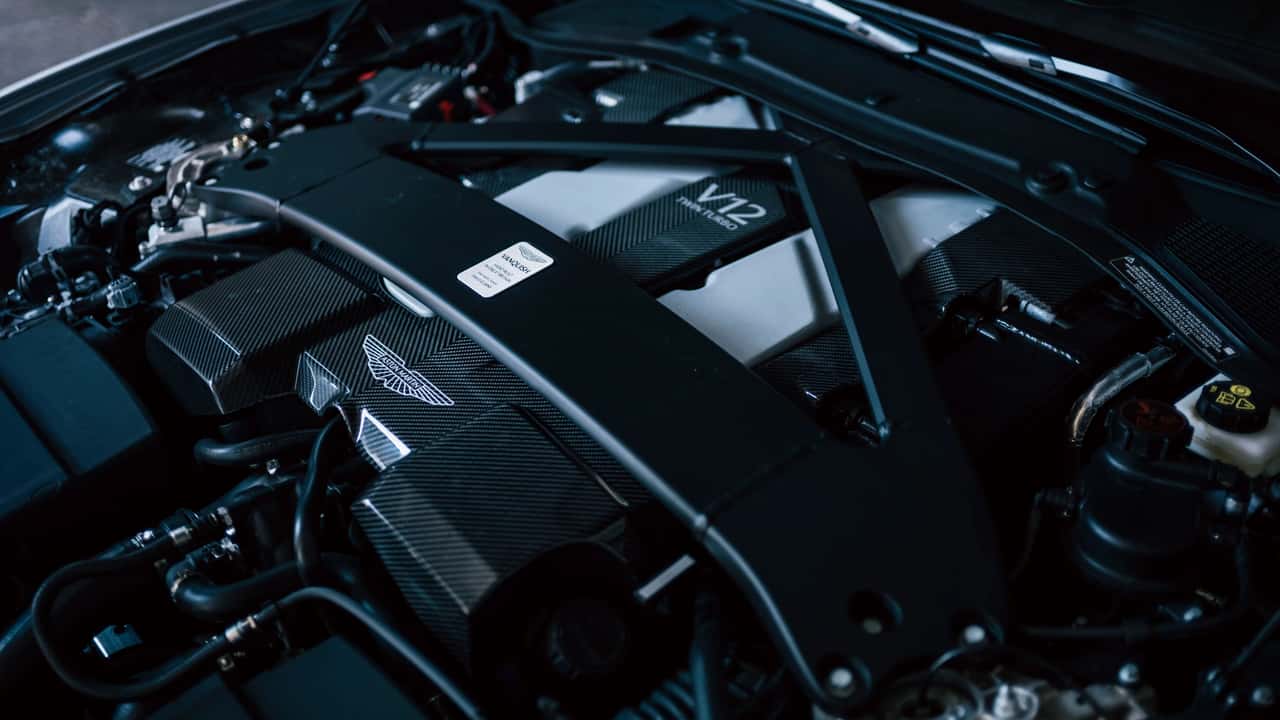
Aston Martin is currently working on its next-generation vehicle platform, which will underpin its future sports cars and SUV models. Speaking with AutoExpress, the British automaker revealed that these next-generation vehicles should continue to offer a V12 engine despite strict emissions regulations, especially in Europe.
"We've done some work to make the V12 compliant with European and US [regulations]," said Aston Martin CEO Adrian Hallmark. "If we keep our V12 sales under 1,000 per year, then we’re exempt from legislation until 2035 at least."
In other words, Aston can continue building models like the current Vanquish, and even few-offs like the One 77.

Aston Martin Vanquish
Aston's EV Shift
Back in 2023, Aston Martin announced plans to partner with Lucid to supply electric powertrains for its upcoming electric vehicles. The timeline has shifted greatly since then. Instead of having four EVs by 2030, the brand will now introduce its first EVs in the 2030s.
This decision was driven heavily by customer demand, as Aston owners told the company they “hate” EVs.
Aston has also done the math on plug-in hybrids, determining that most of their driving is done on gasoline, and thus the weight penalty doesn’t offset the complexity to reduce emissions. The company will instead introduce 48-volt mild-hybrid systems, which deliver a slight fuel economy gain by allowing the engine to shut off in traffic and while coasting.
The next-generation architecture will allow Aston Martin to build multiple vehicles ranging from SUVs to supercars all on the same production line. That not only cuts down on costs, which is good for Aston, but it means there should be more commonality between these models, and that's great for enthusiasts.
"We've got a mathematical description of how every Aston will be in the future: in terms of vehicle [performance], this will be a revolution," Hallmark described.
Using the current models as a benchmark, the next-generation vehicles should deliver improved rigidity with more bonded aluminum, superior turn-in thanks to rear-wheel steering, and enhanced refinement from stiffer suspension mounting points. Put more simply, Aston's already stellar vehicles should become even more fun to drive.


Motor1's Take: The idea of a Lucid-powered Aston Martin EV sounded like a match made in heaven, but if there is no demand for such a product, it makes sense for the company to pivot. There are very few V12s left on the market, so it is cool to see Aston fight to keep this configuration alive.
More Aston Martin News
RECOMMENDED FOR YOU
Aston Martin Undecided Whether It Wants To Fake A Manual Or Not
Expert Reveals The Best Car To Buy In Your Early 20s: ‘The Equivalent Of A Nokia Phone’
Brabus Bodo Cabriolet: 1,000 HP Open-Top Beast, Only 77 Made
‘I’m Hanging It Up’: Veteran Mechanic Folds His Repair Shop. Then He Reveals What Finally Did It
Monterey Car Week 2026: Every New Supercar, Hypercar, And Concept
Man Buys Dodge Car. Then He Gets Arrested Because Of What The Previous Owner Did: ‘Carfax Didn’t Tell Them That’
Aston Martin's Latest Special Supercar Is A V12 Villain