Man Asks Autozone Worker A Question. The Worker Recommends Lucas. Then The Man Asks ChatGPT For A Second Opinion
"ChatGPT is a big reason why..."
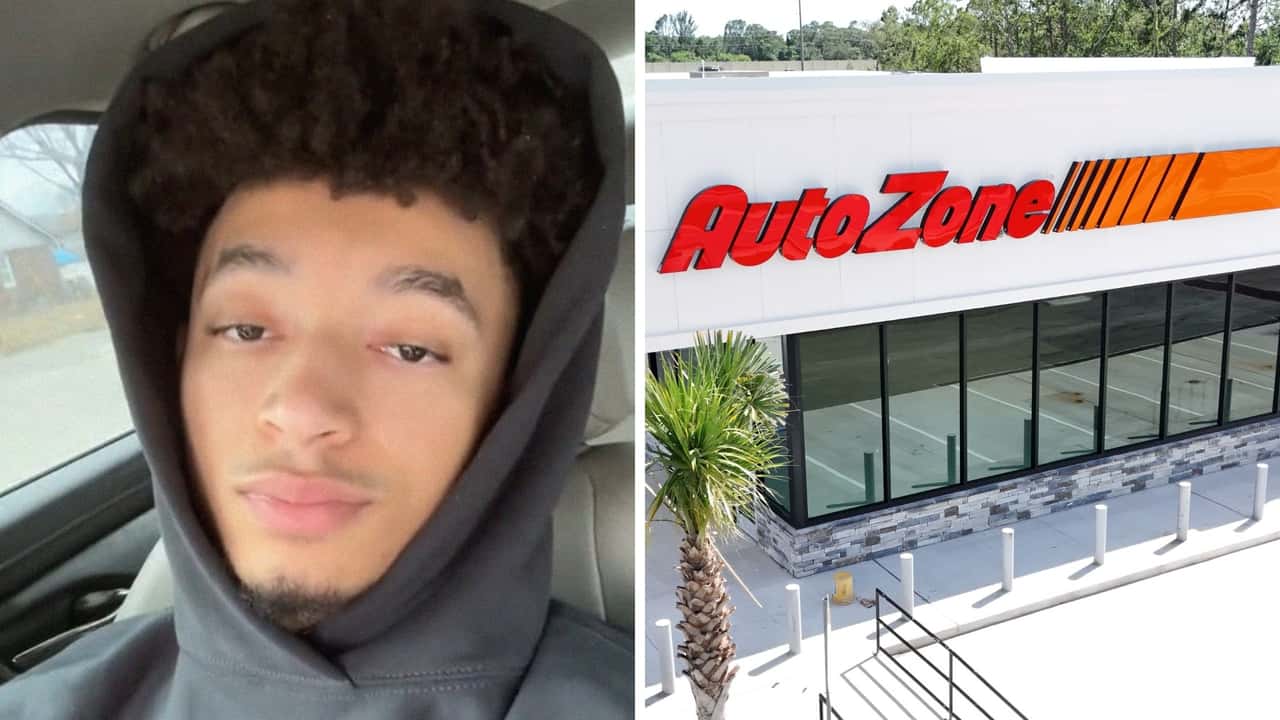

An AutoZone employee recommended a product to a customer, only to be quickly doubted and ignored. Instead of trusting the worker, the man turned to ChatGPT for confirmation.
This resonated deeply with AutoZone employees. One wrote, “Fellow Zoner here, I feel your pain.”
Antonio (@antoniocool2489) shared his recent interaction with the ChatGPT believer who went to AutoZone looking for a way to improve his gas mileage.
Antonio films himself behind the counter at AutoZone.
“He came in and ask for something that makes his gas last longer and pointed at Lucas,” Antonio said. “I told him it doesn’t work like that. This unc pulls out his phone and asks ChatGPT,” he writes in the on-screen text. (He’s likely referring to Lucas Fuel Treatment.)
Clearly skeptical, the man whipped out his phone to attempt to consult ChatGPT.
“Oh my phone died,” the man said.
Via direct message, Antonio told Motor1, ""I’m definitely not an expert and there is some benefit to using Lucas for better gas mileage. In my opinion and in this situation, he had a brand new car, so I doubt the Lucas did anything."
"I don’t think his injectors were gunked up like that," he added. "He buys one every week which I feel is excessive, but it’s not gonna hurt his car or anything so do what you want."
The Rise Of The AI Mechanic
Advancements in AI are impacting much of our lives. Shopping for car parts and products is no exception. Experts are finding themselves being questioned and disregarded in favor of ChatGPT’s suggestions.
Antonio told Motor1 he has customers use AI on the regular. But he said it's not the magic bullet some believe it is.
"A lot of people walk in and use ChatGPT and other AI tools; most of the time it ends up with them returning something and us having to look up what they really need, but sometimes it works out. It’s a 50/50," he said.
Several purported AutoZone employees who commented on Antonio’s post said they’ve had the same experience.
“I feel u brooo. I get a lot of people that come in like that. I work for AutoZone too,” one wrote.
“ChatGPT is a big reason why I'm stepping away from selling parts. This [expletive] is mad annoying,” a second added.
Some said AI is making customers increasingly stubborn and difficult to work with.
“For real, I had a guy make me drag out 10 different filters because he wouldn't tell me what he needed and would only rely on ChatGPT,” one said.
“Dude I had someone come ask me for the same thing, I said I didn't have anything like that. Then they asked the customer in the store and he told them the same thing. She said ‘I saw it online, it was a green bottle, it takes the ethanol out, where's your Lucas stuff?’ MA'AM? Are you talking about the Ethanol treatment? Cause that don't do what you are thinking it does,” someone else said.
How Is AI Impacting The Auto Industry?
ChatGPT is touching every part of the auto industry, including car buying and maintenance.
Customers have even started questioning mechanics’ diagnostics and insisting on doing what ChatGPT says instead of what seasoned professionals recommend.
Getting a second opinion from ChatGPT isn’t necessarily a bad idea. But relying on it instead of experts’ opinions may not be the wisest move. AI doesn’t always get it right, after all.
Viewers mentioned that ChatGPT does make mistakes.
“Had a customer the other day said ChatGPT said the power steering fluid went into the brake fluid,” one person said.
“If a customer comes at me with some ChatGPT I just sell them what they want. Deny that return when it comes back damaged,” another shared.
How Accurate Is ChatGPT?
ChatGPT is a large language model that is designed to follow patterns. Sometimes these patterns are incorrect, even if the response sounds confident.
Even OpenAI, the creator of ChatGPT, admits it makes mistakes.
“ChatGPT can be helpful—but it's not always right,” OpenAI states.
ChatGPT’s errors are often classified as a “hallucination.” Hallucination occurs when the search includes wrong dates, facts, quotes, citations, studies, definitions, or refers to nonexistent sources.
In November 2025, OpenAI reported that the hallucination rate for ChatGPT is between 33% and 79%. This is why OpenAI suggests that users verify information from reliable sources and use ChatGPT critically.
Talkspace notes, however, that this can be challenging because the AI seems so confident in its responses—even when it’s wrong.
Motor1 contacted OpenAI and AutoZone via email. We'll update this article if either responds.
RECOMMENDED FOR YOU

Man Takes Dodge To The Car Wash. Then It Starts Leaking Soap: 'It's Not Supposed To Do That'
Mazda CX-30 Turbo Vs Toyota Corolla Cross Hybrid Comparison: Fun Or Functional?
Toyota Trunk Won’t Open. Then The Driver Finds A Trick No One Knew Existed: ‘Oh The Valet Button’
Genesis Could Build Something Even Hotter Than Magma
Man Negotiates For The ‘Out The Door’ Price At The Dealership. He Gets It—There’s Just One Catch
Porsche Confirms It's Laying Off Another 5,000 People
Man Gets Coupon For Free Mobil 1 Oil Change. Then He Realizes There’s A Catch: ‘Order Me An Uber’