EV crisis? Stella Li: BYD's answer is advanced hybrids
Exclusively for Motor1, Stella Li tells us how BYD is tackling the EV crisis.
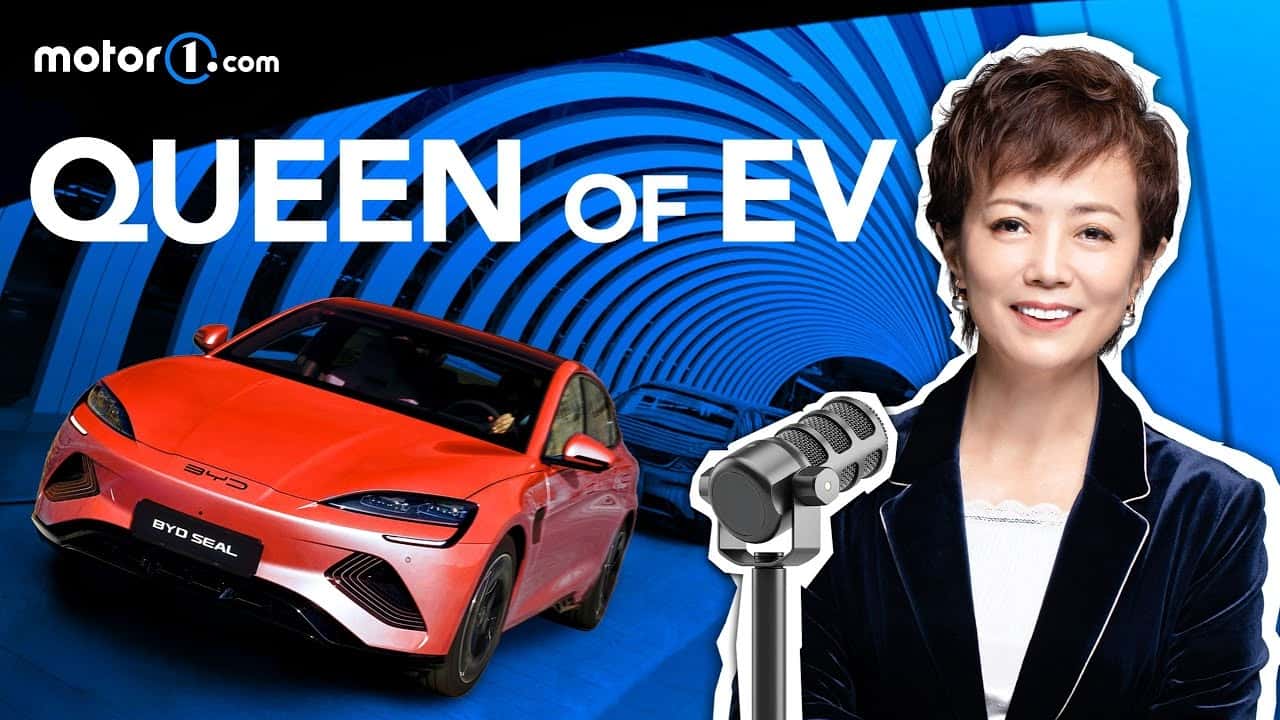

BYD's growth is unstoppable and Stella Li, Vice President of the Chinese giant, is one of the protagonists of this revolution. In an exclusive interview with Motor1, the 'Queen of EVs' tells us about her plans, ambitions and strategies for the European market and beyond. And she does so with the smile of someone who can think big, on the strength of a huge domestic market and the technological dimensions achieved by her company, which is able to file 32 patents every working day of the year.
Listening to Stella Li is interesting to get to know better not only the reality of BYD but also the characteristics of the Chinese industrial system that so frightens Europe but to which it would be a good idea to look in order to identify some healthy 'best practices'. Starting with strategic clarity.
A decisive expansion towards Europe
With a global market share of 23 per cent in electric vehicles, BYD is not content and, as announced several times in recent months, is betting heavily on Europe. A country like Italy, cited as an example, will see its dealer network grow from 20 to 105 outlets by next year. "We are not satisfied with what we have done so far," says Stella Li, emphasising that the company's strategy aims to make its vehicles accessible to more and more consumers by offering a hands-on experience with models such as the Seal U DMI, designed to address fears related to range and recharging.
BYD in the UK:

The new BYD Sealion 7 launched in late 2024 as an antagonist to the Tesla Model Y
The engine of a BYD plug-in hybrid with DM-I system
Overcoming uncertainty in the electric market
The current crisis of confidence in electric vehicles in Europe does not worry Stella Li, who sees it as a natural transition phase. Amidst fluctuating policies and high energy costs, BYD has a clear vision: technologically advanced cars that are affordable and integrated into a clean energy ecosystem. Thanks to the company's solar panels and storage batteries, electric mobility can also become a more sustainable choice in Europe.
Solid-state batteries: a revolution is coming
During the interview, Stella Li confirmed that BYD is already working on the next generation of solid-state batteries, considered one of the most promising innovations in the industry. With a team of over 10,000 engineers dedicated to battery research, BYD expects this technology to be commercialised around 2030.
"We are working to ensure safety, durability, and performance even in extreme temperatures," Li explained, emphasising that these batteries represent the future of sustainable mobility, while acknowledging that current lithium iron phosphate (LFP) technology will remain dominant over the next 15-20 years.
A BYD assembly line for LFP batteries
Technology as corporate DNA
BYD's real strength lies in technology, an area where the company invests more than £4.32 billion a year. With more than 102,000 research and development engineers and an impressive 32 patents filed every working day, BYD is a leader in innovation.
"We are not a traditional automotive brand, but a technology company," says Stella Li, recalling how every aspect of the vehicle, from batteries to autonomous driving, is designed to ensure safety, efficiency and performance.
BYD branding on cars stands for 'Build Your Dreams'.
A new look at China through the automobile
In addition to narrating BYD, Stella Li provides some nuances of China's competitiveness in the automotive sector. A clear strategy, pursued for over 20 years, and a highly competitive domestic market, which stimulates innovation and quality. "In China, people who drive a petrol car are out of fashion," says Stella Li, describing how electric mobility is now an integral part of culture and society. An approach that, according to her, Europe should watch carefully.
For the full interview, please play the video at the top of this page.
RECOMMENDED FOR YOU
Mercedes Admits It Went 'Too Far' Removing Buttons. But Screens Aren't Going Anywhere
Man Buys Ford Bronco. Then The Dealership Refuses To Fix Huge Scratch After Saying They'd Take Care Of It: 'CANCEL THAT CONTRACT!'
'We're Here to Deliver:' How A Forgotten Hypercar Company Plans To Make A Big Comeback
‘We Love CarPlay': Man Leaves Woman In His Car. Then She Finds A Diabolical Way To Expose Him
Why Red Bull's First Hypercar Had To Have A V10: Interview
Woman Goes To Valvoline. Then They Ask Her A Question She Has No Response To: 'I'm Gonna Completely Embarrass Myself'
BMW Explains Why It Finally Gave The M2 All-Wheel Drive