Skoda Octavia (2004-2013): The second generation turns 20
The second-gen Octavia even became the brand's first electric car.
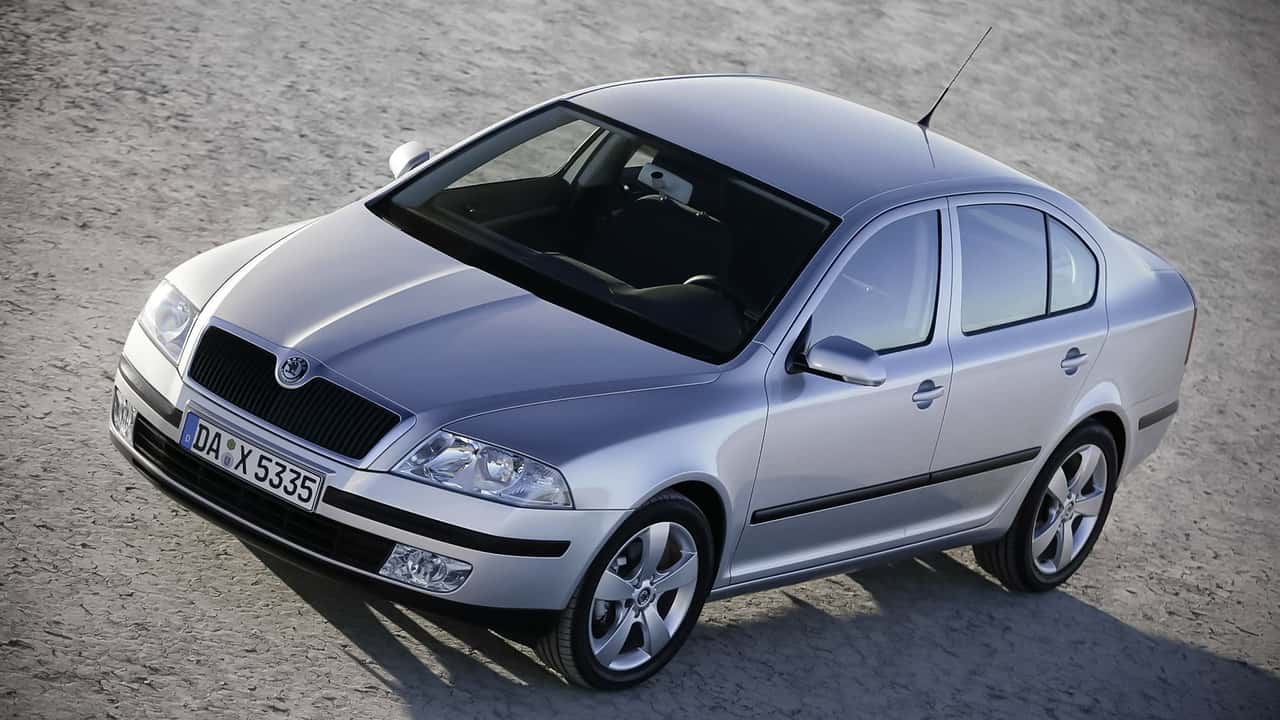

How do you replace a bestseller? In 1996, Skoda hit the jackpot with the first Octavia of the modern era. But of course, there had to be a second generation at some point. This was the case in 2004, now 20 years ago. The Type 1Z, as it was known internally, is still present on the roads today.
On 30 January 2004, Skoda announced a world premiere for the Geneva Motor Show: the new Octavia saloon. The model "is a completely new design based on the latest technologies", it was said at the time. The second Octavia utilised the Volkswagen Group's PQ35 platform, on which the Audi A3 8P, Seat Leon II, and Seat Altea, as well as the VW Golf V, VW Golf VI, VW Golf Plus, and VW Touran I, were also based.
Gallery: Skoda Octavia II (2004-2012)

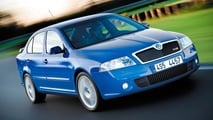
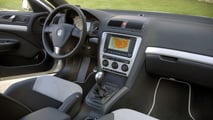
The vehicle is 4,572 mm long, 1,769 mm wide, and 1,462 mm high. Six modern power units provide the propulsion: two petrol engines, the 1.4 MPI with 75 bhp and 1.6 MPI 102 bhp, and two petrol engines with direct injection: 1.6 FSI, (115 bhp) and 2.0 FSI (150 bhp). There are also two four-cylinder diesel engines, the 1.9 TDI PD (105 bhp) and the 2.0 TDI PD (140 bhp).
Skoda models from the recent past:
The second-gen Octavia replaces the successful model of the same name. Skoda produced over 900,000 vehicles of the popular mid-range model series by 2004. 216,760 vehicles were registered in Germany alone between the market launch of the Octavia in 1996 and December 2003.
Even more space and another spacious estate
But back to the second Octavia generation, in addition to a new range of engines, it differs from its predecessor in terms of body modifications and more legroom in the rear. The boot capacity of the estate is 580 litres (1,630 litres with the rear seat bench folded down) and 560 litres for the saloon (1,430 litres with the rear seat bench folded down).
Skoda Octavia II Combi (2004-2008)
The Octavia was produced in Europe at the Mladá Boleslav and Vrchlabí plants in the Czech Republic and from 2008 to 2010, also in Bratislava, Slovakia. In China, Russia, and India, the Octavia was only produced for the respective markets. In India, the second generation of the Octavia was marketed as the Laura to distinguish it from the first, while in Austria there was once again a panel van version called the Praktik.
In 2005, the management and the trade union agreed on additional night shifts. As a result, 3,000 more vehicles were to be produced in the fourth quarter of 2005. At this time, the Skoda Octavia was the brand's most popular model: in Germany alone, a total of 32,924 registrations were recorded by August 2005.
The Combi, which was launched on the German market in January 2005, was also responsible for this. At the same time, Skoda continued to offer the first-generation Octavia as a saloon and estate under the name "Octavia Tour". A practice that will be continued with the pre-facelift model of the Octavia II between 2010 and 2013.
Skoda Octavia II (2004-2012)
From today's perspective, the prices seem almost surreal. In 2005, we tested the new Skoda Octavia Combi: it was available with a 1.6-litre engine and 102 bhp from 16,740 euros (£13,989). Our 1.6 FSI test car cost 22,240 euros (£18,585) in the top Elegance trim. Automatic air conditioning, ESP, and the rear parking aid were all on board.
RS: Top model with two letters
The new Octavia RS celebrated its world premiere at the IAA in Frankfurt in September 2005. It was equipped with a 2.0 TFSI engine with direct petrol injection. An output of (200 bhp) and a generous torque of 280 Nm in the rev range from 1,800 to 5,000 rpm ensured dynamic propulsion. The brand's fastest and most powerful production vehicle to date accelerated from 0 to 62 mph in 7.3 seconds and reached a top speed of 149 mph in saloon form.
Skoda Octavia II RS (2006-2008)
The "Race Blue" metallic paint finish was offered exclusively for the new RS models, which was later supplemented by the "Sprint Yellow" colour. The Octavia RS was also available in the "Corrida Red", "Diamond Silver Metallic", and "Black Magic Pearl Effect" hues. The test praised the "extremely crisp six-speed gearbox with short, precise shift travel". The direct steering and the suspension, which was not too stiff, were also praised.
Premiere for the Scout
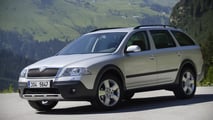
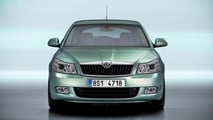
In 2006, the lifted Scout version with unpainted black plastic cladding complemented the Octavia range. In 2008, the Octavia got a major facelift. The new front end with its sleeker headlights was particularly striking, as were the larger exterior mirrors and modified rear lights. New in the Octavia was the 1.4 TSI with an output of 122 bhp. In addition, the turbocharged petrol engines with a displacement of 1.4 and 1.8 litres can be combined with a seven-speed DSG.
Skoda Octavia Scout (2006)
Skoda Octavia II Facelift (2008)
In the interior, new materials and controls for the air conditioning system ensured even greater comfort. All trim levels (Classic, Ambiente, and Elegance) were available with the latest textile upholstery, while the steering wheel and the decor variants in the door strips and the centre console also had a new design. Xenon headlights with cornering light function now made an important contribution to active safety. The revised Skoda Octavia arrived at German dealerships on 3 January 2009 at a starting price of 15,290 euros (£12,777).
Skoda was also presenting the new Octavia RS accessory study+ at the motor show in Essen. The body was upgraded with a front apron, a diffuser at the rear, and alloy wheels in black. In the interior, an exclusive leather steering wheel, a leather gear lever, and leather door panelling together with carbon trim elements and Recaro sports seats provided that extra touch of sportiness.
Test fleet with electric drive
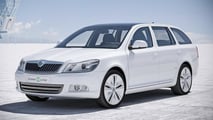
In 2010, the Octavia even became Skoda's first electric car. The Czech manufacturer presented the Octavia Green E Line concept study at the Paris Motor Show in October. The first test fleet was planned for 2011.
Skoda Octavia Green E Line (2010)
The electric motor delivered 80 bhp in continuous operation and 114 bhp at peak power. The maximum torque of 270 Nm was available at start. The Octavia Green E Line accelerated from 0 to 62 mph in 12 seconds. The top speed was limited to 84 mph.
The Octavia Green E Line drew its electrical energy from a modern lithium-ion battery and had a range of about 87 miles. Meanwhile, a special Skoda Octavia RS of a completely different calibre set a world record at the American Bonneville Speedway in August 2011, becoming the fastest car in the world with an engine up to two litres in displacement at 227 mph. Speaking of records: a good two million second-generation Octavia models rolled off the production line.
RECOMMENDED FOR YOU
Morgan's Best Performance Car Is Coming To America Without An Important Feature
Why Modern Cars Are So Expensive to Repair
'A Tribute To The Very Beginnings:' McLaren Rebuilt Its First Road Car To Absolute Perfection
A Genesis Pickup Truck Could Be Back On The Table Thanks To Hyundai
Here's What It's Actually Like To Own a Skoda
Woman Buys Chevrolet. Then She Tries To Use The Warranty—And Runs Into Biggest Misconception There Is: ‘It’s Bumper To Bumper?'
Facelifted Skoda Octavia now available in the UK starting at £26,775