VW Jetta (1984-1992): The second generation turns 40
The notchback is still overshadowed by the more popular Golf II


Notchback models in the compact class have always been a special case. While they are still popular in southern Europe today, people in western Europe preferred hatchbacks or went up a class. As a result, hardly any manufacturers still offer such a model today.
The best example of this is the Volkswagen Jetta, which was later given new names such as Vento and Bora in an attempt to take away its stuffiness. But it was (and to some extent still is) only really successful in the USA and China. Even today, the Golf's notchback brothers are still massively less popular among classic car fans. In the shadow of the widely celebrated "50th anniversary of the Golf", the second generation of the Jetta is now 40 years old.
Gallery: VW Jetta II (1984-1992)


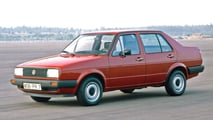


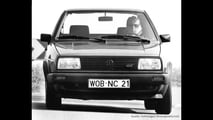
The Jetta II is presented in February 1984, one year after the premiere of the Golf II - with which it was developed jointly from the outset. However, like its predecessor, the Jetta II presented an independent rear end: nothing was reminiscent of its compact brother with a tailgate. The interior dimensions of the 4.31 metre long saloon have been increased to an even more comfortable size, while the boot offers a volume in luxury class format: 550 litres are an argument in times when there is still no Golf Variant.
Technically, the Golf II and its Jetta counterpart are still closely related. Rectangular headlights at the front set it apart. The overall length is 4,315 millimetres, the kerb weight has increased to 910 kilograms.
There are four equipment lines: C, CL, GL and Carat. The Carat equipment variant is only available with the 1.8-litre engine (90 PS) and four doors. The special models are Strada, Beach, Coach, Court, Pacific, Flair, TX and Style.
In February 1984, the Jetta II was launched with the following engines: 1.3 litre (55 PS), 1.6 litre (75 PS), 1.8 litre (90 PS), 1.6 litre diesel (54 PS) and the 1.6 litre turbo diesel with 70 PS. "Powerful and dynamic" is how the sales brochure describes it.
In its very first year of production, the Jetta will be equipped with the 1.8-litre GTI engine (112 PS) for beautiful autumn drives in October, which, with a top speed of just over 118 mph (190 km/h), is an absolute understatement. Visually, the GT variant stands out with black wing extensions, a small rear spoiler and, above all, red stripes on the bumpers, red emblems and disc brakes at the rear. The car is driven with sports suspension, which is lowered by ten millimetres in the GT version.
ABS was also available as an extra from 1984, initially only for the more powerful versions from 90 PS. The new ABS is coupled with the rear disc brakes.
Volkswagen followed up in spring 1987: A second GT variant with a 1,781 cc sixteen-valve engine was added to the range and produced 139 PS without exhaust gas purification - or a slightly reduced 129 PS with a catalytic converter. Externally, the GT 16V is distinguished from the eight-valve model by a roof aerial, a discreetly growling rear silencer with twin tailpipes and red 16V emblems on the radiator grille, rear and glove compartment. The Jetta 16V is only available as a four-door model and is a further ten millimetres lower than the 112 PS GT.
The following engines are now also available with catalytic converters: 1.6 litre with 72 PS, 1.8 litre with 84 PS (both U-cat) and from March 1.6 litre with 70 PS (G-cat). The ADAC tests a Jetta GL with 72 PS at a price of DM 22,195. The clear cockpit and the well-balanced engine, which consumed "only" 7.8 litres, were praised. A five-speed gearbox, officially called "4+E", was only available as an option at the time. The 910-kilogram (!) car needed 13.9 seconds to reach 62 mph, and a top speed of 100 mph (162 km/h) was perfectly adequate in 1987. In earlier tests, the Jetta with 1.8 litres even beat the BMW 316 ...
Another new model in 1987 is the Jetta syncro. Its well-known all-wheel drive is supplied exclusively with the 1.8-litre engine (initially 90 PS, later 98 PS) due to its favourable torque curve. A folding rear seat bench is available for the syncro variants.
In 1987, the basic C version (our cover picture) and the Carat luxury version were also discontinued. Two new versions with a sporty look appear: in parallel to the Golf GT, there is also a similar Jetta GT with 90 PS, and a GTD with a 70 PS turbodiesel engine is also offered.
The GTX model is introduced in 1988, with an engine range of 107/112 PS and 129/139 PS (depending on whether it was with or without catalytic converter). The GTX models are recognisable by the GTX emblem in the radiator grille, with a "16V" added to the sixteen-valve engine.
The Jetta syncro is boosted to 98 PS from a displacement of 1.8 litres with a G catalytic converter. At the beginning of 1989, a new central electrical system from the Passat 35i found its way into the Jetta, recognisable by the hazard warning switch on the steering column. All models are now fitted with large bumpers; at the front, the spoiler lip corresponds to that of the Golf GTI. On the GT, the rear spoiler is painted in body colour, while the new bumpers extend the vehicle by seven centimetres. The GL is equipped with power steering as standard. The model designation GTX is dropped; all sports versions are again called GT or GT 16V.
In 1989, the internal model designation is also changed from 16E/19E to 1G2. The two-door model is now only available as "CL". Following the discontinuation of the basic "Jetta" version, the CL is now also the basic model. The 1.8-litre engine of the Jetta Syncro is converted to G-cat and the power output is increased to 98 PS.
The GL is equipped with power steering as standard, but the electric exterior mirror control and the through-loading facility are omitted. The chrome trim is now limited to two bright trim strips on the bumpers. The GTX model was dropped; all sporty versions were again called GT or GT 16V.
In the UK, the GTI logo was emblazoned on the Jetta II
The 16V models are fitted with larger front brakes from the VW Passat 35i and are therefore now fitted with 14-inch wheels as standard. The ABS brakes are now also available in conjunction with rear drum brakes for the weaker versions.
From February 1989, a new central electrical system from the Passat 35i and Corrado is used, recognisable by the hazard warning switch on the steering column (in the Golf, this only happened six months later with the facelift for the 1990 model year).
The Jetta II received its most visible facelift in August 1989: all models now had solid bumpers with body-coloured aprons (on the Golf only GL and GTI) and a large front spoiler (as on the Golf GTI). The side view is enhanced by narrow door mouldings and black sill extensions (as on the Golf GTI).
The rear spoiler of the GT is now also painted in body colour and is now made of hard plastic. Finally, the tailgate has been given a large plastic trim panel between the rear lights on all versions. Thanks to the new bumpers, the Jetta is now seven centimetres longer than before.
More From VW's History:
With the facelift, VW has added two new engines to the diesel range. The most powerful diesel engine is now the 1.6-litre turbo diesel with an additional intercooler and 80 PS. As an "environmental diesel", the same engine block is offered as a soft turbo and with an Oxi-KAT, designed for 60 PS. Like the naturally aspirated diesel, the latter is not available as a GTD.
Production of the Jetta II is discontinued in Western markets at the beginning of 1992 with the launch of the Vento. In the People's Republic of China, it continued to be manufactured and further developed as the FAW-VW Jetta from 1991. Production only ended there in 2013.
RECOMMENDED FOR YOU
Volkswagen Built A 1,000-Horsepower Mega Golf, But It Didn't End Well
Ford's Super Duty Could Become The US Army's Next Tactical Truck
Here's How The Volkswagen Group Plans To Simplify Its Parts Bin
Mazda CEO Says The Miata Could Go Electric—Eventually
The Volkswagen Atlas Just Got More Expensive
Top Gear Star Richard Hammond Hit With $2,300 Speeding Fine And Seven Points
VW Explored A Range-Extending Gas Engine For The ID. Buzz