Here's Why Your Car's Rear Windows Don’t Roll All the Way Down
No, the window probably isn’t broken, and the answer usually has nothing to do with child safety.

No, the window probably isn’t broken, and the answer usually has nothing to do with child safety.
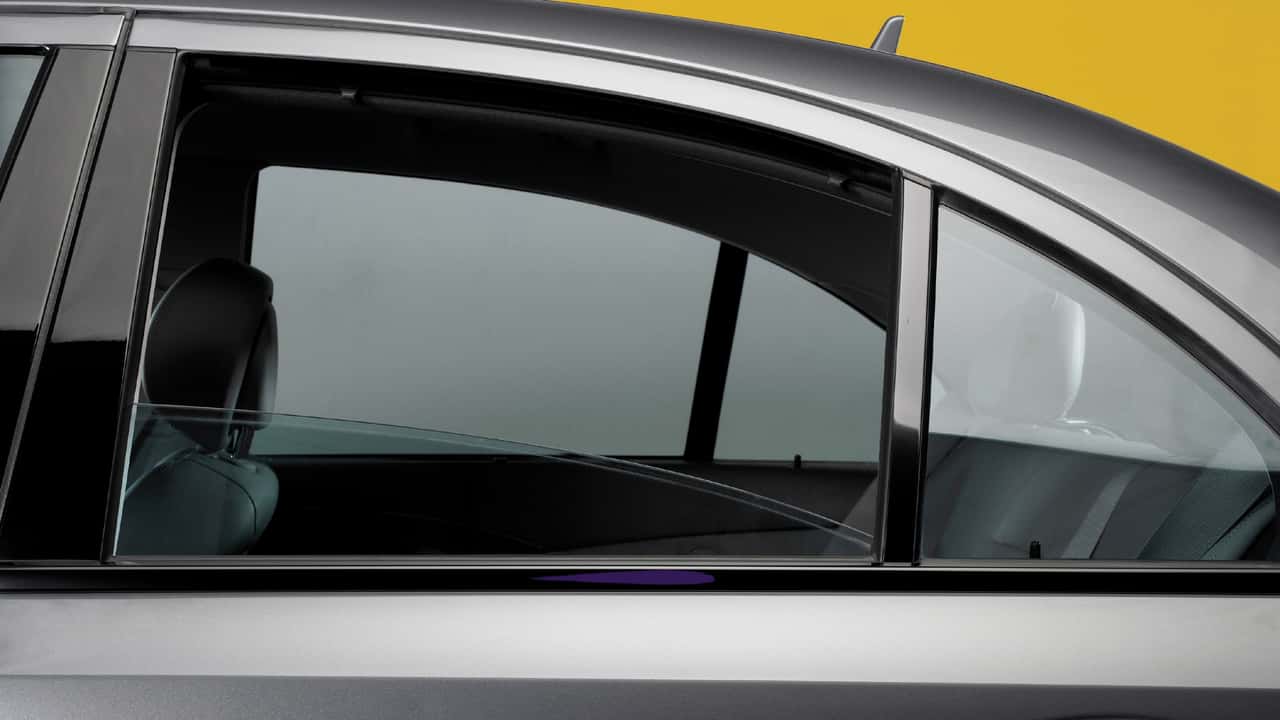
You press the switch, hear the electric motor whir, and watch the rear window slide into the door. Then, with several inches of glass still sticking out, it stops. The front windows disappear completely. So why can’t the rear windows do the same thing?
It might seem like a malfunction, a cheap design decision, or some sort of built-in child-safety feature. But the real explanation is much simpler: There often isn’t enough room inside the rear door for the entire window.
The Rear Wheel Gets in the Way
A car window doesn’t simply vanish when you roll it down. The glass has to physically travel into a hollow cavity inside the door.
That usually isn’t a problem up front. Front doors tend to be relatively tall and rectangular, giving the glass a large, unobstructed space in which to move.
Rear doors are shaped differently.
Look at the bottom-rear corner of a typical rear door, and you’ll notice that it curves upward around the rear wheel opening. That wheel-arch cutout reduces the amount of vertical space available inside the door.
If the window glass is taller than the usable cavity below it, the glass can only travel so far before its lower edge reaches the wheelhouse area. The window regulator simply stops before that happens.
This isn’t a new problem. Vehicle designers have been dealing with the conflict between rear window glass and wheel-well packaging for decades. Modern cars may look dramatically different, but the basic geometry hasn’t changed.


Your Car Door Is More Crowded Than It Looks
The window also isn’t the only component competing for space inside the door.
Behind the interior panel, you’ll typically find the window regulator and motor, door latch, lock mechanism, wiring, weather seals, audio speaker, and structural reinforcements.
Designers could create a larger door cavity, but doing so might require changing the wheelbase, roofline, rear-seat opening, exterior proportions, or crash structure.
That means the partially exposed rear window is often a compromise between styling, passenger access, structural requirements, and manufacturing cost.
No, It Usually Isn’t for Child Safety
One of the most common explanations is that rear windows stop early to prevent children from climbing out.
It sounds believable, but that generally isn’t why the glass remains exposed.
Actual child-safety features include rear-door child locks and the driver-controlled window-lock button. Power-window safety rules govern how switches and certain automatic-closing systems operate, but they don’t require rear windows to remain partially raised.
The leftover glass is normally the result of packaging—not a mandated safety feature.
That misconception came up in a recent Reddit discussion about why rear windows don’t roll all the way down. Several commenters assumed the limited travel was designed to keep children or pets inside the vehicle.
Others pointed out the simpler answer: The shape of the window often doesn’t fit inside the available portion of the door.
It’s an understandable assumption. The design can look intentional from the passenger seat, even when it is really just a consequence of the rear wheel arch.
Why Do Some Rear Windows Go Down Completely?
Not every vehicle has this problem.
Cars with long rear doors, tall beltlines, or rear wheels positioned farther behind the passenger compartment may have enough room to hide the entire pane. Designers can also make the movable glass smaller by adding a fixed quarter window near the back of the door.
That little triangular piece of glass isn’t always there solely for visibility or styling. By separating the window into fixed and movable sections, engineers can create a narrower pane that fits more easily inside the door.
Other vehicles use glass that travels at an angle rather than moving straight downward. More complicated mechanisms can rotate or shift sections of glass around an obstruction, although those designs add parts, weight, cost, and potential failure points.
Sometimes the easiest solution is simply to let the window remain partially exposed.
Newer Cars Haven’t Eliminated the Problem
You might expect modern vehicle platforms, computer-aided design, and sophisticated electric-window systems to make this issue disappear.
They haven’t.
Door design remains a balancing act. Larger wheels can create more intrusive wheel arches. Sloping roofs can produce taller or more dramatically shaped side glass. Thick doors may contain additional sound insulation, speakers, wiring, sensors, and side-impact protection.
Giving the window another two inches of travel may therefore require significantly more engineering than it appears from the passenger seat.
How To Tell Whether Your Window Is Actually Broken
A rear window that has always stopped at the same height—and matches the window on the opposite side—is probably operating exactly as designed.
There may be a problem when:
- One rear window lowers farther than the other.
- The window suddenly stops higher than it used to.
- The glass moves slowly, crookedly, or in short bursts.
- You hear clicking, grinding, or crunching inside the door.
- The window drops but will not rise again.
- Those symptoms can point to a damaged regulator, worn cable, failing motor, misaligned track, or an obstruction inside the door.
But if both windows leave an identical strip of glass exposed, there’s a good chance nothing needs to be repaired.
It’s All About Geometry
Rear windows don’t stop early because automakers forgot how power windows work. And in most cases, they aren’t deliberately preventing rear-seat passengers from getting fresh air.
The glass simply needs somewhere to go. Between the rear wheel arch, window mechanism, door hardware, structural components, and exterior styling, that space can disappear surprisingly quickly.
So the next time your rear window stops with four inches of glass still showing, don’t blame the switch. Blame the shape of the door.
More From Motor101
RECOMMENDED FOR YOU

Why Cars Have Tiny Black Dots Around The Windshield
6,000 Audi Workers Flood Neckarsulm — Will VW Shut It Down?
Why Costco Gas Is Always Cheaper Than Everyone Else
The 2027 Audi Q9 Configurator Is Already Live. We Maxed It Out
Why Your Brake Rotors Rust Overnight
The Genesis GV60 Magma Is $9,000 Pricier Than Its Hyundai Sibling
Why Some New Cars Have Fake Exhaust Tips