Mercedes CLS (2004-2010): The first generation turns 20
The beautiful four-seater established a new trend


Hardly anyone knows him, but the Mercedes brand in particular has a lot to thank the American car designer Michael Fink for. This includes the first generation of the CLS, which is now 20 years old. The C 219, as it is known internally, was produced between October 2004 and July 2010 and was designed by Mr Fink back in 2001.
He also designed the first CLK, the C sports coupé and the Maybach 57 and 62 models, but what was the first CLS actually like? According to the Mercedes press department, it combined the "strong emotional charisma" of a coupé with the "comfort and practicality" of a saloon.
Gallery: Mercedes CLS (C219, 2004-2010)

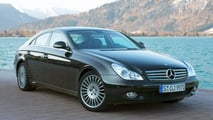
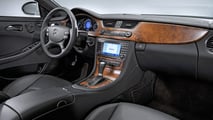
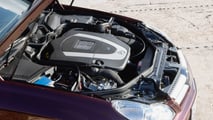
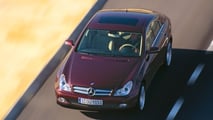
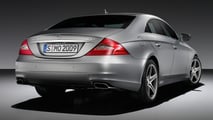
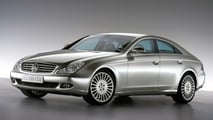
The story of the Mercedes CLS began back in 2003, when two vehicles shone in the Mercedes hall at the IAA 2003: the Vision CLS concept car and the SLR McLaren super sports car. The Vision CLS was created at the consistent instigation of the then Chief Designer Prof. Peter Pfeiffer. His aim was to use design to charge the brand with fascination and emotionality but also with superior composure.
When Mercedes-Benz lifted the cloth over the metallic wine-red Vision CLS at the IAA, it was immediately clear to the global public that a design icon was standing there - a four-door coupé with highly elegant, expressive lines.
Mercedes Vision CLS (2003)
Due to the extremely positive response, production of the 219 model series begins just one year later. It contributes significantly to the dynamisation of the brand. The body shape is influential in the industry: other car manufacturers also adopt it, for example in the form of the VW CC or BMW 6 Series Gran Coupe.
The series version of the new Mercedes CLS-Class celebrates its market premiere at the beginning of October 2004. It is based on the platform of the former E-Class (W211) and shares important components such as engines, gearboxes and an identical wheelbase of 2,854 mm. In comparison, the car is 95 mm longer, 51 mm wider and 27 mm lower and, according to Mercedes, has a 30 per cent stiffer suspension and more responsive steering. The CLS-Class is priced above the E-Class but below the S-Class in the Mercedes model range.
The engine range includes two powerful petrol engines: a newly developed V6 engine with 272 PS in the CLS 350 and a powerful eight-cylinder unit with 306 PS in the CLS 500. Both engines work together with the new 7G-TRONIC seven-speed automatic transmission as standard. In the top-of-the-range CLS 500 model, the Airmatic air suspension and four-zone climate control offer the comfort of the S-Class segment.
The four-door coupé concept also makes it easy for rear passengers to get in and out of the car. They sit on two comfortable individual seats and enjoy a high degree of freedom of movement. The lavish wood-panelled cockpit of the first CLS is legendary.
The distance between the front and rear seats is 829 millimetres, which, like the shoulder room and elbow room (1,422 and 1,464 millimetres respectively in the rear), exceeds the values of comparable saloons. With up to 505 litres (according to the VDA measurement method), the new CLS-Class also significantly exceeds the values of other coupés and some saloons in terms of boot space.
The CLS 350 is powered by a newly developed V6 engine that delivers 272 PS and develops a maximum torque of 350 Newton metres from just 2400 rpm. Both are top values in this displacement class.
The six-cylinder CLS 350 coupé accelerates from zero to 62 mph in exactly 7.0 seconds and reaches a top speed of 155 mph. The high-revving V6 engine harmonises with the 7G-TRONIC seven-speed automatic transmission, which is also new and comes as standard. At the time, it was the world's first transmission of its kind for passenger cars. The CLS 500 with a 306 PS V8 and 460 Nm of torque accelerates to 62 mph in 6.1 seconds.
There was also a diesel in the CLS right from the start: 320 CDI until 2009, then continued as the 350 CDI until 2010. However, the output of the 3.0-litre engine always remains the same at 224 PS, as does the maximum torque of 540 Nm. Standard on all CLS models: the electro-hydraulic braking system Sensotronic Brake Control, or SBC for short.
In mid-2006, Mercedes introduces the world's first petrol engine with piezo direct injection and a jet-guided combustion process in the CLS. The 292 PS six-cylinder engine in the CLS 350 CGI is said to achieve further fuel savings of around ten per cent compared to the V6 petrol engine with duct injection. The CLS 500 now uses the new V8 engine from the S-Class, which at 388 PS is around 26 per cent more powerful than the previous eight-cylinder unit.
Also new is the CLS 63 AMG, whose naturally aspirated V8 engine develops 514 PS. It replaces the previous CLS 55 AMG with 476 PS, which was also the only CLS with only a five-speed automatic transmission.
The only major facelift of the C 219 model series finally took place at the beginning of 2008: the new entry-level engine, the CLS 280 with a modern V6 engine, produced 231 PS. The top model in the range, the CLS 63 AMG with a 514 PS 6.3-litre V8 engine, now features 19-inch AMG light-alloy wheels and a new sports exhaust system.
The modified radiator grille, which now has two instead of the previous four louvres, catches the eye at the front. Diamond-shaped, three-dimensional grilles painted atlas grey in the air vents lend the front view even more self-confidence and also emphasise the width of the vehicle. The 32 per cent larger rear-view mirrors also have a new shape. The integrated LED side indicators have an arrow-shaped design.
Viewed from the rear, the new-generation CLS draws attention to itself with a new rear apron, new tail lights and modified tailpipe trims. Trapezoidal instead of the previous oval exhaust tailpipe trims emphasise this impression. The rear lights now feature LED technology.
The last Mercedes CLS of the 219 model series
The interior has also been updated: A redesigned three-spoke leather steering wheel with multifunction buttons is just as much a part of this as a new-look instrument cluster. The white dials form a contrast to the chiselled surface of the tube panel. New wood applications in chestnut replace the Laurel matt colour scheme.
More Modern Day Classics From Germany:
Incidentally, prices start at just under €56,000 for the CLS 280, while the CLS 63 AMG costs a good €107,000. Production of the C219 series totalled 170,000 units worldwide during its six-year production period. The last CLS model in the 219 series rolls off the production line at the Sindelfingen plant on 26 July 2010: the plain black CLS 550 goes to a customer in the USA.
RECOMMENDED FOR YOU
A New V8 Mercedes C63 Is Coming. Eventually
Toyota Upgrades Its Funkiest Model With A New Hybrid System
The New Mercedes-Maybach GLS Debuts With More Power, Better Style
This Supercharged Corvette Hit 300,000 Miles On Its Original Engine
The New Maybach GLS Shows Its Face For The First Time
Woman Starts Her Buick. Then It Makes A Noise Unlike Any She's Ever Heard: ‘Does Anybody Know What’s Going On?’
Man Goes To Mercedes Dealership With Navy Federal Check And $10,000: 'They Wanted A Copy Of My Degree.' Then He Goes To Carvana