The Porsche Cayenne Coupe Electric Is Performative Sport Utility: Review
The Cayenne Electric Coupe is the same as the SUV, just with a little more style.
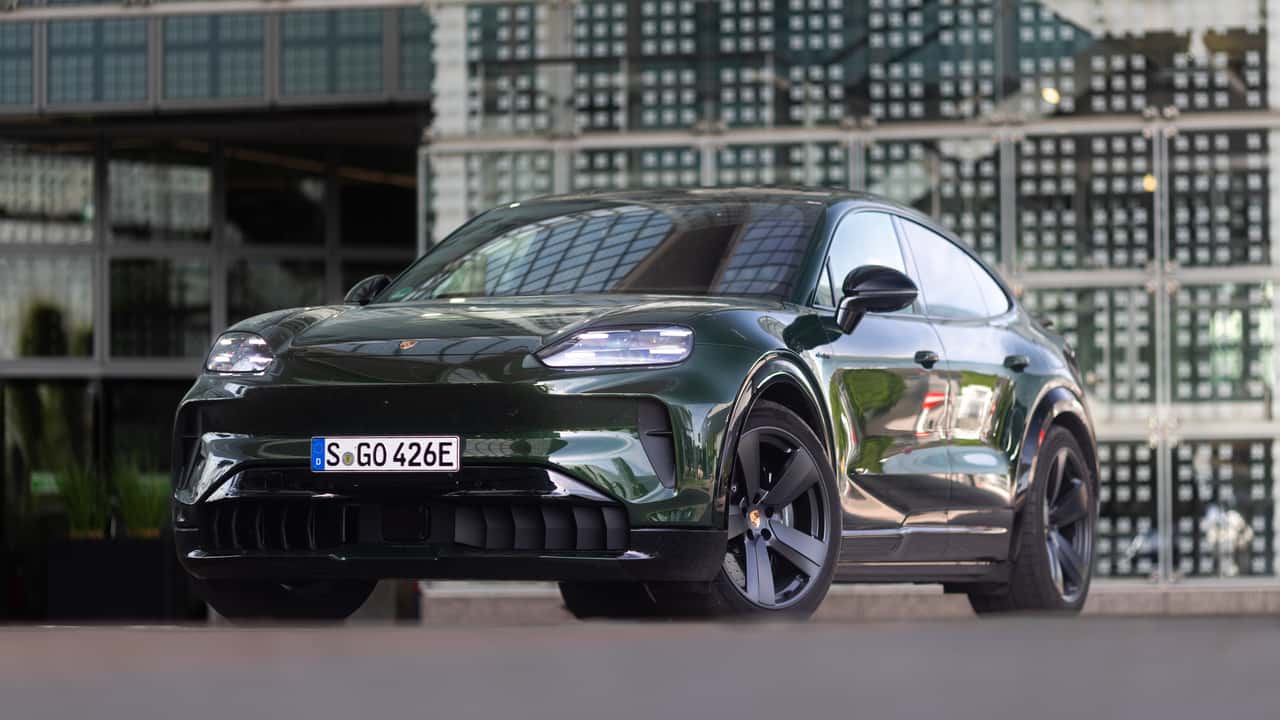

The idea of an SUV coupe is as oxymoronic as diet soda. Yeah, it says zero calories on the label, but it still has some form of harmful compound that will inevitably result in the same outcome as the full-bodied drink. But it isn’t about the actual dieting. It’s about appearances, people.
Hence, the newly minted Porsche Cayenne Electric Coupe. It is a Cayenne with a chopped roofline—a roofline that Porsche insists is taken almost directly from the 911. You, of course, lose luggage space and gain very little in terms of sporting character. The Coupe’s drag coefficient is a little lower, and there are some sportier configurations available, but fundamentally, the Coupe is simply the SUV in slightly different, perhaps performative, clothing.
Maybe it isn’t diet Cayenne as much as its Cayenne Zero.
| Quick Specs | 2026 Porsche Cayenne S Coupe Electric |
| Battery | 113.0 Kilwatt-Hours |
| Motors | Dual Permanent-Magnet Synchronous |
| Output | 657 Horsepower / 796 Pound-Feet |
| 0-60 MPH | 3.6 Seconds |
| Weight | 5,637 Pounds |
| Price / As Tested | $133,550 / $201,150 |

Since we drove the Cayenne Turbo Electric SUV recently, I won’t spend too much time rehashing the basics. In all ways, the Coupe and SUV share trim levels, have identical powertrains, and are basically the same SUV in two flavors.
The Coupe does get a couple of improvements, though: The nifty liquid-crystal panoramic sunroof and Sport Chrono are standard, and you get a slightly better drag coefficient; 0.23 instead of the SUV’s 0.25. Losing drag is a meaningful improvement, though Porsche doesn’t claim any great range improvement from it. As a bonus, the onboard wireless phone charger is now magnetized.
You also get the Coupe-exclusive Lightweight Sport package, which replaces the panoramic glass with carbon fiber and comes with 22-inch wheels shod with Pirelli PZero R tires. It saves just 39 pounds, so it's another example of appearances over substance, especially when the weight savings represents a mere 0.7 percent overall weight reduction.
Of course, the top-trim Turbo still gets a colossal 1,139 horsepower from blank blank blank, while the S I drove gets a (relatively) piddling 657 horsepower courtesy of blank blank blank. The base settles for just 435 hp. The scale of those numbers is ridiculous, especially considering what the internal-combustion variants of the Cayenne are capable of. It’s arguably the headline feature of the Cayenne Electric, though the interior makes a great argument as well.
The wow factor comes from the curved 12.3-inch OLED infotainment display. It’s not curved as much as it's bent in the middle, segmenting the display nicely and also offering a useful pocket for critical buttons to exist within. It’s fast, crisp, and extremely intuitive.
Flanked by Porsche’s 14.3-inch curved gauge cluster and an optional 14.9-inch passenger screen, the cockpit is undoubtedly screen-heavy, but it doesn’t feel like it in practice. HVAC controls like temperature and fan speed are physical, as is the volume control. Overall, I found the depth of usability to be unusually good.
My Oak Green Neo S Coupe had the Lightweight package, which was a nice bit of placebo effect for my long stints down de-restricted sections of the German Autobahn. If anything, it was a perfect environment to feel the Cayenne Electric’s high-speed capabilities and refinement. And, there are precious few times when you can legally V-Max a test car, something I did with haste.
Of course, the Coupe is typical Porsche in execution. The seating position is perfect, with the seat going just low enough to feel sporty but not too low as to allow the Cayenne’s interior to consume your field of view. The steering wheel, which is the same wheel from the previous generation, met my arms perfectly. And that wheel offered a lovely murmur of tire information, with an excellent, linear buildup of steering weight and a clear sense of straight ahead. Indeed, at 167 miles per hour, I couldn’t ask for more stability or steering response. It was all just right.
But there were some wrinkles. For the size and heft of the Cayenne, I was surprised that it was not a bank vault-level noise isolation chamber. A noticeable amount of high-frequency road and ambient noise made it into the cabin at normal highway speeds, with the higher-pitch tones from the tires and surrounding traffic penetrating through. My tester was also equipped with the active suspension system, which is normally extremely trick, but was not quite perfect. Sharp cracks and rougher bumps sent shocks into the cabin, which doesn’t happen with the same system on the Panamera.
And, perhaps because Porsche set the bar so high with the Taycan and Macan EVs, the Cayenne doesn’t quite have the handling magic of those cars. To be fair, it is a large luxury SUV, so it doesn’t need to handle well, but it’s only because Porsche executed so well on its other products that I even noted it.
Porsche Cayenne S Coupe Verdict
For $201,150 as-tested—a huge number—I do think that the interior noise is disappointing. It’s not incredibly loud, but it’s louder than it should be, and the Macan EV suffers from a similar issue. If it’s Porsche’s electric platform, or a specific deficiency, I’m not sure. But it doesn’t detract much from a very rosy overall experience.
The tech is incredibly slick and usable, the performance is undeniable, and the range is decent enough to be usable. You don’t lose much rear headroom with the Coupe, and the trunk is still plenty large.
Really, the Cayenne Electric Coupe is just a matter if you want classic Coke or Coke Zero.
Competitors
More Porsche Reviews

2027 Porsche Cayenne S Coupe Electric
RECOMMENDED FOR YOU
Porsche Denies It's Killing The Taycan, 2030 End Date Still Unclear
Man Offers To Buy Car With Cash. Then He Realizes The Dealership Has A 'Hidden Agenda'—And Threatens Him
Europe's Sports Car Market Is Shrinking. But The Porsche 911 Is Still Winning
Did You Know: Auto Parts Stores Can Read Your Check Engine Light For Free
I Took Porsche's Manthey Taycan To The Nürburgring. It's A Different Animal: Driven
Another State Is Raising Speed Limits To 75 Miles Per Hour
'This Is The Enthusiast's Choice:' Porsche's American CEO On Why The Manual Still Matters And What's Next