Tire Pressure Matters
The air inside your tires does more than just cushion the ride—it helps support your car in a multitude of ways.

It’s a terrible feeling. You’re driving along, at peace with the world, possibly jamming to Linkin Park (or whatever floats your boat), and that dreaded yellow light illuminates the dashboard: A little silhouette of a tire and an exclamation mark.
Yup, you’re low on tire pressure.
Now, the natural instinct is to simply ignore this warning and hope it goes away. But the responsible thing to do would be to head to the nearest tire shop, or pull over somewhere safe and check the pressures yourself. Either way, it is extremely important that you check those pressures. Your tires are the only thing that touches the road, but the air that inflates them determines almost everything about that interaction.
You might even ask, "Why is there even air in tires?" and "Why do tires even exist?" Well, there are very good reasons for that.
motor101
Welcome to Motor101, our series dedicated to answering the internet's biggest automotive questions. From the origins of iconic designs to the engineering breakthroughs that shaped the world's greatest cars, we uncover the stories behind the vehicles you love.
The Origin Of Air-Filled (Pneumatic) Tires
The need for tires was simple: Things that used wheels needed a replaceable wear surface to extend their useful life and make maintenance cheaper. Rather than replacing whole wooden wheels, the earliest tires were effectively leather bands.
Soon, iron and steel bands were used over wood until one day in 1888, John Boyd Dunlop (yes, that Dunlop) wanted to improve the ride quality of wheeled objects. Some sources say it was to alleviate his son’s headaches, but Dunlop perfected the idea of a rubber tire filled with air (a pneumatic tire, for the nerds).
At first, Dunlop’s tires were used for bicycles and tricycles. But Michelin came in and developed the concept for automobiles by 1895.
Air was chosen for a simple reason: It was free, easily available, and happened to be an excellent medium for a cushioned ride. It also turned out that air is highly stable over a variety of temperature ranges and was variably hard or soft based on the amount of air pressure within the tire—which is the operative point of today’s story.
Over the years, experiments with airless tires and nitrogen-filled tires have made the rounds, and in especially high-performance applications, Nitrogen is more effective. But to this day, air remains the standard fill on nearly all automotive tires.

Nokian Hakkapeliita 01 Studded Snow Tires
Why Does Tire Pressure Matter?
The most basic principle of air-filled tires is that the air provides a cushion that also bears load. At its most basic, a tire is a rubber shell for the air within. Without the air, a tire collapses, and without the tire, the air can’t hold the car up. Simple.
Think of a very strong, highly reinforced, and well-engineered balloon. The amount of air you blow into a balloon determines how firm it is, how large it gets, and how flexible it can be. The same principle broadly applies to tires, and that amount of air is what we know as the tire pressure.
In the US, tire pressure is expressed in Pounds per Square Inch (psi). This, quite literally, means the amount of force the air is exerting on the tire per square inch, in pounds. So at 35 psi, there is 35 pounds of force per square inch of tire. Now, imagine that spread across the entire tire, and you can imagine the ability to hold up a 4,000-pound SUV.
Tires are specially designed to harness this force and spread the load across the entire tire. It’s why they aren’t just rubber balloons, because a simple balloon would compress and warp like it does when you squish one.
Instead, tires have incredibly strong carcasses comprised of nylon, Kevlar, and steel bands that provide structure for the air while also helping define how your car handles. The tire’s flexibility and also the type of rubber (called a rubber compound) matter greatly.
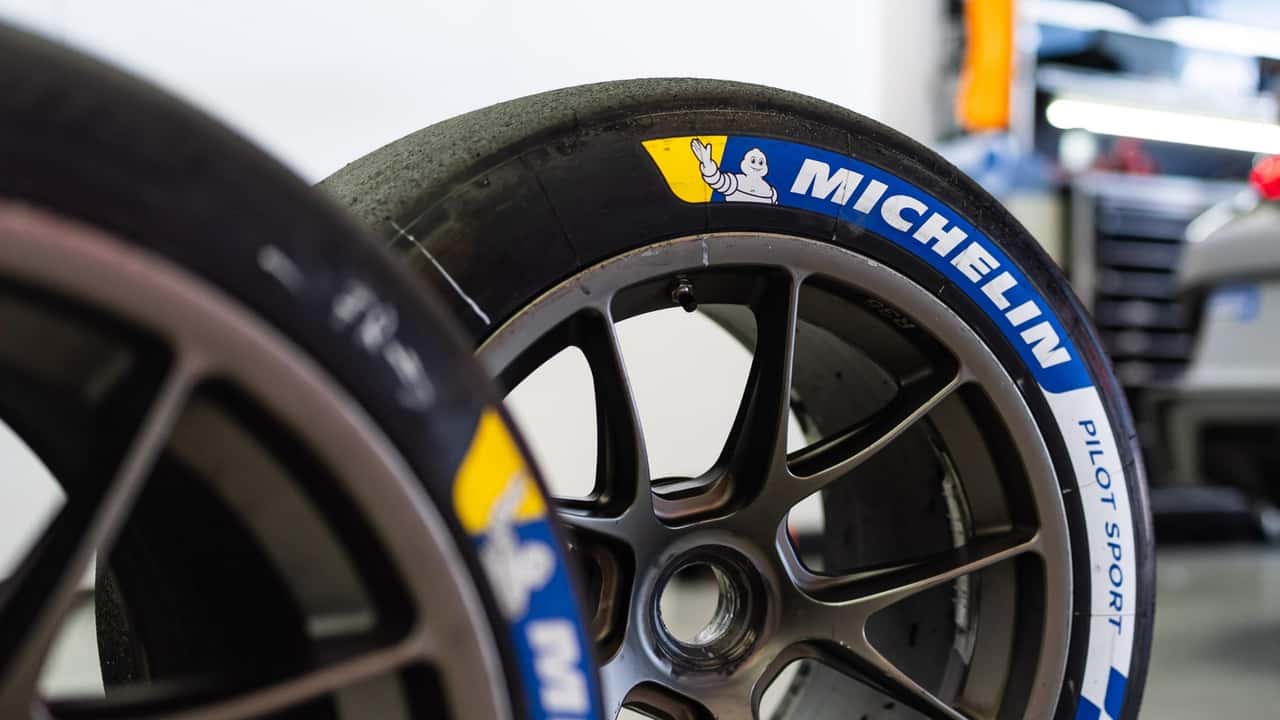
Michelin Pilot Sport S 5
How Do You Check Tire Pressure?
New cars are legally required to have some form of tire pressure monitoring system (TPMS), which will illuminate if any discrepancies in pressure are detected. Sometimes, though, these systems can malfunction, and it’s best to check your pressures with a gauge. Gauges are simple and cheap, and can be bought at any gas station, auto parts store, or hardware store.
Locate the valve stem on your tire, which will look like the end of a small black pen sticking out, and unscrew the cap if equipped. Then place the end of the pressure gauge onto it, and read the gauge.
If the gauge reads lower than the recommended pressure, fill the tire. If it reads higher, bleed air slowly using the gauge, or use your fingernail on the center part of the valve stem.
The Bottom Line
Nonetheless, it all begins with tire pressure. Without the appropriate amount of pressure, your tire would flex too much and wear out quickly. It could even get damaged and fail if a tire is run flat for too long, or if you exceed the load limit.
It’s important to make note of the correct tire pressure for your car and note the maximum tire pressure of your tires. In the US, cars are legally required to carry the recommended pressures in an easily visible place on the driver’s door jamb. Refer to that for any information. Your owner's manual will also contain the appropriate pressures.
So yes, when that light illuminates, it’s important to check your pressures using a cheap, easily purchased gauge or at any local tire shop. It could be the difference between damaging an expensive tire and potentially losing control of your vehicle, and having a smooth road trip with an easy fix.
More From Motor101
RECOMMENDED FOR YOU
How Long Do Brake Pads Last?
McLaren's Manual Supercar Isn't A Preview Of The Future
You're Probably Not Using All Of Your Car's Key Fob Features
Jeep Just Debuted The New Cherokee. But Another One Is Already On The Way
Turbocharged Vs Supercharged: What's The Difference?
850,000 Jeep, Ram, Dodge And Chrysler Vehicles Recalled
What All Those Numbers And Letters On Your Tires Actually Mean