Uber, Rivian, And The $1.25 Billion Robotaxi Deal
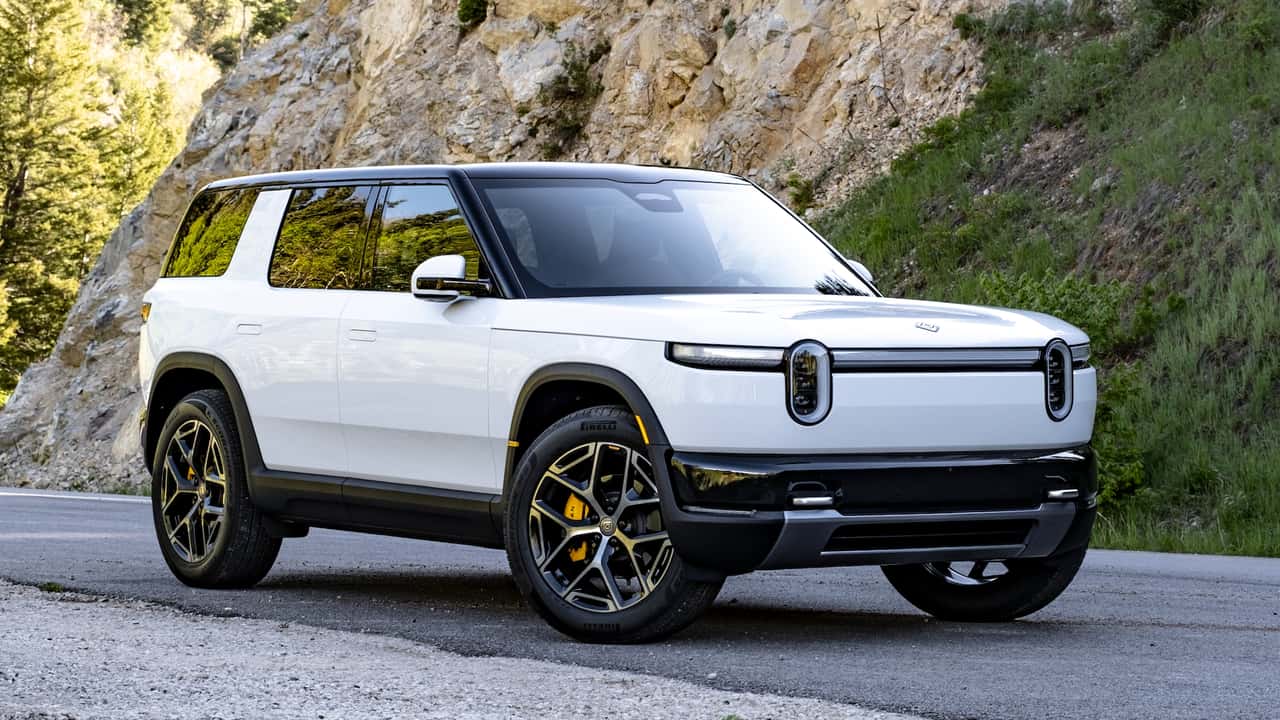
Rivian R2 targets Level 4 autonomy by 2028 as Uber eyes up to 50,000 robotaxis, blending retail SUV duties with high-mileage ride-hailing work.

THE BREAKDOWN
- Uber will invest up to $1.25 billion in Rivian through 2031, including roughly $300 million already committed.
- Launch in 2028 starting in San Francisco and Miami.
- Robotaxi-spec R2s will gain extra sensors, redundant steering and brakes, and tougher interiors.
Picture a compact electric SUV easing up to the curb, the doors pop open, and the whole trip unfolds with no one in the driver’s seat. That is the world Uber wants to build around the Rivian R2, and it is putting real money behind it. Under a new deal, Uber plans to invest up to $1.25 billion in Rivian through 2031, tied to a plan to deploy as many as 50,000 fully autonomous R2 robotaxis that would run exclusively on the Uber platform.
The rollout starts with 10,000 R2 robotaxis targeted for 2028 in San Francisco and Miami, then ramps up to roughly 25 cities across the US, Canada, and Europe by 2031. For Rivian, the R2 is still a mainstream compact SUV that slots below the R1T pickup and R1S SUV, but this agreement gives it a split personality: a family-size EV in your driveway that shares its hardware and software with a high-mileage robotaxi tuned for strict autonomy, uptime, and fleet economics.

2027 Rivian R2 First Drive Review
Rivian R2 As Robotaxi: Platform Specs, Autonomy Hardware And Software Roadmap
The retail R2 is already set up as a tech-forward compact SUV. It rides on a simpler, more cost-focused platform than the R1 family and is slated for production in Normal, Illinois, with a second plant in Georgia planned to boost capacity and support a dedicated R2 robotaxi configuration alongside the smaller R3. That Georgia site is central to Rivian’s push toward higher volumes and the kind of output needed for large fleet deals.
Rivian’s software and autonomy plan comes in steps. The company is targeting point-to-point assisted driving by late 2026, an interim “Autonomy+” stage, Level 3 eyes-off highway capability around 2027, then Level 4 robotaxi service beginning in 2028. Robotaxi-spec R2s are expected to run extra cameras, added radar, likely lidar, and more onboard compute than the consumer versions, paired with redundant steering and braking so the system can ride out component failures without needing a human to grab the wheel.
These robotaxis will not be outfitted like lifestyle adventure rigs. Expect hard-wearing, easy-to-clean cabins, passenger-friendly ingress and egress, and heavy-duty thermal management and charging hardware tuned for near-constant duty instead of weekend road trips. Rivian has already signaled that R2 robotaxis will carry additional sensors and dedicated robotaxi software beyond the standard consumer setup, trading camping gear and trail toys for long life in dense urban fleets.
The tradeoff is that true Level 4 capability does not appear overnight. The 2026 and 2027 phases still assume a human fallback driver. For a while, Uber is likely to run R2s in supervised autonomous modes where the car does most of the driving, but a safety driver remains ready to step in, especially outside precisely mapped operational zones.
Motor1's Take: Uber’s Rivian R2 deal is a swing at locking down both the hardware and the AI driver for the next phase of ride-hailing. The volume goals, from 10,000 vehicles in 2028 to a possible 50,000 by 2031, all rest on Rivian delivering durable Level 4 tech on time and in big numbers. For riders, an R2-based robotaxi should feel like a normal, practical SUV instead of a science project, which is exactly what you want when millions of trips are on the line. For human drivers and fleet owners, the big questions are how long supervised modes stick around, how quickly fully driverless service scales, and who ultimately pockets the savings once there is no one left in the front seat.
More From Uber And Rivian:
RECOMMENDED FOR YOU
Waymo Is Facing A Major Recall Because They Might Enter Freeway Construction Zones
Does Your Car Smell Like Crayons? There's A Reason
Uber's New Autonomous Vehicle Is the VW ID. Buzz
Woman Takes Toyota To The Dealership. Then They Say They Lost Her Keys: ‘They Were Playing Games’
Tesla announces robotaxi service for June 2025
BMW Will Flood The Market With New Cars Through 2027
China enters the race for autonomous cars