Home
Porsche
News
Mechanic Quotes Porsche Owner $5,000 For Headlight Restoration. Then He Gets A Second Opinion: ‘Quick $200 Fix’
'Worth it for sure.'
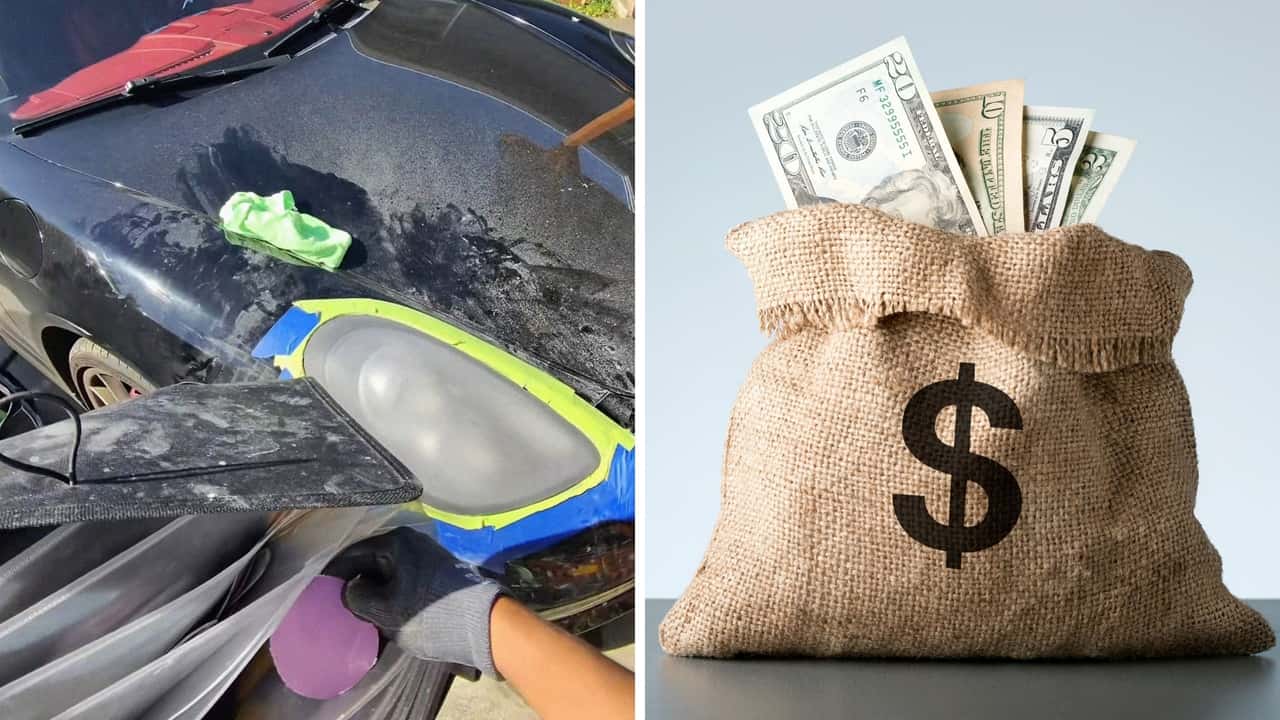
Photo by: AdobeStock
JT Wilson 
By: JT Wilson
Jun 8, at 6:00am ET
Add Motor1.com as a preferred source in Google
- (https://twitter.com/intent/tweet?url=https%3A%2F%2Fwww.motor1.com%2Fnews%2F798010%2Fporsche-vapor-headlight-restoration%2F&text=Mechanic%20Quotes%20Porsche%20Owner%20%245%2C000%20For%20Headlight%20Restoration.%20Then%20He%20Gets%20A%20Second%20Opinion%3A%20%E2%80%98Quick%20%24200%20Fix%E2%80%99&via=motor1com)
- copy
Share
Comment
A Porsche owner in Portland had been told it would cost $5,000 to fix his cloudy driver-side headlight. Instead, he booked a mobile detailer he had found on TikTok, who turned up in a retail parking lot with an acetone-vapor setup, knocked the haze out of the lens in a few minutes, and charged him $200 with a one-year warranty. The video of the appointment has drawn more than 1.5 million views and a long debate in the comments section about whether the cheap fix is actually the right call.
The clip was posted by Sam at nextlevelheadlights (@nextlevelheadlights), a Salem, Oregon-based mobile headlight restorer whose channel mostly shows before-and-afters from his calls. The video opens with him introducing himself to the customer, Tony, in the lot.
The Job: A Porsche Headlight Restoration
“Right one is new only because this car got into an accident, and the whole thing got replaced. But this one is from the factory,” Tony explains. The clouded lens is the one that has lived its life in the car.
Sam runs through his sander, then sets up the vapor rig. The bulk of the video is the close-up restoration. When he hands the car back, he flags the warranty: “Like I said, you have a one-year warranty. So, if it starts getting, like, yellow again, I’ll just come back and just redo it again.”
He confirmed his solution in a comment reply. “Vapor,” he wrote, when a viewer asked what he had poured into the canister. Another commenter cut closer to it: “It’s not vapor. It’s acetone.” Both descriptions point to the same thing—heated acetone vapor flashed across the lens to soften the polycarbonate surface and redissolve the haze.
Does Vapor Headlight Restoration Actually Work?
The video shows that the harder question is what the lens is doing on the road afterwards. AAA’s 2018 research on cloudy headlights found that deteriorated lenses deliver only “22 percent of the amount of light a new headlight does" and that even a competent restoration only recovers light output to about 70 percent. Replacing with an OEM headlight is the only path back to 100 percent. So, the fix matters for safety, but it doesn’t bring the lens back to factory.
The longevity question is where vapor specifically gets argued over. Polycarbonate headlight lenses ship with a factory UV hard coat that, per the polycarbonate trade publication UV+EB Technology, degrades from “sunlight, moisture, carwashes, dirt and many other environmental conditions.” Once that coat is gone, anything that re-clears the lens without replacing the UV barrier is on a clock. The same article notes that aftermarket UV-A-cured hard coats can hold up well, citing one OEM-style refinish that showed “limited degradation” after three years in service, while Consumer Reports found typical drugstore restoration kits last about a year.
Sam’s one-year warranty is on the right side of that data—but the technical debate in his comments section was loud, and most of it turned on whether a sand-and-clear-coat job lasts longer than vapor.
‘In Germany This Is Illegal’
A competitor restorer who posts as GenesMachinesLLC made the loudest case for the sand-and-coat camp.
“Hopefully a clear coat or it certainly won’t last,” he wrote on the vapor approach, then described his own process: sanding, two or three light coats of 2K UV clear, and results he says are still going on personal vehicles after eight years.
Another self-identified detailer working under the handle "St" posted a detailed sanding protocol—600, 800, 1,000, and 3,000 grit, wet-sanded, and finished with a Meguiar’s UV-rated sealer—and said his customers were three years out and still clear.
The other side of the thread reads the warranty as the answer. “1 year warranty. So it’s good fam,” wrote AFK. Several Salem and Portland viewers asked Sam to come do their cars.
A German commenter, daddyluh2, surfaced an outright legal objection. “In Germany this is illegal,” he wrote, with another German viewer clarifying the reason: the factory layer that keeps headlights from blinding oncoming traffic gets removed by the process. U.S. headlights are regulated under FMVSS 108 for output and beam pattern, but no comparable rule restricts after-market refinishing of a lens at home.
Vapor Headlight Restoration: The Cost Calculus
The number that makes the story is the spread between the two quotes. Two hundred dollars against $5,000 is a 25:1 ratio. Even at Sam’s stated 12-month warranty interval, an owner could rebook the work every year for roughly two decades and still come out ahead of a single dealer replacement.
The AAA caveat is the corner that gets cut: a restored lens does not put out factory-spec light, which matters most at the same time of day that nearly half of fatal crashes happen. For an owner with one new factory headlight already in place from a previous body repair, matching the other side at $200 is a reasonable choice. For an owner who drives a lot at night on dark rural roads, the calculus tilts back toward replacement.
What do you think?
View
Comments
Most of the rest of the comments were either book-me requests from other Pacific Northwest viewers or shock at the $5,000 figure. “$5,000 for this???” wrote kkkkvvvv, in the most concise version of that reaction. Sam, for his part, pinned a “DM to book” comment near the top of the thread and went back to work.
Motor1 reached out to nextlevelheadlights via TikTok direct message and the contact details listed in his channel bio. We’ll be sure to update this if he responds.
We want your opinion!
What would you like to see on Motor1.com?
Take our 3 minute survey.
- The Motor1.com Team
Share this Story
- (https://twitter.com/intent/tweet?url=https%3A%2F%2Fwww.motor1.com%2Fnews%2F798010%2Fporsche-vapor-headlight-restoration%2F&text=Mechanic%20Quotes%20Porsche%20Owner%20%245%2C000%20For%20Headlight%20Restoration.%20Then%20He%20Gets%20A%20Second%20Opinion%3A%20%E2%80%98Quick%20%24200%20Fix%E2%80%99&via=motor1com)
- copy
GO TO COMMENTS
(
)
Got a tip for us? Email: tips@motor1.com
View all comments ( )
Popular

Bugatti Restores One-Off Veyron With A Mirror-Like Aluminum Body
BMW Kept This Hatchback A Secret For Decades
Skoda Wants You To 3D Print Pieces Of Your Car At Home
The Gas BMW M3 Isn't Dead: Next-Gen Prototype Roars
latest articles
- 12 Cars With Names That Make Absolutely No Sense Oct 20 - Lists -
- The Ford Ranger Is Getting A Bigger V6 For 2027: Report Oct 20 - Rumors -
- BMW Already Has A Deal On The New i3. But It's Not Cheap Oct 20 - Pricing -
- Remember The Ford Flex? This Weird SUV Is Now A Great Used Buy Oct 20 - Why Buy? -
- Mercedes Isn't Sold On Extended-Range EVs: 'Would You Really Switch?' Oct 20 - Interview -
- Cadillac Driver Is Fed Up With Auto Stop. Then She Buys A $9 Item On Amazon To Disable It Oct 20 - Trending -
- Bugatti Restores One-Off Veyron With A Mirror-Like Aluminum Body Oct 20 - Supercars -
RECOMMENDED FOR YOU
Porsche Won't Build An Electric Supercar Because 'There Is No Demand'
12 Cars With Names That Make Absolutely No Sense
Porsche Mission S Could Get A Manual If Customers Want One
The Ford Ranger Is Getting A Bigger V6 For 2027: Report
Listen To The Porsche Mission S Rev Its Mysterious Engine: Video
BMW Already Has A Deal On The New i3. But It's Not Cheap
Porsche Mission S: All The Features You Might've Missed