'Walmart... They Let Me Watch': Man Goes To Jiffy Lube For An Oil Change. Then He Checks The Dealership
'I do my own.'
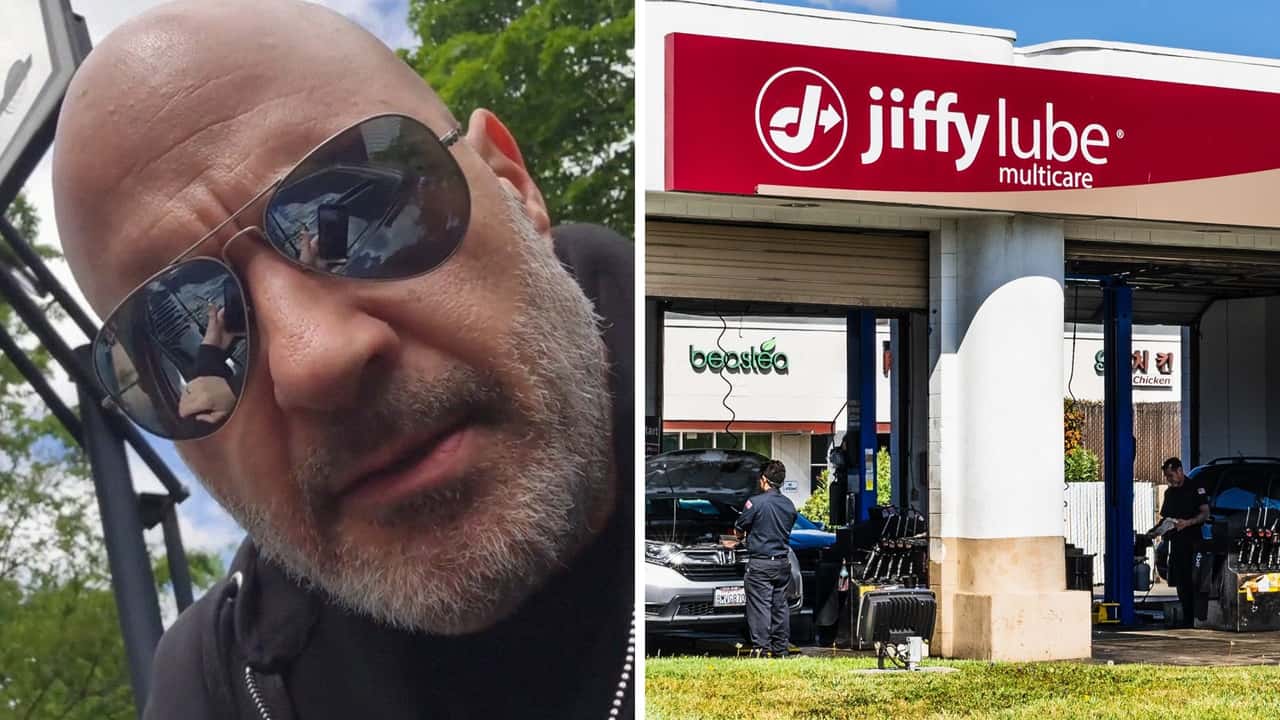

It can be hard to know where to go for your car’s regular maintenance. Is it worth it to go back to the dealership, hit up a local shop, or go to a quick lube place that does this day in and day out?
And one man has sparked a debate on which place is worth your time and money and will hopefully preserve your car’s longevity.
In a video posted by content creator Gary Macchione (@gary.macchione), he posed the question: dealer or Jiffy Lube?
In the video, Macchione shares that he's getting an oil change along with a full inspection but wonders where his followers take their cars when the time for maintenance comes.
"You guys go to a dealer, or you go to one of those Jiffy [Lubes]?" he asks.
Dealership VS. Quick Lube Spots: What's The Difference?
You may be surprised to find that the biggest difference between the two isn't always price.
According to ABC Advanced Automotive Service, dealerships use OEM-certified oil and filters matched to your specific vehicle's manufacturer specifications, while quick lube shops typically stock a limited range of oil weights and aftermarket filters.
For many everyday drivers with older vehicles out of warranty, that distinction probably doesn't matter much. But for newer cars, luxury vehicles, or anything with a turbocharged engine that calls for a specific synthetic blend, getting the wrong viscosity repeatedly can add up to real wear over time.
Cost-wise, the gap is real but not always as wide as people assume.
Quick lube shops typically run $30 to $75, depending on oil type, while dealerships tend to land between $60 and $150.
The dealership is more expensive, but it usually comes with a multi-point inspection that can catch other issues early.
According to the Center for Performance Improvement, roughly 65% of routine maintenance is done outside of dealerships, with Jiffy Lube accounting for about 15% of that. Their take is firmly pro-dealership, but even accounting for that bias, the technician training gap is worth knowing about. Quick lube staff turnover is high, and formal automotive certification isn't always required, whereas dealership lube techs generally have some level of brand-specific training.
Dealership VS. Jiffy Lube Debate: ‘Walmart. … They Let Me Watch’
In the comments section, responses ranged from viewers saying they do it themselves, go to a locally owned shop, go to a dealer, or go to a company other than Jiffy Lube.
“I change my own oil,” a top comment read.
“I go to the dealer to make sure that my warranty stays in place,” a person shared.
“Always the dealer when they mess it up its on them to fix it,” another wrote.
"Dealership every time, ive seen way [too] many horror stories with quick lube places,” a commenter added.
Motor1 reached out to Gary Macchione for comment via email and Instagram direct message and to Jiffy Lube via email. We'll be sure to update this if either responds.
RECOMMENDED FOR YOU

Woman Leaves 1-Star Review For Nissan Dealership. Then The General Manager Fights Back
The New Nissan Leaf Nismo Is All Show Without The Extra Go
Woman Sits In Line For An Hour At Take 5. Then They Say They Don’t Have Her Oil Filter—And Ask Her To Do Something That Shocks Her
The Range Rover GT Is The Most Car-Like Range Rover Ever
Man Hits Traffic Lane Divider In His $50,000 Honda. Then He Sees Smoke: ‘That Actually Totaled It’
This New Italian Supercar Turns A Porsche 911 Into An 800-HP Custom Machine
Man Spots Tesla Cybertruck Towing A Boat. Then He Looks Closer And Sees Who's Really Doing The Heavy Lifting