Rolls-Royce Phantom: 100 years at the summit
We take a look back at the history of this automotive legend
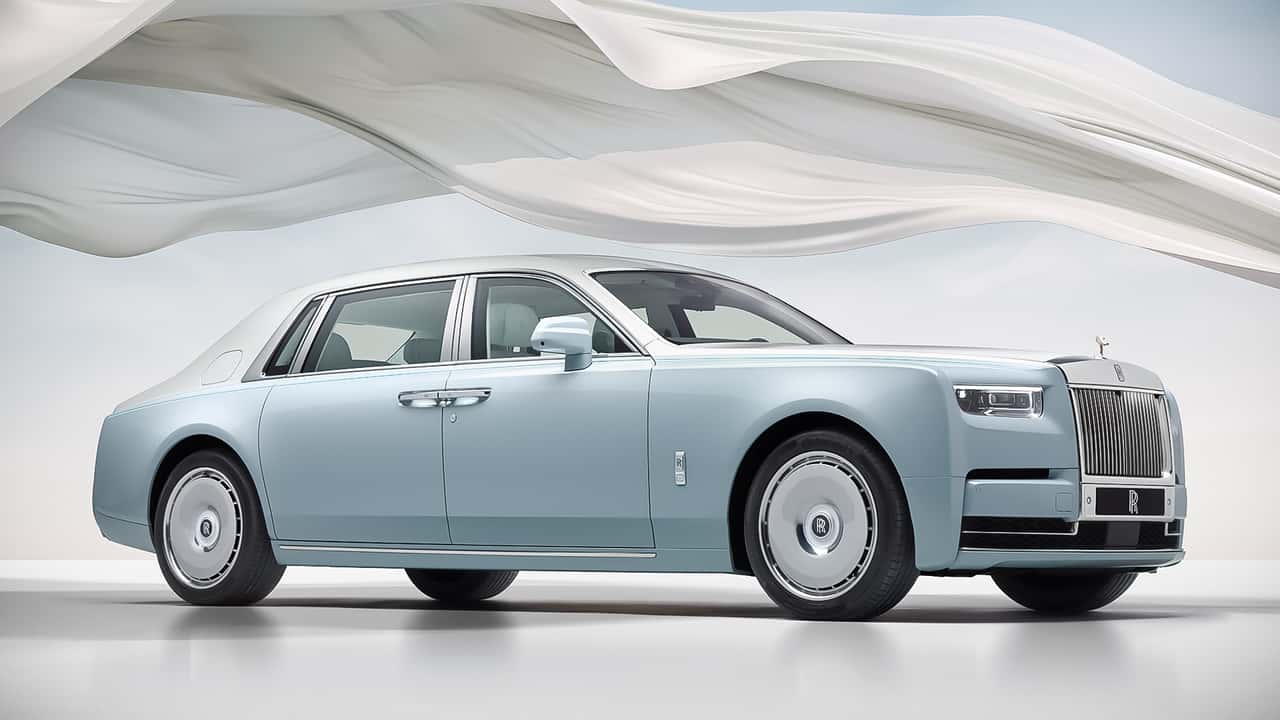

Whether you're a fan or not, the launch of the Rolls-Royce Phantom in 1925 marked the beginning of a chapter in motoring history that has seen eight generations of the Phantom redefine the standards of elegance, comfort and engineering time and time again. This anniversary provides an opportunity to take a look at the evolution of this model, which epitomises the ultimate four-wheeled experience like no other vehicle.
The roots of perfection
Even before the Phantom was created, Rolls-Royce enjoyed a reputation for building the best car in the world with the Silver Ghost model. Nevertheless, Henry Royce, co-founder and technical genius of the brand, recognised the need to develop a successor model in 1921. The result was the "New Phantom", whose name was first officially used in an advert in The Times in 1925. From the outset, the Phantom stood for the promise of unrivalled comfort and technical excellence.

Visionary naming
The naming of the Phantom emphasises Rolls-Royce's ambition. The company associated the term "Phantom" not only with the idea of silent elegance and unrivalled grace, but also with the creation of a brand that symbolises timelessness and exclusivity. The name also served as a key tool to emphasise Rolls-Royce's unmistakable identity as the manufacturer of the ultimate luxury vehicle and to set it apart from its competitors.
Claude Johnson, the commercial director at the time, recognised the impact of powerful names. Terms such as Phantom, Wraith or Ghost were intended to convey the silent elegance and almost supernatural grace of the vehicles. The decision in favour of "Phantom" cemented the myth and gave the model an unmistakable identity as well as a certain mysterious aura.
A platform for individuality
From the outset, the Phantom offered almost unlimited versatility. While Rolls-Royce only supplied the chassis, the design of the body was left to the individual wishes of the customer and the expertise of independent coachbuilders. The generous proportions of the Phantom made it possible to realise a wide range of equipment variants to suit the needs and lifestyle of the owners.
Some vehicles were equipped with integrated writing desks, swivelling individual seats or special compartments for golf accessories. Others contained secret compartments for jewellery, safes or even individually designed storage spaces for collector's items. This flexibility made the Phantom a canvas on which customers could realise their personal ideas of luxury.
Technical evolution
The Phantom has always reflected the technical advances of its time. The 1936 Phantom III marked a new era with its V12 engine, not only increasing power to 165 PS, but also introducing independent front suspension for the first time, which significantly improved ride comfort.
The introduction of the aluminium spaceframe in the seventh generation from 2003 showed how the brand was adapting to modern engineering techniques, while the Phantom VIII redefined the combination of technology and art with the "Architecture of Luxury" and the innovative Gallery.
A new era after the war
After the Second World War, Rolls-Royce faced the challenge of adapting the Phantom to post-war conditions. With the Rationalised Range programme, the focus returned to efficiency without compromising on quality. The Phantom IV, which was specially developed for the British royal family, was a prime example of this philosophy. With only 18 examples produced, this model remained an absolute rarity.
At the same time, Rolls-Royce worked on further developing the model series to meet changing requirements. The Phantom V, launched in 1959, offered a new level of luxury and comfort with its V8 engine and a host of technical improvements such as air conditioning for the front and rear seats and an optimised chassis design. This model was particularly popular with heads of state and celebrities.
The Phantom VI, which was launched in 1968, continued this tradition and was equipped with additional modernisations such as separate air conditioning systems and even higher quality materials. It remained in the programme until 1993 and marked the end of the classic coachbuilding era, before Rolls-Royce introduced a completely new approach with the seventh generation in 2003.
Renaissance of the brand
The revival of the Phantom in 2003, following the takeover of Rolls-Royce by the BMW Group, marked another milestone. The seventh generation was the first model to be produced entirely in-house, continuing the tradition of handcrafted perfection. The Phantom VII came to symbolise the fusion of classic craftsmanship and modern technology.
A look into the future
The current eighth generation, launched in 2017, is based on the "Architecture of Luxury", a state-of-the-art aluminium spaceframe construction. At the same time, the Phantom has become the ultimate platform for individual customer wishes. With the so-called Gallery, a glazed area in the dashboard, works of art or personal design ideas can be integrated. Bespoke projects such as the Phantom Syntopia or the Phantom Oribe show that Rolls-Royce continues to push the boundaries of what is possible.
100 years after its debut, the Phantom is not just a car, but an institution. It remains a symbol of unrivalled elegance and technological excellence - a legacy that will carry Rolls-Royce into the future.
More from Rolls-Royce recently:
RECOMMENDED FOR YOU
Woman Shops For Rolls-Royce. Then She Notices Something Shady: ‘This Dealership Must Be Thoroughly Investigated’
Man Always Parks His Mercedes Far Away From The Office Parking Lot. Then He Reveals Why
Rare Mazda 767B Engulfed In Flames At Laguna Seca
BMW Drops 8 Series As Alpina Vision Steps Up
1958 Ferrari Reappears With A Shocking $5 Million Estimate
This Open-Top Ferrari 550 Restomod Has A V12 And Manual Gearbox
This Lovely Mercedes 190 Evo II Restomod Packs 765 Horsepower