Home
Rolls-Royce
Phantom
News
Rolls-Royce Phantom: 100 years at the summit
We take a look back at the history of this automotive legend
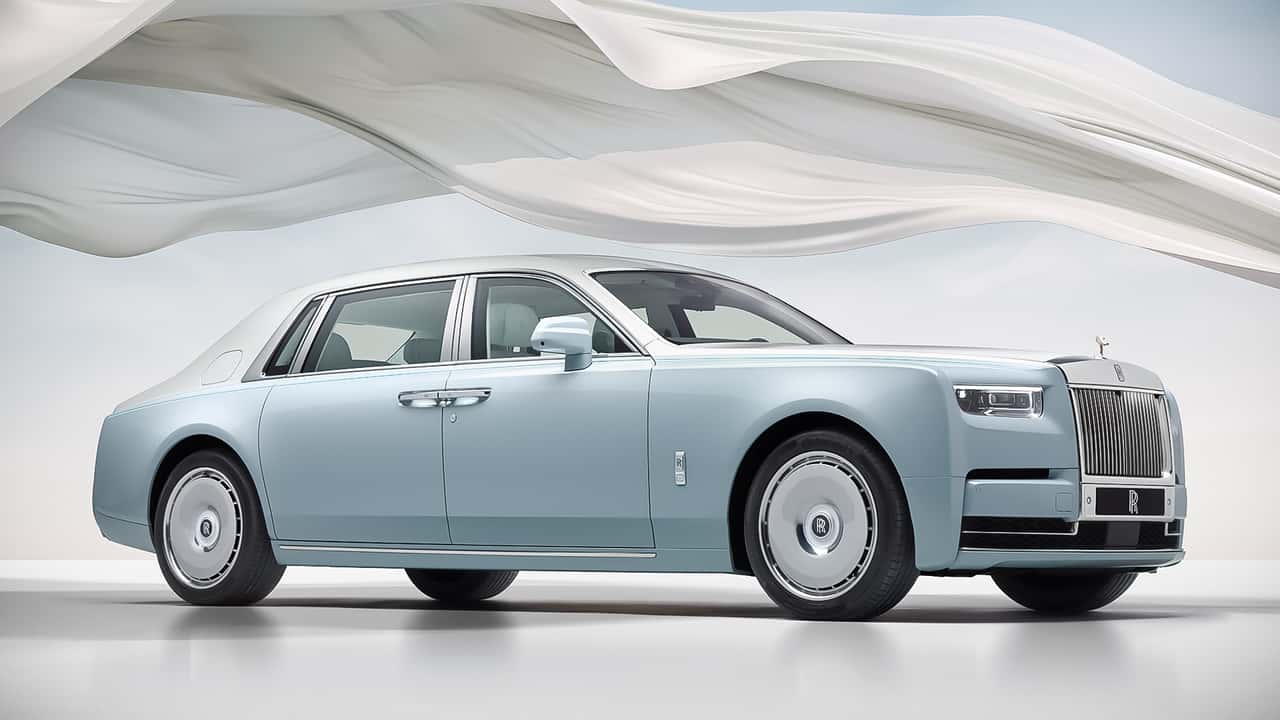
Photo by: Rolls-Royce

By: Christopher Otto
Published by: Brian Potter
Jan 20, 2025 at 1:43am ET
Add Motor1.com as a preferred source in Google
- (https://twitter.com/intent/tweet?url=https%3A%2F%2Fwww.motor1.com%2Fnews%2F747808%2Frolls-royce-phantom-100-years-history%2F&text=Rolls-Royce%20Phantom%3A%20100%20years%20at%20the%20summit&via=motor1com)
- copy
Share
Comment
Whether you're a fan or not, the launch of the Rolls-Royce Phantom in 1925 marked the beginning of a chapter in motoring history that has seen eight generations of the Phantom redefine the standards of elegance, comfort and engineering time and time again. This anniversary provides an opportunity to take a look at the evolution of this model, which epitomises the ultimate four-wheeled experience like no other vehicle.
The roots of perfection
Even before the Phantom was created, Rolls-Royce enjoyed a reputation for building the best car in the world with the Silver Ghost model. Nevertheless, Henry Royce, co-founder and technical genius of the brand, recognised the need to develop a successor model in 1921. The result was the "New Phantom", whose name was first officially used in an advert in The Times in 1925. From the outset, the Phantom stood for the promise of unrivalled comfort and technical excellence.

Photo by: Rolls-Royce
Visionary naming
The naming of the Phantom emphasises Rolls-Royce's ambition. The company associated the term "Phantom" not only with the idea of silent elegance and unrivalled grace, but also with the creation of a brand that symbolises timelessness and exclusivity. The name also served as a key tool to emphasise Rolls-Royce's unmistakable identity as the manufacturer of the ultimate luxury vehicle and to set it apart from its competitors.
Claude Johnson, the commercial director at the time, recognised the impact of powerful names. Terms such as Phantom, Wraith or Ghost were intended to convey the silent elegance and almost supernatural grace of the vehicles. The decision in favour of "Phantom" cemented the myth and gave the model an unmistakable identity as well as a certain mysterious aura.
Photo by: Rolls-Royce
A platform for individuality
From the outset, the Phantom offered almost unlimited versatility. While Rolls-Royce only supplied the chassis, the design of the body was left to the individual wishes of the customer and the expertise of independent coachbuilders. The generous proportions of the Phantom made it possible to realise a wide range of equipment variants to suit the needs and lifestyle of the owners.
Some vehicles were equipped with integrated writing desks, swivelling individual seats or special compartments for golf accessories. Others contained secret compartments for jewellery, safes or even individually designed storage spaces for collector's items. This flexibility made the Phantom a canvas on which customers could realise their personal ideas of luxury.
Photo by: Rolls-Royce
Technical evolution
The Phantom has always reflected the technical advances of its time. The 1936 Phantom III marked a new era with its V12 engine, not only increasing power to 165 PS, but also introducing independent front suspension for the first time, which significantly improved ride comfort.
The introduction of the aluminium spaceframe in the seventh generation from 2003 showed how the brand was adapting to modern engineering techniques, while the Phantom VIII redefined the combination of technology and art with the "Architecture of Luxury" and the innovative Gallery.
Photo by: P
A new era after the war
After the Second World War, Rolls-Royce faced the challenge of adapting the Phantom to post-war conditions. With the Rationalised Range programme, the focus returned to efficiency without compromising on quality. The Phantom IV, which was specially developed for the British royal family, was a prime example of this philosophy. With only 18 examples produced, this model remained an absolute rarity.
At the same time, Rolls-Royce worked on further developing the model series to meet changing requirements. The Phantom V, launched in 1959, offered a new level of luxury and comfort with its V8 engine and a host of technical improvements such as air conditioning for the front and rear seats and an optimised chassis design. This model was particularly popular with heads of state and celebrities.
Photo by: RM Sotheby's
The Phantom VI, which was launched in 1968, continued this tradition and was equipped with additional modernisations such as separate air conditioning systems and even higher quality materials. It remained in the programme until 1993 and marked the end of the classic coachbuilding era, before Rolls-Royce introduced a completely new approach with the seventh generation in 2003.
Renaissance of the brand
The revival of the Phantom in 2003, following the takeover of Rolls-Royce by the BMW Group, marked another milestone. The seventh generation was the first model to be produced entirely in-house, continuing the tradition of handcrafted perfection. The Phantom VII came to symbolise the fusion of classic craftsmanship and modern technology.
Photo by: Rolls-Royce
What do you think?
View
Comments
A look into the future
The current eighth generation, launched in 2017, is based on the "Architecture of Luxury", a state-of-the-art aluminium spaceframe construction. At the same time, the Phantom has become the ultimate platform for individual customer wishes. With the so-called Gallery, a glazed area in the dashboard, works of art or personal design ideas can be integrated. Bespoke projects such as the Phantom Syntopia or the Phantom Oribe show that Rolls-Royce continues to push the boundaries of what is possible.
Photo by: Rolls-Royce
100 years after its debut, the Phantom is not just a car, but an institution. It remains a symbol of unrivalled elegance and technological excellence - a legacy that will carry Rolls-Royce into the future.
More from Rolls-Royce recently:
How to apply for apprenticeship 2025 at Rolls-Royce
Rolls-Royce 2025: All the upcoming models
I visited the most exclusive factory in the world - the Home of Rolls-Royce
Rolls-Royce Camargue: The 1970s oddball that defied convention
We want your opinion!
What would you like to see on Motor1.com?
Take our 3 minute survey.
- The Motor1.com Team
Share this Story
- (https://twitter.com/intent/tweet?url=https%3A%2F%2Fwww.motor1.com%2Fnews%2F747808%2Frolls-royce-phantom-100-years-history%2F&text=Rolls-Royce%20Phantom%3A%20100%20years%20at%20the%20summit&via=motor1com)
- copy
GO TO COMMENTS
(
)
Got a tip for us? Email: tips@motor1.com
View all comments ( )
Popular
The Rotary Engine Should Be Everywhere. Why Isn't It?
The 2027 BMW X5 Is Hugely Improved Where It Matters Most: Driven
Honda's Mitsubishi-Based Truck Is Official, Coming In 2028
The BMW iX5 Makes A Strong Case Against The Gas X5: Driven
Volkswagen Wanted An Electric Bugatti Tourbillon, But Mate Rimac Pushed For A V16 Engine
latest articles
- The New Lexus LFA Inches Closer To Production With Fresh Spy Photos Oct 22 - Spy Shots -
- Remember Aston Martin's Weird Little City Car? There's A Reason It Existed Oct 22 - Motor101 -
- The BMW iX5 Makes A Strong Case Against The Gas X5: Driven Oct 22 - First Drives -
- The 2027 BMW X5 Is Hugely Improved Where It Matters Most: Driven Oct 22 - First Drives -
- Ford Explains Why Naming Cars Is So Hard: 'Everyone Has An Opinion' Oct 22 - Official -
- Cadillac Built A $239,000 Escalade-V To Celebrate 125 Years Oct 22 - Design -
- For Around $40,000, You Can Buy BMW's Sports Car Of The Future Oct 22 - Why Buy? -
RECOMMENDED FOR YOU
Every Rolls-Royce Has A Hidden Feature Most People Don't Know About
The New Lexus LFA Inches Closer To Production With Fresh Spy Photos
Woman Shares How To Find The Hole In Your Tire—All It Takes Is Some Dawn Powerwash
Remember Aston Martin's Weird Little City Car? There's A Reason It Existed
Woman Learns What Happens When You Drive Way Past Empty—Now She Does It All The Time: 'Ghost Miles'
The BMW iX5 Makes A Strong Case Against The Gas X5: Driven
You Can Buy This Wild 1967 Alfa Romeo Giulia Built Like A Le Mans Racer