I Drove The Manual Nissan Z Nismo—And It Fixes Everything
With a manual transmission (finally) and a few subtle updates, this is the Z Nismo you've been waiting for.
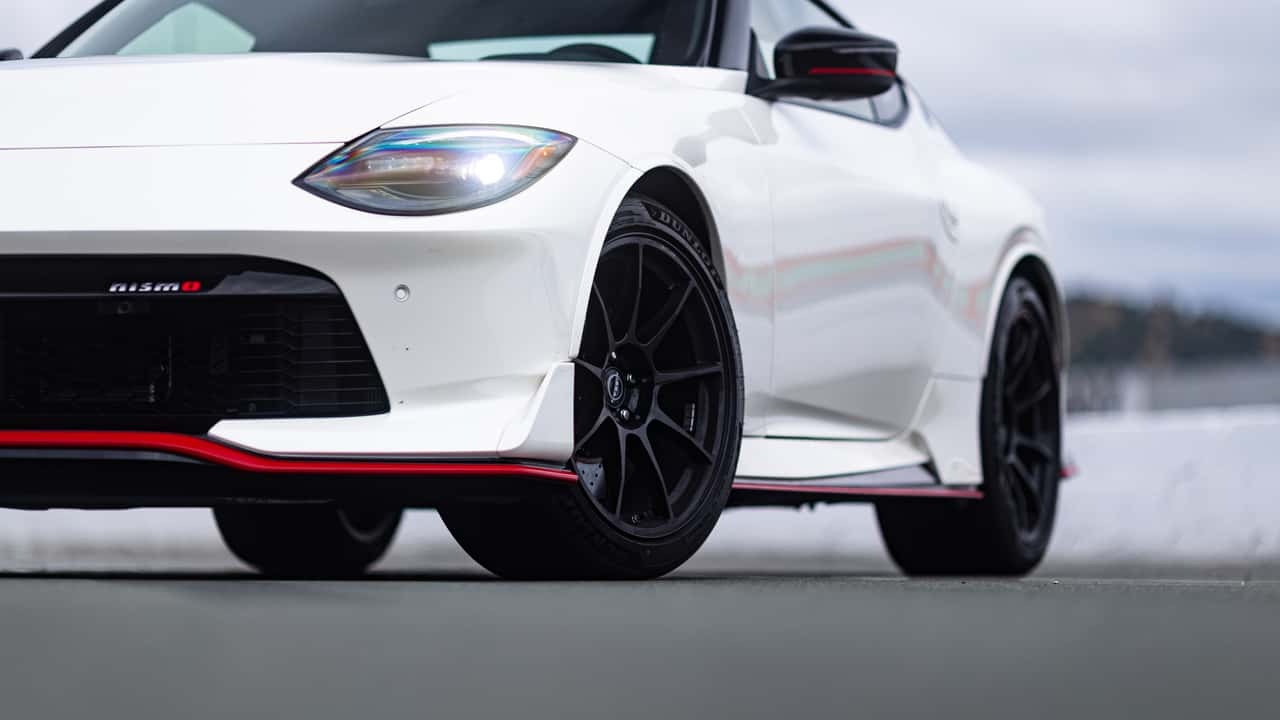

Everyone reading this, I’m sure, is having the same thought about the Nissan Z Nismo: "I told you so." A year on sale was long enough; Nissan finally transplanted the Z’s well-known six-speed manual into its highest-performing trim. And it completely changes the experience.
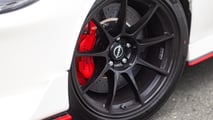
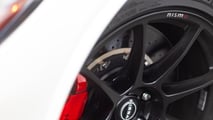
Nissan didn’t just put the six-speed in the Nismo, though; it also gave the car a solid raft of improvements—two-piece front brake rotors lifted from the early R35 GT-R, retuned steering and suspension, and a short shifter. It all lives alongside the Nismo’s already standard upgrades.
Fundamentally, this is the same Z Nismo with a manual transmission—so I won’t waste too much time rehashing the automatic we drove at launch. Instead, let’s focus on how the manual has changed the core character of the Z Nismo, and how it has turned from, frankly, a flop, into what could be the most compelling sports car in its class.
The Missing Piece

Under the clouds of Sonoma Raceway, it would’ve been challenging to tell the Z Nismo manual apart from any other Nismo. It looks exactly the same—only the trainspotters will see the two-piece rotors for the 2026 cars.
Mercifully, Nissan didn’t feel the need to promote the return of the manual (at least, not visually). The presence of a shifter inside the Nismo is so matter-of-fact that it almost doesn’t even feel like an occasion—and the attitude of the engineers reflects a silent agreement that this is the Z Nismo as it should’ve launched.
The steering rack now has less internal friction, which required a retune of the electronic assist. The manual transmission also cuts curb weight from 3,677 pounds to 3,624, leading Nissan to revise the suspension calibration.
The car’s VR30DDTT twin-turbocharged 3.0-liter V6 engine is unchanged, however. It still has some tricks, like independent ignition timing per cylinder, water-to-air intercoolers, and enough coolers to support its 420 horsepower and 384 pound-feet. The throttle was retuned to suit the manual transmission, offering more blippiness that wasn’t required with the auto.
And finally, there’s the manual transmission itself. It’s the same gearbox as the standard Z, but it benefits from a short shifter that reduces throws by 6 millimeters. That may not sound like much—but it goes a long way in practice.
Three Pedal Good
The ergonomics of the Nismo are the same as the normal Z, which means the shifter feels a little too far from the steering wheel and back toward the driver. But that’s a minor complaint in the larger scope.
Simply engaging with the Nismo’s clutch pedal is a delight. As our lead-follow track sessions begin, there’s an immediate difference compared to the standard Z—the drivetrain mounts feel stiffer, restraining any nasty rocking or bucking motions. A quick warm-up session in a Z Performance makes the difference blatantly obvious.
The low-speed amble out of pit lane offers more delights than expected. The revs drop quickly between gears, and the shorter shifter feels notchy and precise. There’s no sensation of "sliding" into a gate; just a distinct effort that’s clearly communicated.
Yet the Nismo’s most incredible trick is fluidity. On the flowing, undulating turns of Sonoma, a track famous for its difficulty and, um, ease of crashing, it’s incredibly easy to meet the Nismo’s limit and dance with it.
Unsticking the rear axle is a task, even with its prodigious power. Unreasonable usage of the throttle results in little more than a light wag of the tail and a tighter line. It would be difficult to find a modern sports car more stable than the Z Nismo—it’s borderline too much, in fact, with drifts requiring a herculean effort to achieve.
But that stability comes with incredible benefits: The Nismo is the most approachable car in its segment by a long shot. Its steering offers more texture and tire information than the next-best Audi or BMW, with tire slip communicated loud and clear through the wheel. Its only real sin? The wheel feels a step behind when the rear does eventually step out.
Driven straight and narrow, though, the Z Nismo is a true track star. It's only handling peer would be a Porsche, with superb manners and reactions that match some of Germany’s best.
Nothing flaps the Nismo, and its manual gearbox slots seamlessly into the experience. Where the automatic could bore with its competence, the manual has just enough engagement to make the thing addictive.
Nissan Z Manual: The One You Want
The Z Nismo is so good that it needed the manual to give its driver something to do. It’s just enough jeopardy for the average driver, and enough of a challenge for the good drivers to nail the perfect shift every time, perfecting heel-toe downshifts and reengaging the clutch without upsetting the car. The manual gearbox fixes the Z Nismo’s primary sin: Boredom.
With the stick, I find myself looking at it differently. Suddenly, the likely $70,000+ price tag (pricing yet to be announced) doesn’t seem too bad when the car is this good to drive. Where I would’ve shrugged off any suggestion other than an M2, the Nismo is now a truly worthy competitor.
Nissan Z Nismo Competitors
Competitor Reviews
Gallery: 2027 Nissan Z Nismo Manual First Drive Review

2027 Nissan Z Nismo Manual
RECOMMENDED FOR YOU
The 2027 Nissan Z Is More Expensive, But It Gets One Smart Upgrade
Woman Tells Trader Joe’s Worker Her Car Is Making A Sound. She Can’t Believe How The Cashier Responds: ‘You Both Panicked’
Your Car Has a Hidden Mechanical Key. Here's Why It's There
You're Probably Not Using All Of Your Car's Key Fob Features
Nissan's Smallest SUV Gets A Rugged-ish Makeover
Woman Gets Goodyears. Then The Shop Tries To Take Them Back—And Replace Them With Cheaper Douglas Tires: ‘Go To Costco’
Man Goes To Ford Dealership. Then A Saleswoman Asks If He Wants To 'Swap Keys.’ It’s Not Just Him’