Home
Tesla
News
Why Trump is necessary but not enough for Tesla to soar
The euphoria of the markets should not make us underestimate what the real challenges are
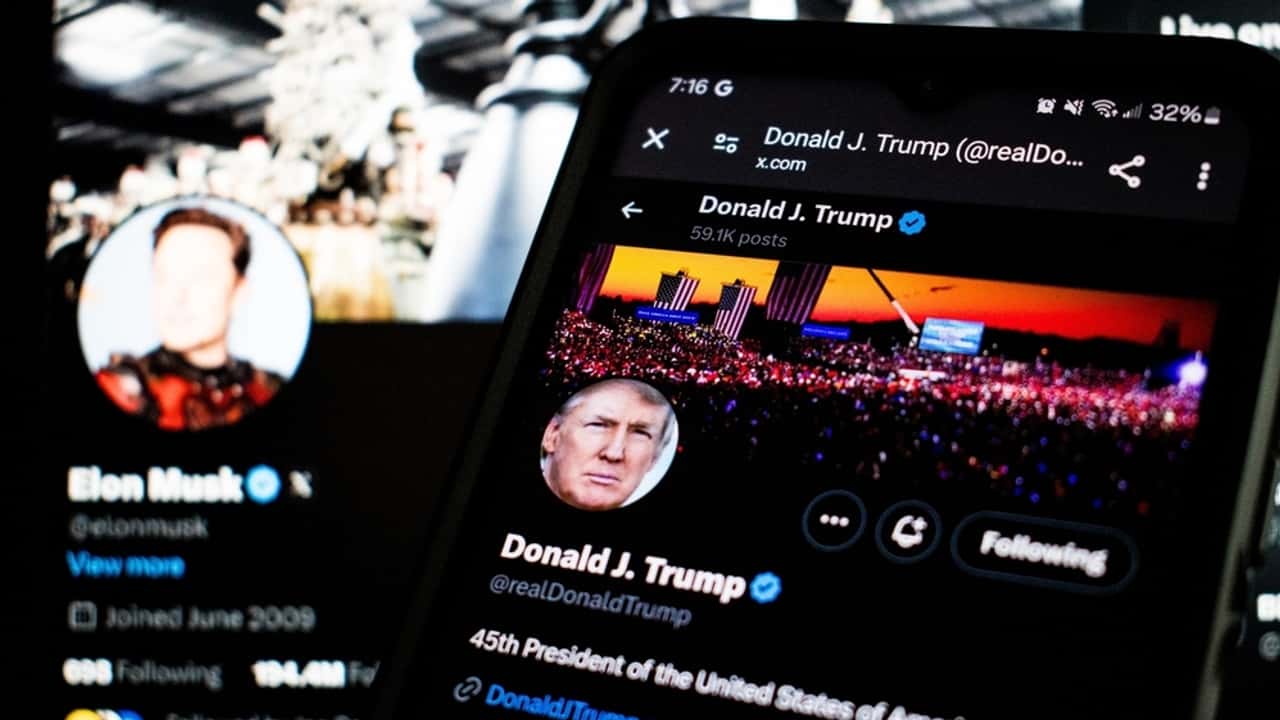
Photo by: Shutterstock

By: Alessandro Lago
Published by: Brian Potter
Nov 11, 2024 at 5:16am ET
Add Motor1.com as a preferred source in Google
- (https://twitter.com/intent/tweet?url=https%3A%2F%2Fwww.motor1.com%2Fnews%2F740509%2Ftrump-musk-tesla-market-euforia%2F&text=Why%20Trump%20is%20necessary%20but%20not%20enough%20for%20Tesla%20to%20soar&via=motor1com)
- copy
Share
Comment
It is not the first time that Tesla is worth 1 trillion on the stock market as it already happened in 2021. However, it's an important reminder to interpret not so much what happened in the days after Donald Trump's election, but what should happen in the coming months to turn investors' dreams into solid realities.

Tesla's share price over the past five years
The mainstream equation is very simple: Trump won, so Musk will be the 'shadow president', so his companies will be favoured. Some have delved deeper and wondered how Musk in the White House could favour Tesla, and the most talked about scenarios are two fold.
The first is the protectionist strategy of the new administration. If Trump confirms - as it seems - the massive tariffs to block Chinese cars and perhaps further complicate life for European, Japanese and Korean manufacturers that do not produce as much as they could in the States, Tesla will have an easy time selling electric cars in America.
Scenario 1
America is the first market for Musk, but then there is China and Europe, where Tesla has its other plants and has to prove it can continue to grow, which is not a given, considering the overdose of Chinese and Western competitors and, most importantly, the absence of new models, including the cancelled Tesla Model 2 project. It is no coincidence that BYD, this very year, should succeed in ousting Tesla as the leading electric car manufacturer.
Elon Musk during Tesla Annual Shareholders' Meeting 2023
The second, more suggestive scenario is the emergence of autonomous driving. Those who follow the subject still have in mind the images of the Hollywood presentation of Tesla's robotaxi, the Cybercab. Such a self-driving vehicle is undoubtedly the 'next big thing' that could revolutionise human mobility. Imagine thousands of autonomous, shared cars, driving around the streets and giving you a lift when you need one. And inside them you can do everything but drive. Drivers would be transformed into transported consumers who can be safely distracted with geotargeted advertisements and paid-for service proposals. Autonomous driving would be a huge money-maker that would explode the revenues of whoever gets there first. Hence the idea that with Musk in the White House, the Trump administration could widen the regulatory net favouring Musk's ambition to launch the Cybercab as early as 2026.
Scenario 2
Between saying and doing there is not only regulation, but also the practical applicability of the technology in the real world. Over the past 10 years, $200 billion has been invested in developing reliable robot cars, and the many prototypes circulating in countries such as California periodically fail for the silliest reasons. Images of a traffic jam in San Francisco caused by robot cars undecided as to who should get over an obstacle first have gone around the world. Can you imagine an insurance company willing to take out a third-party liability policy to protect you from accidents when there are still such snags?
Advances in artificial intelligence will help. To hear Musk talk about it, we're almost there, but American safety regulators continue to slam Tesla because the assisted driving systems on current models lead them to believe they can do more than they can, not to mention that many experts are not convinced of the reliability of the technical choices made by Tesla engineers on the type of sensors in the cars that are supposed to drive themselves.
Tesla Cybercab, the robotaxi unveiled in early October by Elon Musk
What do you think?
View
Comments
By this I am neither saying nor wishing Tesla to fail, but simply pointing out that Trump's victory is a necessary but insufficient condition to ensure the medium to long term success of this extraordinary company. And therefore that one should not get caught up in the euphoria of these hours.
Let us remember that in 2021 Tesla's exploit was possible because demand for electric cars was growing everywhere, Tesla was particularly profitable and Hertz ordered 100,000 Teslas for its worldwide fleet of rental cars. Today, the electric car is experiencing an unprecedented reputational crisis, there is enormous political uncertainty over energy transition strategies, and Hertz is selling the Teslas it had bought.
More on the matter:
Why Trump's return threatens the European car industry
Trump wants more hybrids and fewer electrics, so he calls Elon Musk
Trump wins: Promises to protect Musk because 'he is a supergenius'
Elon Musk backs Trump, he changes his mind about the electric car
We want your opinion!
What would you like to see on Motor1.com?
Take our 3 minute survey.
- The Motor1.com Team
Share this Story
- (https://twitter.com/intent/tweet?url=https%3A%2F%2Fwww.motor1.com%2Fnews%2F740509%2Ftrump-musk-tesla-market-euforia%2F&text=Why%20Trump%20is%20necessary%20but%20not%20enough%20for%20Tesla%20to%20soar&via=motor1com)
- copy
GO TO COMMENTS
(
)
Got a tip for us? Email: tips@motor1.com
View all comments ( )
Popular
12 Cars With Names That Make Absolutely No Sense
BMW Kept This Hatchback A Secret For Decades
Bugatti Restores One-Off Veyron With A Mirror-Like Aluminum Body
The Gas BMW M3 Isn't Dead: Next-Gen Prototype Roars
latest articles
- Every Rolls-Royce Has A Hidden Feature Most People Don't Know About Oct 20 - Motor101 -
- Subaru Built A 510-HP Electric Wagon Without Toyota's Help Oct 20 - Official -
- The Strange Reason The Golf GTI Had A Golf Ball Shifter Oct 20 - Motor101 -
- Photos: Porsche's Mission S Concept Takes Over New York City Oct 20 - Design -
- The 2027 Honda Passport TrailSport Looks Noticeably Taller Next To Last Year's Model Oct 20 - Off-Road -
- 12 Cars With Names That Make Absolutely No Sense Oct 20 - Lists -
- The Ford Ranger Is Getting A Bigger V6 For 2027: Report Oct 20 - Rumors -
RECOMMENDED FOR YOU
All Aboard The Hype Train: Tesla Says The New Roadster Could Hit 330 MPH
Every Rolls-Royce Has A Hidden Feature Most People Don't Know About
Tesla Roadster Will Be 'Sentient' And Perform Stunts Autonomously, Musk Says
Subaru Built A 510-HP Electric Wagon Without Toyota's Help
The Best (And Worst) Cities For Owning An EV: Study
The Strange Reason The Golf GTI Had A Golf Ball Shifter
The New Tesla Roadster Looks Nothing Like The Concept